

Fred Young Submillimeter Telescope (FYST) is on its way to Chile
On 17 January, the telescope started its journey to Chile.
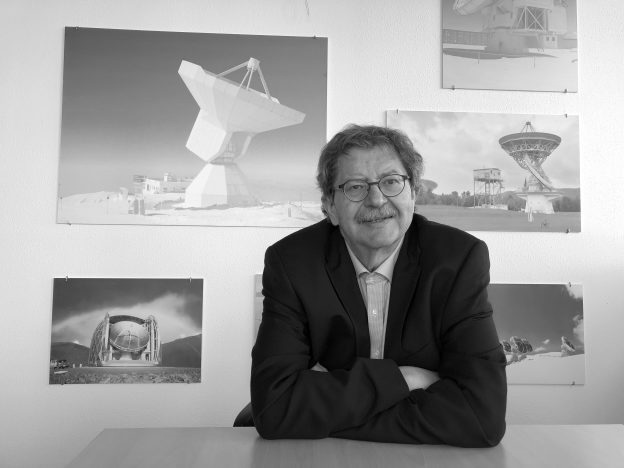
In Memory of Prof. Karl Menten
Mit schwerem Herzen trauern wir um unseren Freund und Weggefährten Karl Menten,
der am 30.12.2024 plötzlich und unerwartet verstarb.
Grosse Dankbarkeit erfuellt uns beim Gedanken an die lange Suche
nach Wahrheit in der gemeinsamen Beobachtung der Natur.
Wir werden ihm immer ein ehrendes Andenken bewahren.
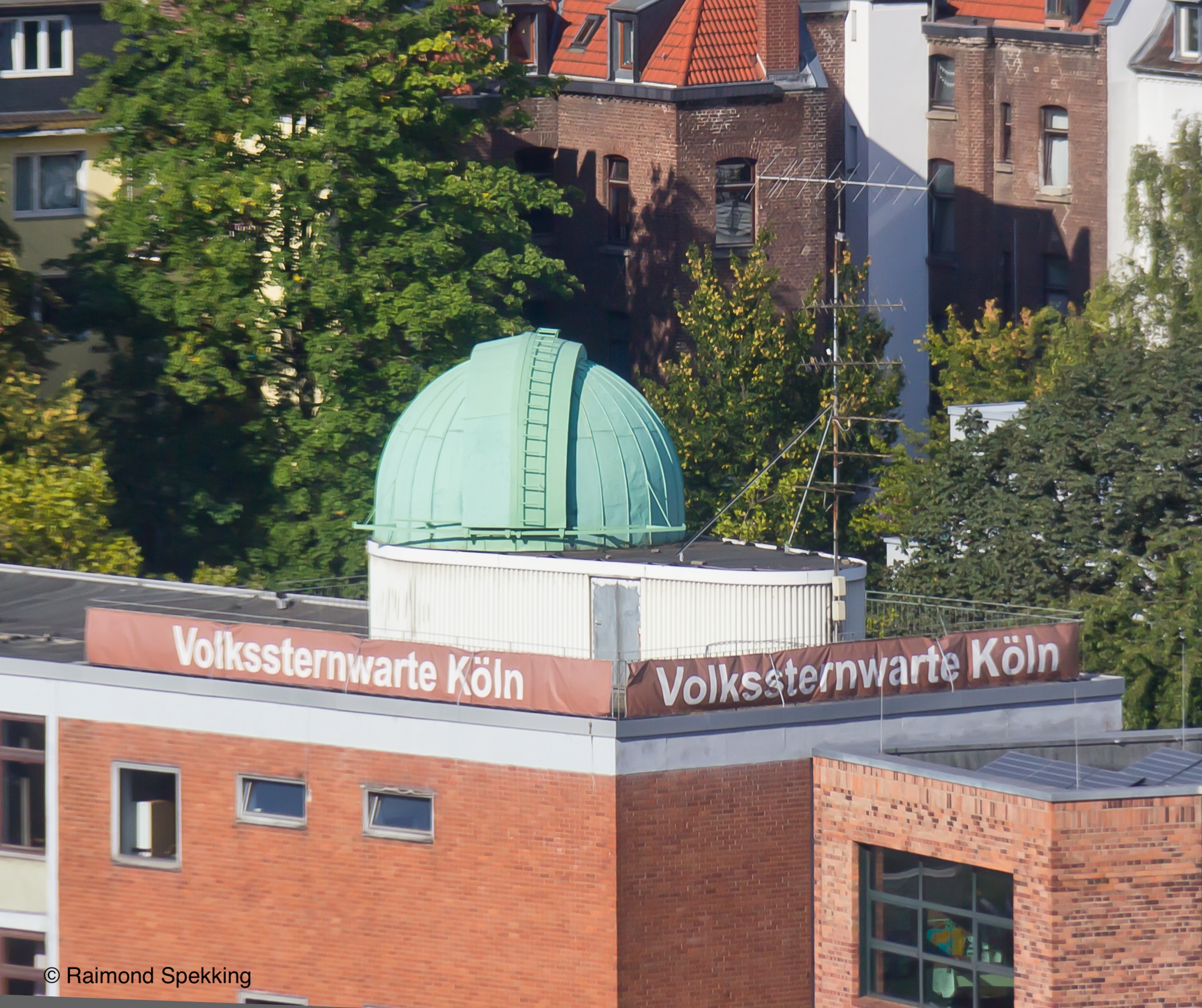
Public Observatory Cologne
The Public Observatory Cologne is a private institution which is run by the members of the “Vereinigung der Sternfreunde Köln e.V.” on a voluntary basis. This association of interested amateurs and amateur astronomers was founded in 1922 with the aim of disseminating basic astronomical knowledge to the public and promoting the training and further education of active amateur astronomers within the scope of the available possibilities.With the 60cm refractor “Cologne Large Telescope” (CLT) installed in 2012, the Volkssternwarte Köln operates the largest freely accessible telescope in North Rhine-Westphalia
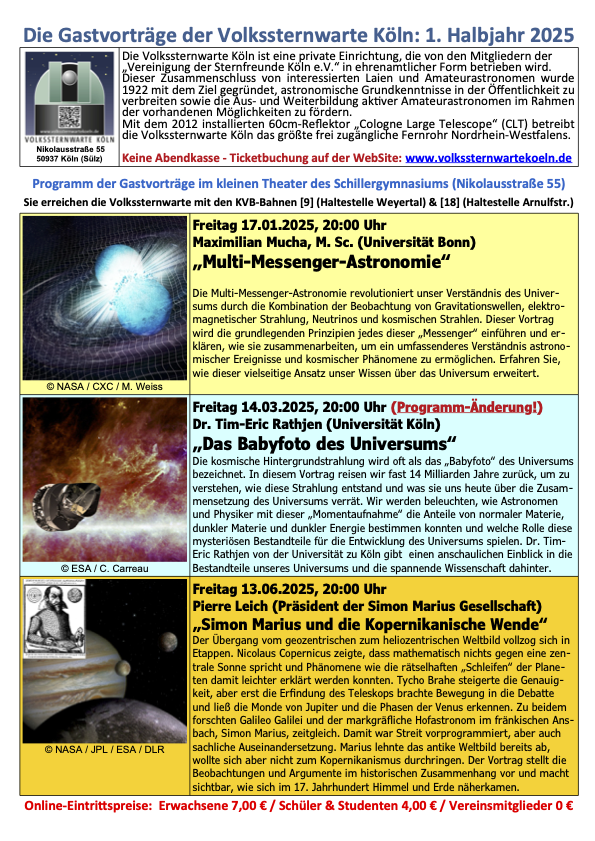
Talks at the Public Observatory Cologne
The Public Observatory Cologne is a private institution which is run by the members of the “Vereinigung der Sternfreunde Köln e.V.” on a voluntary basis. This association of interested amateurs and amateur astronomers was founded in 1922 with the aim of disseminating basic astronomical knowledge to the public and promoting the training and further education of active amateur astronomers within the scope of the available possibilities.With the 60cm refractor “Cologne Large Telescope” (CLT) installed in 2012, the Volkssternwarte Köln operates the largest freely accessible telescope in North Rhine-Westphalia
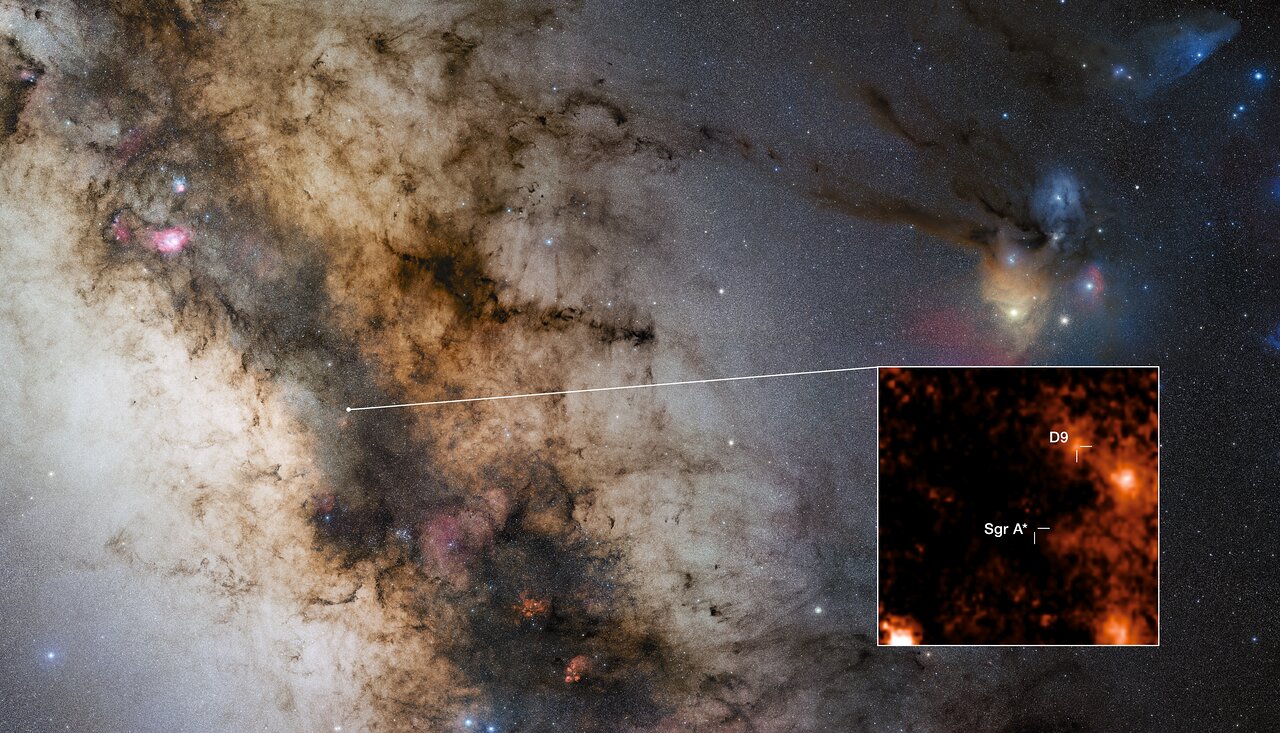
ESO news: First ever binary star found near our galaxy’s supermassive black hole
An international team of researchers has detected a binary star orbiting close to Sagittarius A*, the supermassive black hole at the centre of our galaxy. It is the first time a stellar pair has been found in the vicinity of a supermassive black hole. The discovery, based on data collected by the European Southern Observatory’s Very Large Telescope (ESO’s VLT), helps us understand how stars survive in environments with extreme gravity, and could pave the way for the detection of planets close to Sagittarius A*.
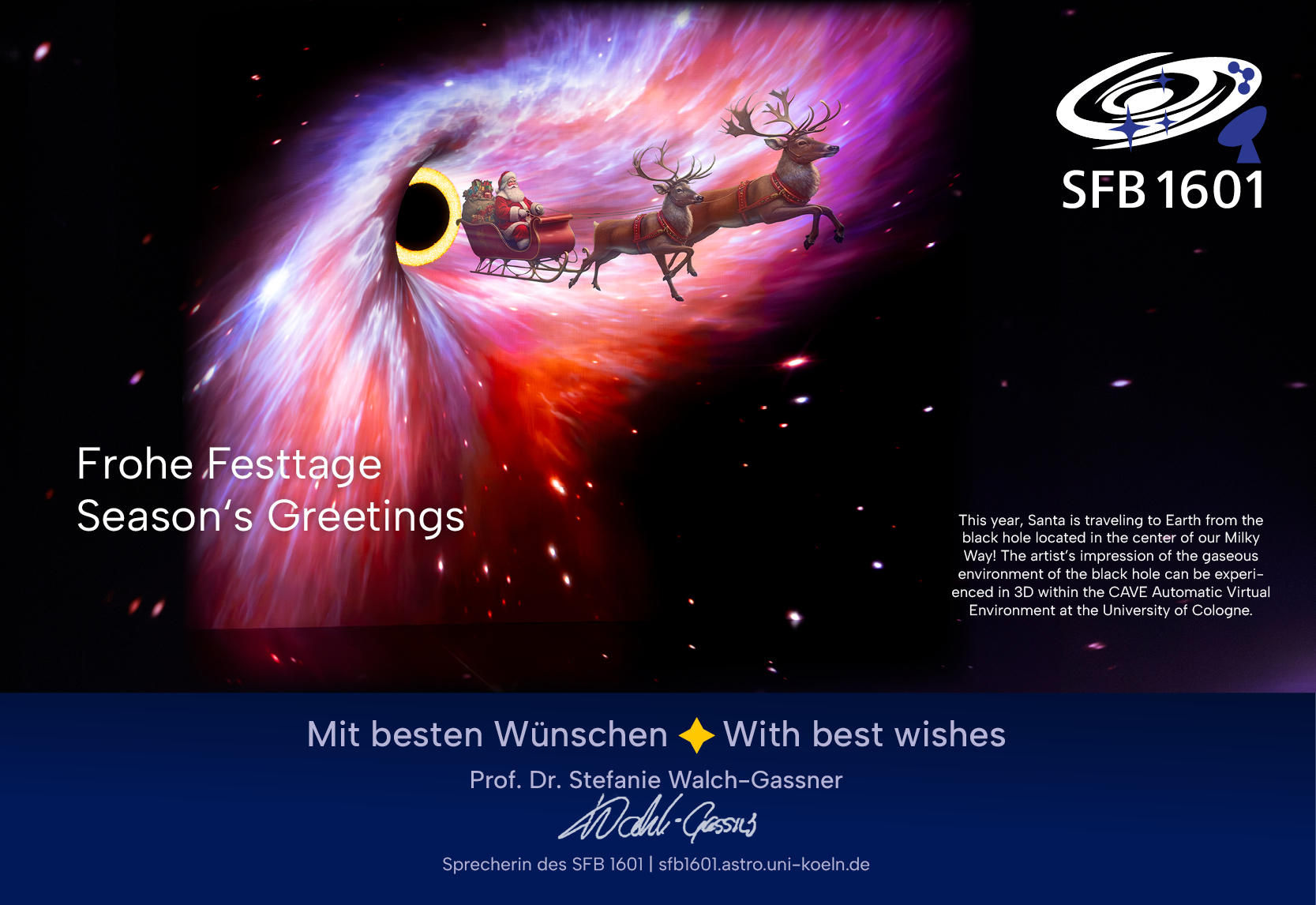
Merry XMAS
As the year draws to a close, we extend our heartfelt gratitude to all colleagues and friends who contribute to advancing our understanding of the habitats of massive stars across cosmic time. Your dedication and collaboration continue to illuminate the path forward in our shared scientific journey. May this holiday season bring you moments of …
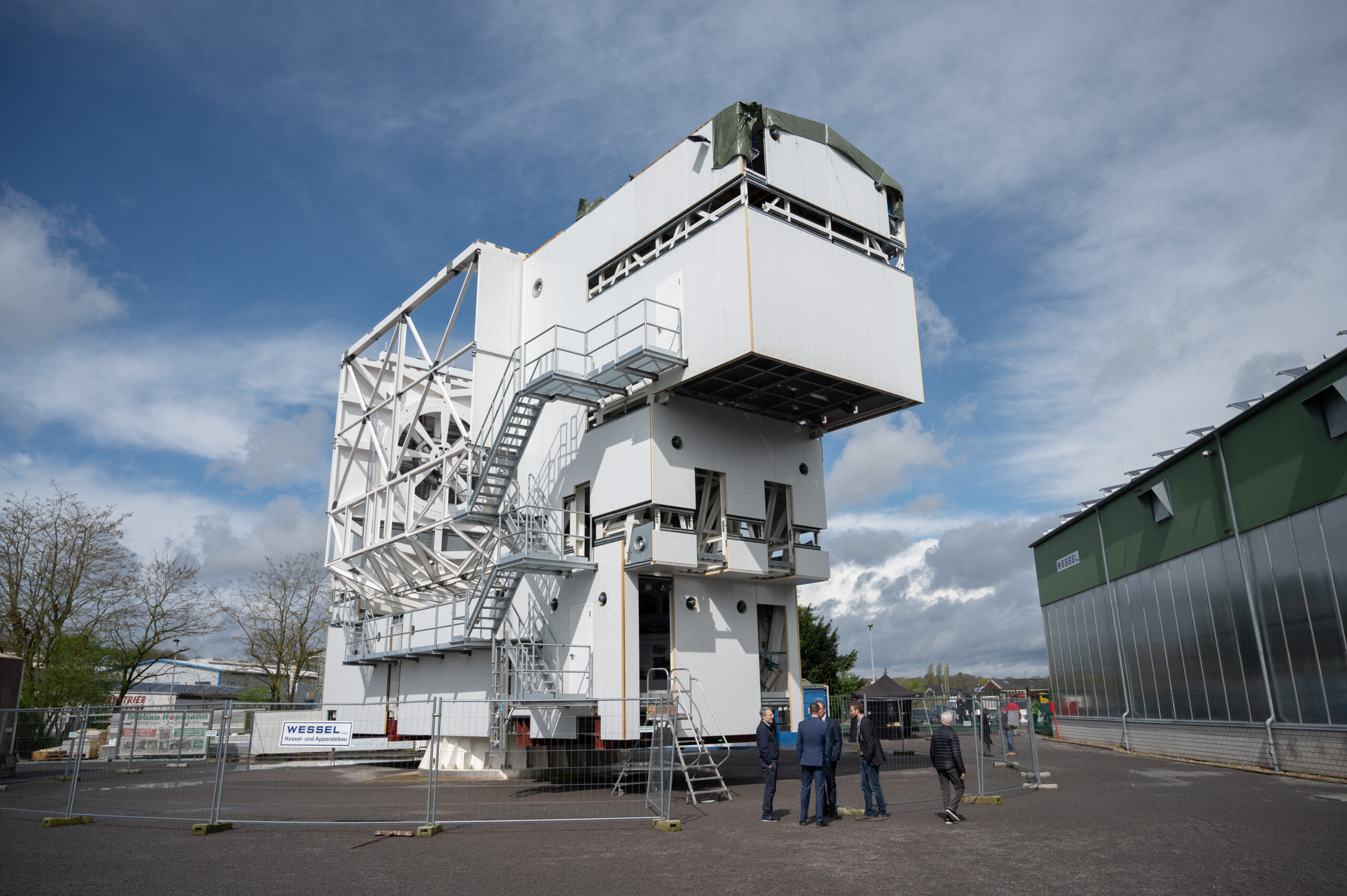
CompositesWorld: Airborne completes final delivery of CFRP mirror structures for Fred Young Submillimeter Telescope
The magazin CompositesWorld reports about the completion and structures of the FYST telescope by Airborne, featuring an off-axis Crossed-Dragone design, consisting of a parabolic primary mirror and a large concave secondary mirror, both with a diameter of roughly 6 meters. This creates a high-throughput, wide field-of-view telescope capable of mapping the sky rapidly and efficiently:
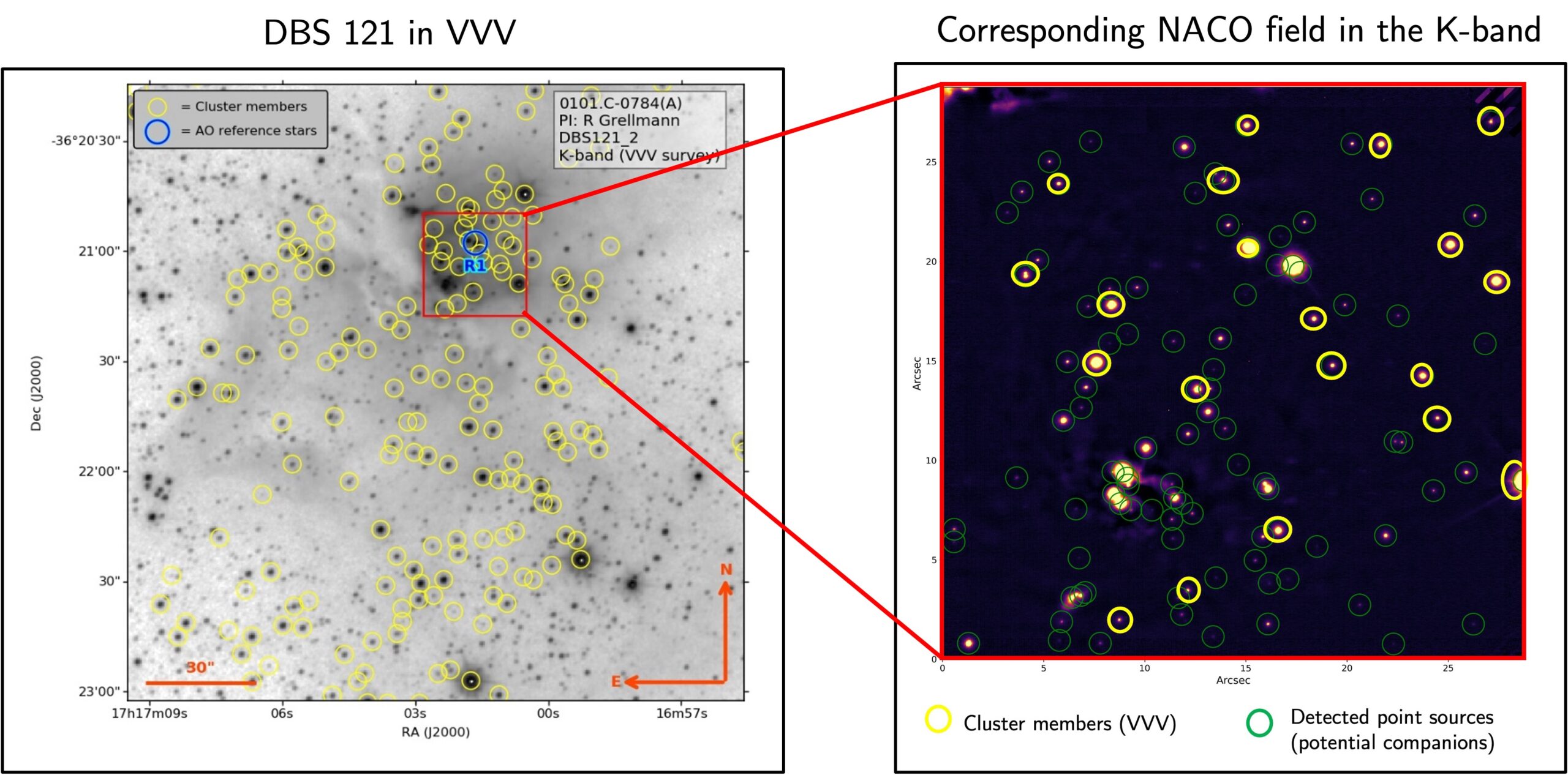
A3: Exploring the Evolution of Stellar Multiplicity in Massive Star-Forming Clusters (Emma Bordier, Chinmaya Nagar)
Understanding how stars form and evolve is one of the most fascinating challenges in astronomy. A key piece of this puzzle is the stellar multiplicity—the frequency, separations, and mass ratios of stars that form in pairs or higher-order groups. Massive stars, which make up only 0.01% of all formed stars, play a pivotal role in shaping galaxies and the universe. Understanding their life cycle—90% of which unfolds alongside at least one companion—is therefore of paramount importance. Yet, they are particularly difficult to study since they are heavily bloated in their dusty envelopes and are born in distant, dense, and young star clusters. These observational challenges leave significant gaps in our understanding of how their multiplicity evolves over time.
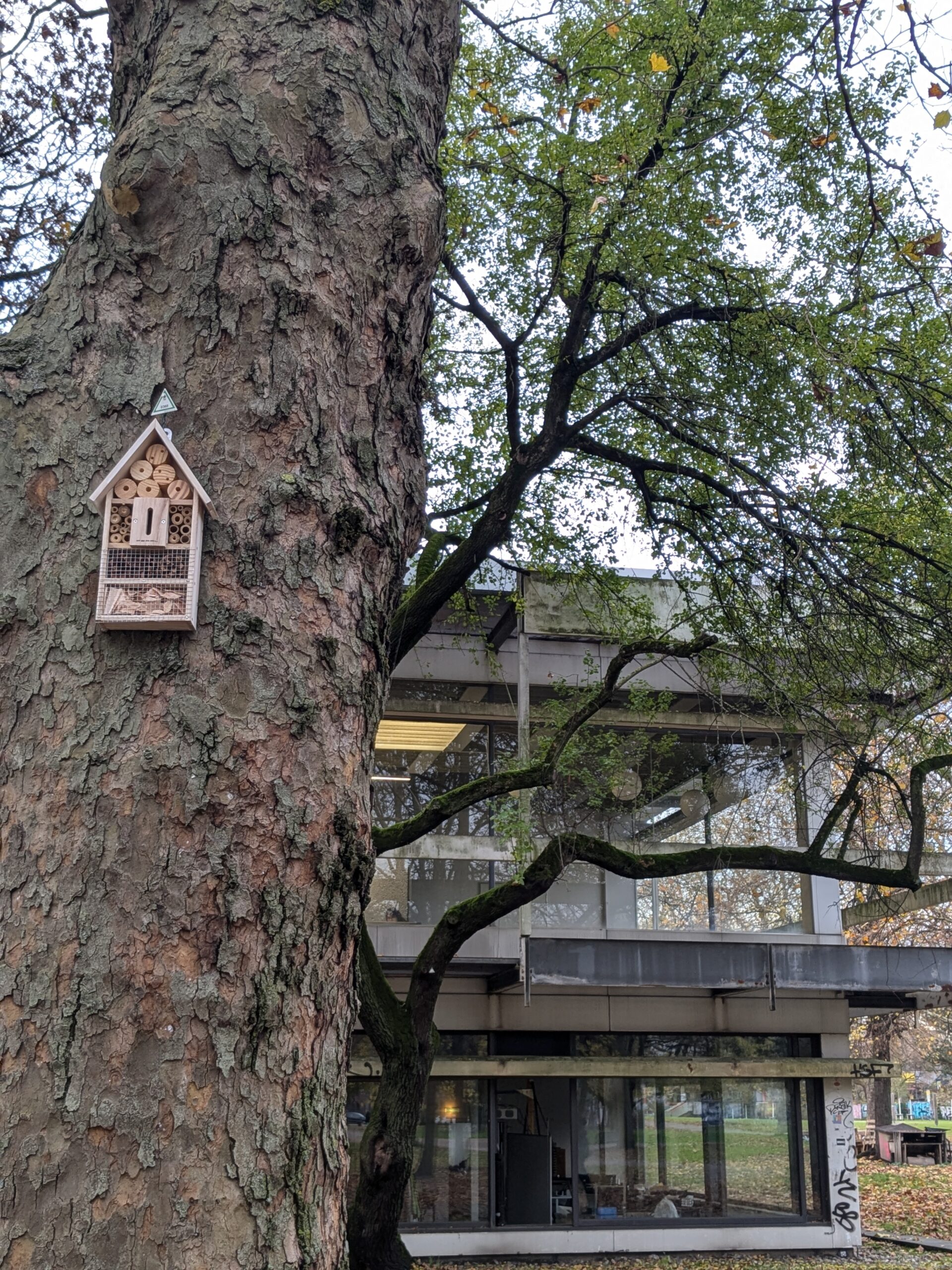
CRC1601 insect hotels are ready for moving in
The CRC’s Sustainability Board is responsible for coordinating the evaluation of the environmental impact of the CRC’s activities and proposing measures to reduce it.
In addition, the Sustainability Board organises talks and workshops for the CRC members to raise awareness of sustainability issues and establish solutions for daily work.
During the sustainability barbecue on October 17, among other topics, the University of Cologne’s sustainability strategy and the problem of conference trips were discussed. In the afternoon, several workshops took place, one of which involved participants building their own insect hotels. This Thursday, a total of seven insect hotels were put up around the physics department of the University of Cologne.
Insect hotels provide shelter and nesting facilities for a variety of insects during winter. Introducing insect hotels can help with pollination and ecosystem diversity.

The Evolution of Our Universe – Lindau Nobel Laureate Meeting Blog
As a school kid growing up in India, I was interested in science in general. When Sunita Williams, a NASA-astronaut of Indian origin, flew to space for the first time in 2006, I closely followed the news covering that event. That interest in space science stayed with me; and having finished school, it was an apt choice to apply for a bachelor’s in Engineering Physics at the Indian Institute of Space Science and Technology (IIST), followed by a master’s degree in Astronomy and Astrophysics.
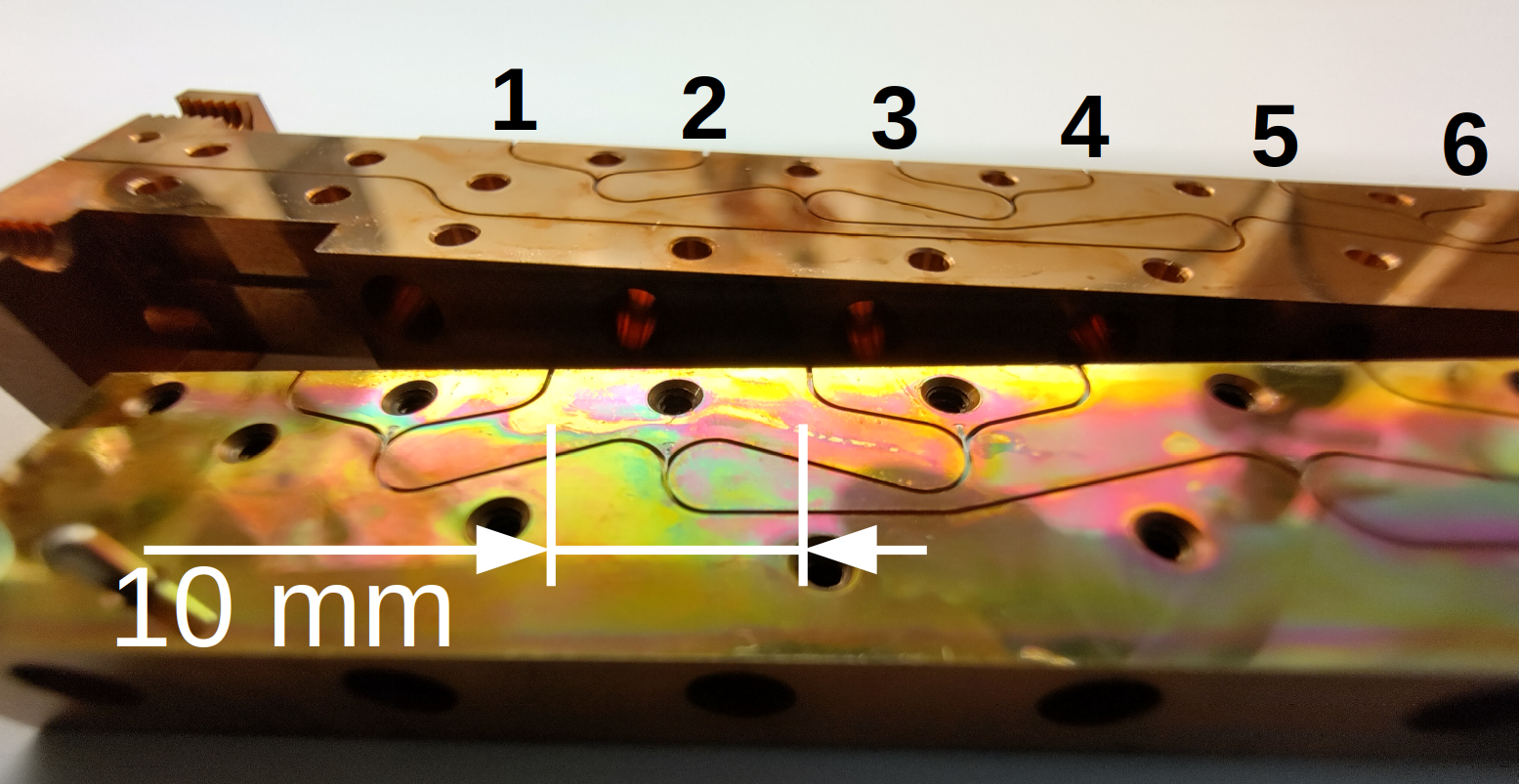
B7: 8-Port Power Divider for the CHAI Receiver (Matthias Justen)
We are currently building the CCAT Heterodyne Array Instrument (CHAI) to be operated at the FYST-telescope. CHAI is a 64-pixel high-resolution spectrometer for two frequency bands around 460 GHz (650 µm) and 800 GHz (370 µm). For optimum instrument stability, CHAI uses balanced SIS mixers, which receive their Local Oscillator (LO) signal through an input port separate from the measurement signal input.
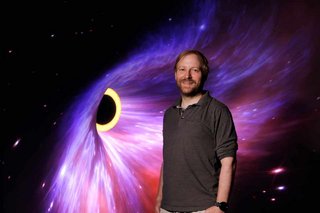
Weiteres mittelschweres Schwarzes Loch im Zentrum unserer Galaxie gefunden
Ein internationales Team von Forscher*innen unter Leitung von PD Dr. Florian Peißker hat einen Sternenhaufen in direkter Umgebung des supermassiven Schwarzen Lochs SgrA* (Sagittarius A Stern) im Zentrum unserer Galaxie untersucht und Anzeichen für ein weiteres, mittelschweres Schwarzes Loch gefunden. In unserem ganzen Universum sind trotz enormer Anstrengungen der Forschung bisher nur ungefähr zehn dieser mittelschweren Schwarzen Löcher gefunden worden. Wissenschaftler*innen nehmen an, dass sie sich schon kurz nach dem Urknall gebildet haben und durch Verschmelzung als „Samen“ für supermassive Schwarze Löcher fungieren. Die Studie wurde unter dem Titel „The Evaporating Massive Embedded Stellar Cluster IRS 13 Close to Sgr A*. II. Kinematic structure“ im Fachjournal The Astrophysical Journal veröffentlicht.
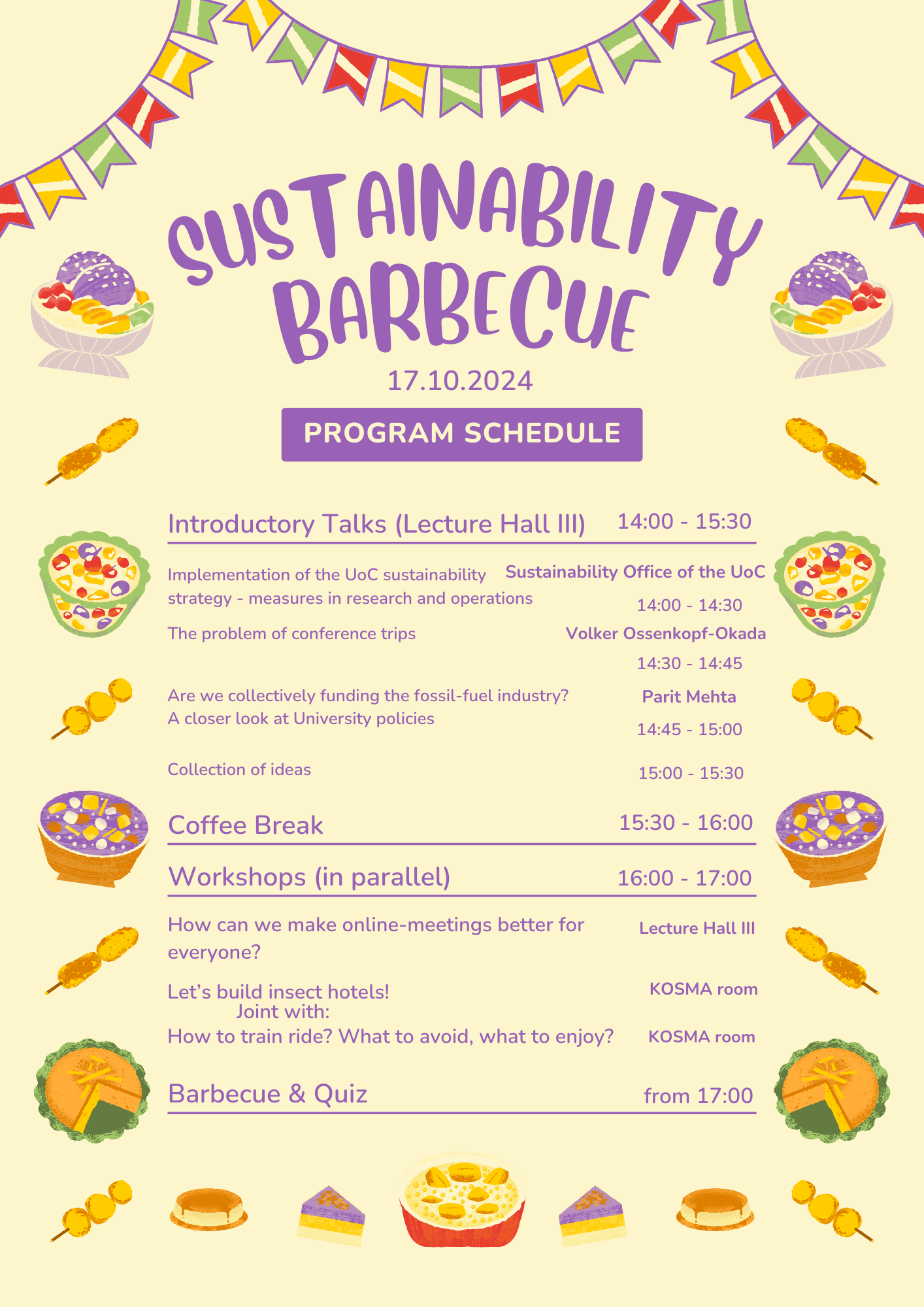
The CRC1601 devotes the afternoon of October 17 to sustainability!
Did you know that the University of Cologne has its own Sustainability Office? We have invited them to present their daily work and challenges to make our university more sustainable. Do you have an idea on how to improve our university? Then join us and take this opportunity to talk to them directly!
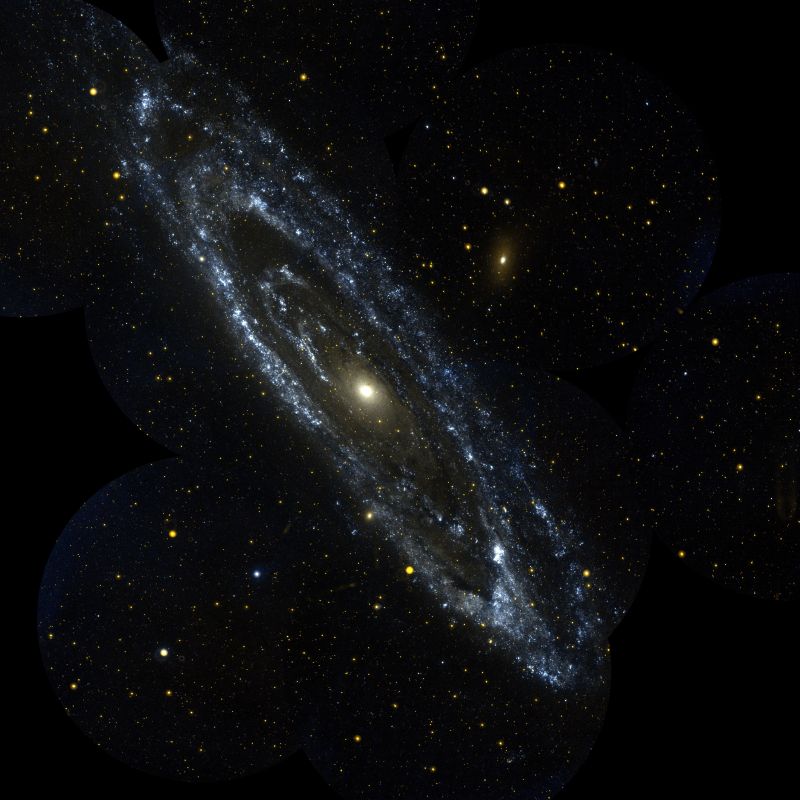
Exoplaneten – Maria Melamed (16.10.24, Schmittmann Kolleg)
Maria Melamed ist Doktorantin im Bereich Astrophysik an der Mathematisch-naturwissenschaftlichen Fakultät in Köln. In der Arbeitsgruppe von Prof. Dr. Eckhart setzt sie sich unter anderem mit schwarzen Löchern und Galaxien auseinander.
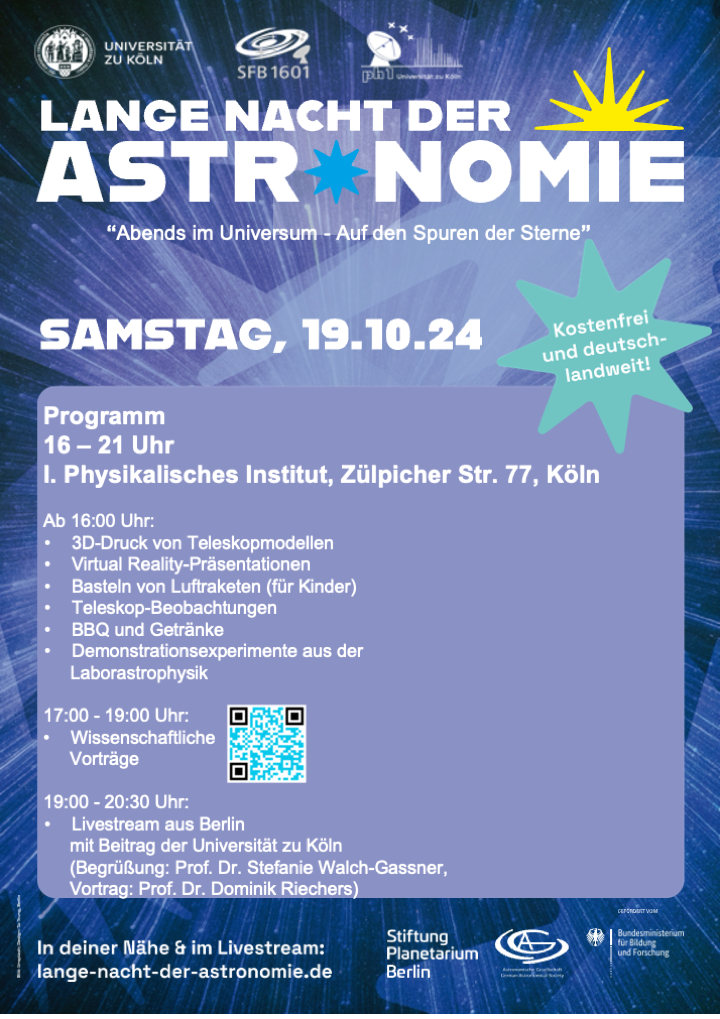
Lange Nacht der Astronomie (19.10.24, I. Physikalisches Institut)
Abends im Universum – Auf den Spuren der Sterne
Gehen Sie mit uns auf die Spuren der Sterne.
Neben Vorträgen zu aktuellen Forschungsthemen und Vorführungen von Experimenten kann mit Hilfe von VR-Brillen das Universum hautnah erlebt und das CCAT-Teleskop besucht werden.
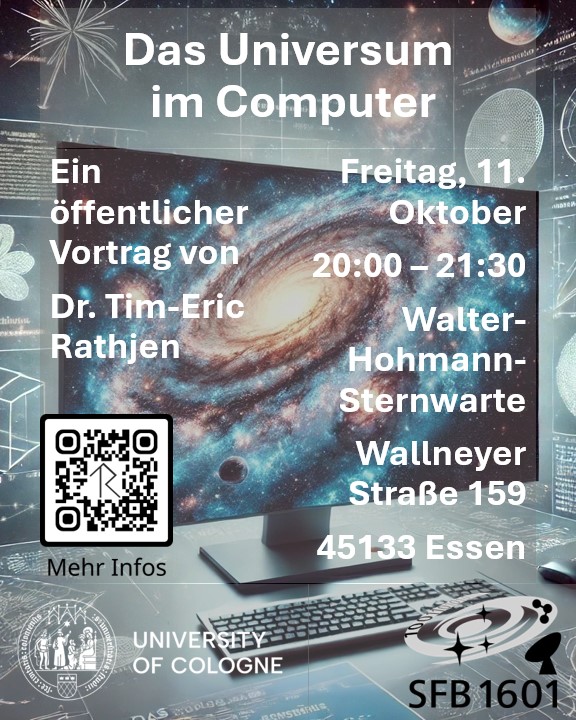
Das Universum im Computer – Tim-Eric Rathjen (11.10.2024, Walter-Hohmann-Sternwarte Essen)
Was braucht es, um Planeten, Sterne, Galaxien und das ganze Universum in einem Supercomputer zu erschaffen? Was ist das tägliche Brot eines theoretischen Astrophysikers, und warum brauchen wir so astronomisch große Computer? Diesen und weiteren Fragen geht Dr. Tim-Eric Rathjen von der Universität zu Köln auf den Grund!

Atemholen im Universum – Volker Ossenkopf-Okada (19.10.24, Schalkenmehren)
Wo kann man im Universum wandern? Auf der Erde haben wir das getan und uns auf dem Weg zum Observatorium “Hoher List” gefragt, wo wir denn noch frische Luft genießen könnten. Es gibt tausende Exoplaneten, aber könnten wir dort atmen? Die geologische Entwicklung unserer Erde hilft, diese Frage zu beantworten. Die Kombination aus Wanderung und astronomischem Beobachtungsabend erlaubt die Entstehung der Erde und die Entwicklung ihrer vulkanischen Aktivität im Kontext der Planetenentstehung und damit die besondere Stellung der Erde im Universum zu verstehen.
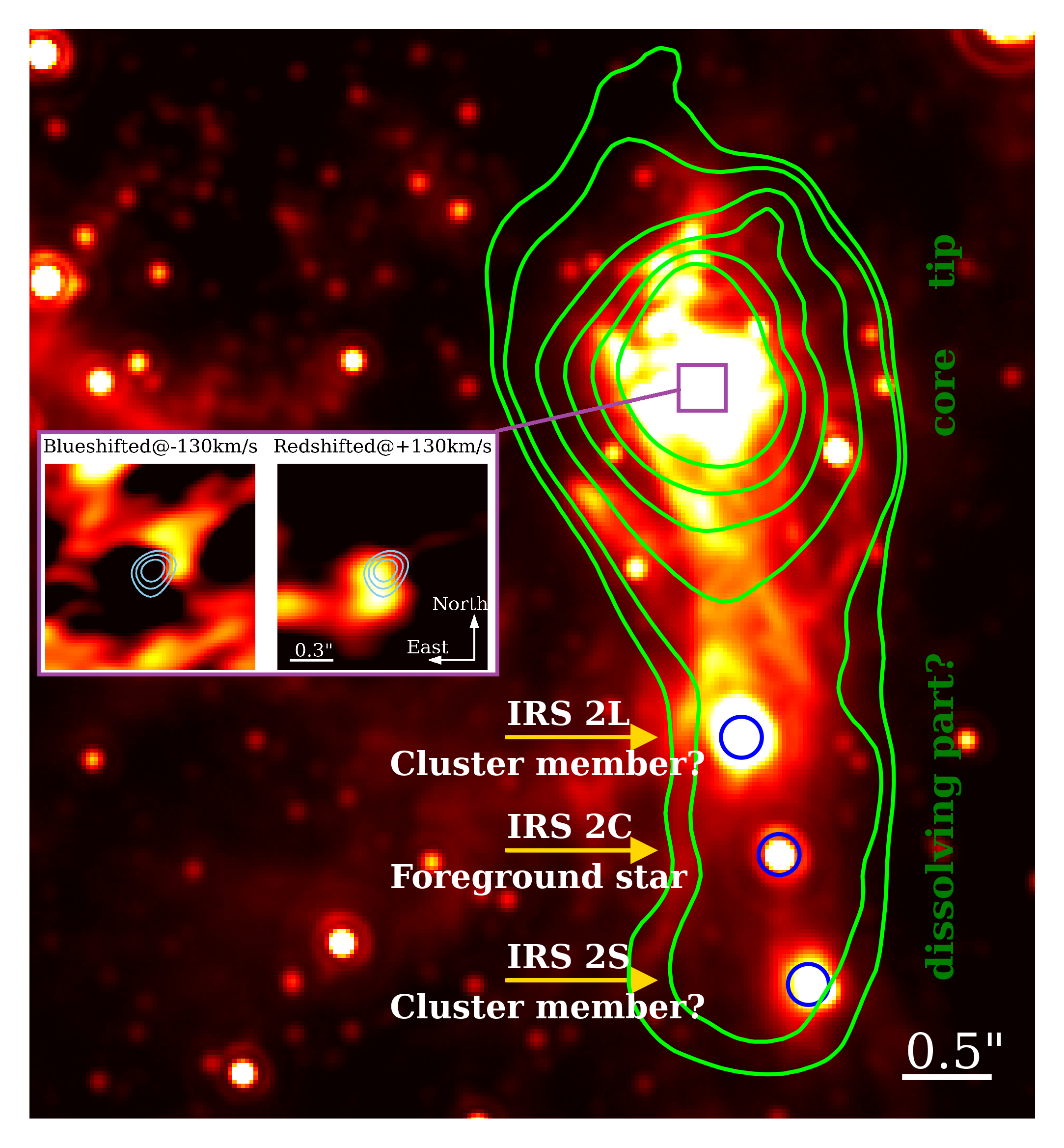
A3: An intermediate mass black hole in the center of our galaxy (Florian Peißker)
To date, the growth mechanism of supermassive black holes (SMBHs) is a scientific mystery. If we consider the accretion rate of the SMBH in our Milky Way, Sagittarius A* (Sgr A*), and the age of the universe, a discrepancy of several magnitudes in its mass opens up. One proposed idea to overcome the mismatch of accretion rate and age of the universe is merging events between intermediate-mass black holes (IMBHs) that ultimately form SMBHs. However, only around 10 IMBHs in our entire universe have been confirmed by observations, which poses a significant challenge to the theory of merging black holes.