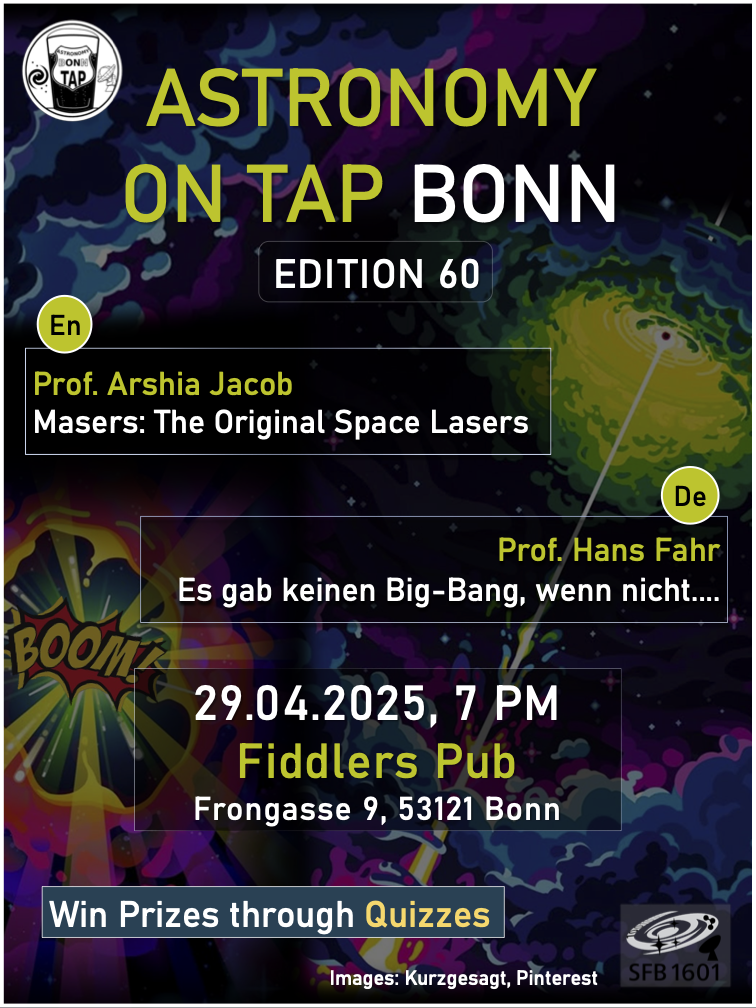
You are invited to Astronomy on Tap Bonn on April 29, 2025!
Join us for Astronomy on Tap Bonn!
You can attend exciting astronomy talks in English and German at Fiddlers Pub (Frongasse 9, Endenich) on Tuesday 29 at 19:00.
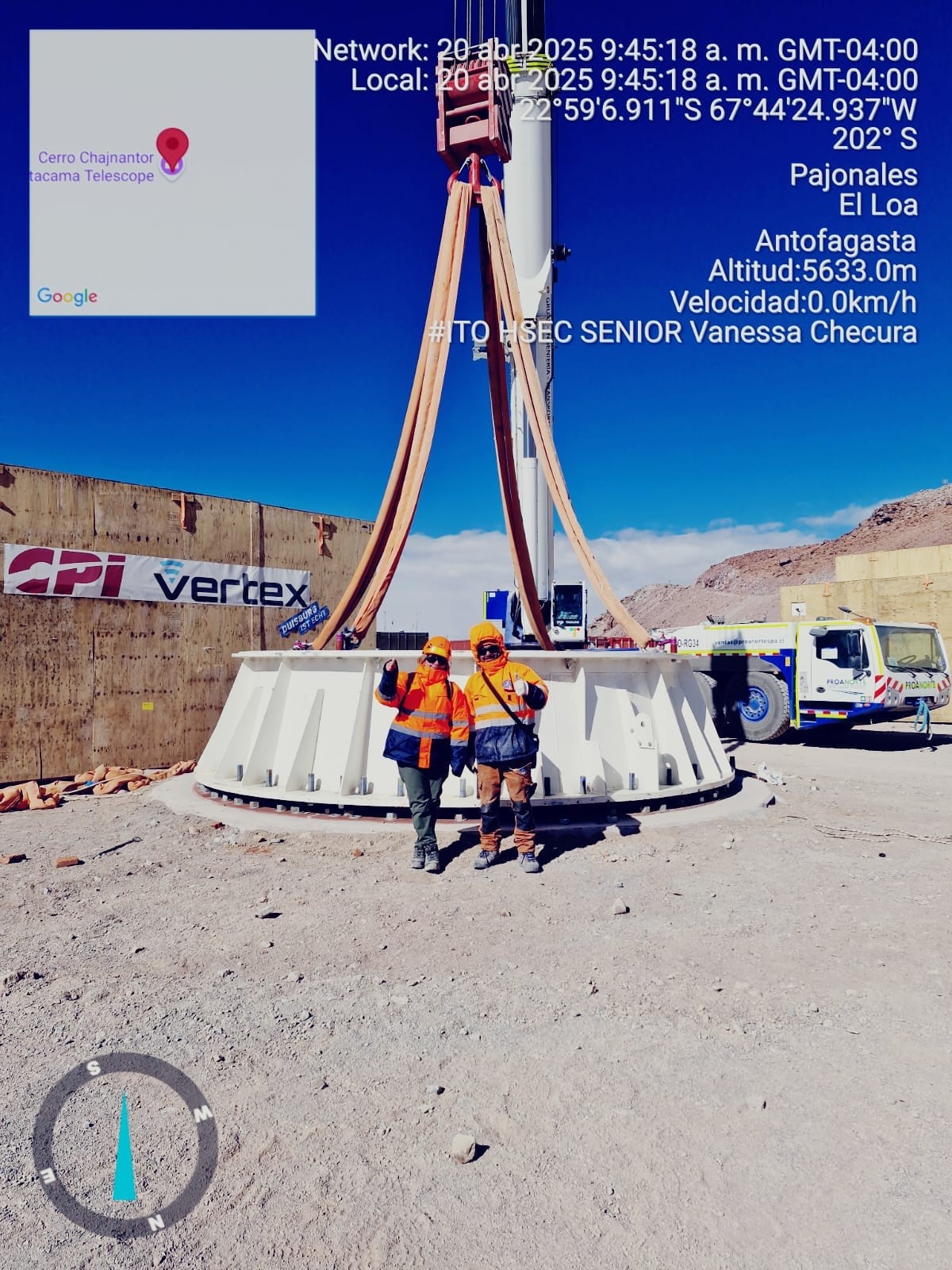
FYST assembly in Chile
FYST has reached its final destination on top of the Cerro Chajnantor! A film crew from the German television ZDF came along for the recent transport of CCAT/FYST in Chile from the harbor to the mountain.
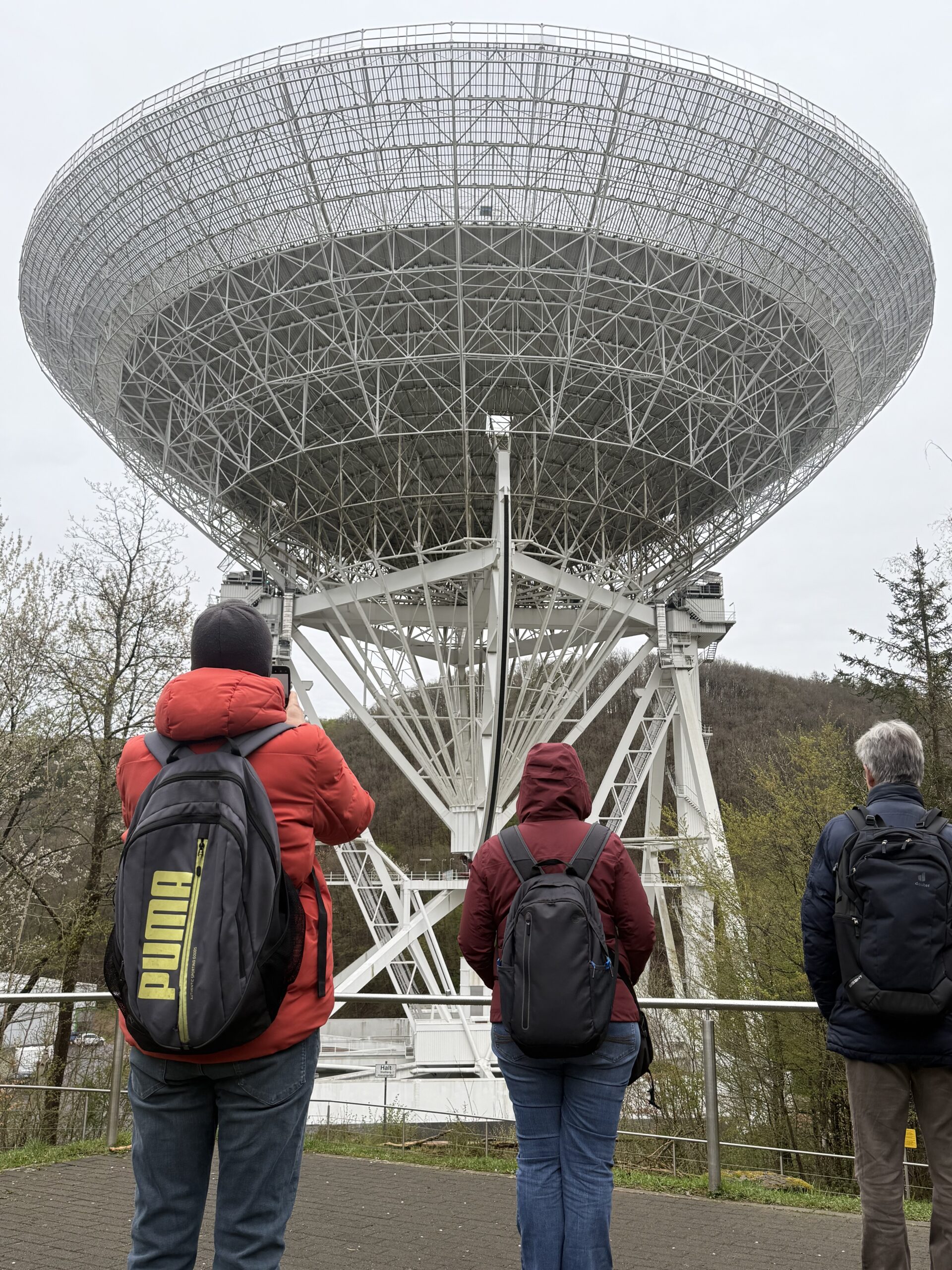
Visit to the Effelsberg Radio Telescope
With a diameter of 100 meters, the Radio Telescope Effelsberg is one of the largest fully steerable radio telescopes on earth. Members of the CRC 1601 were invited to a tour that included beside the visitors pavilion and the observation platform also the control rooms and the first platform of telescope.
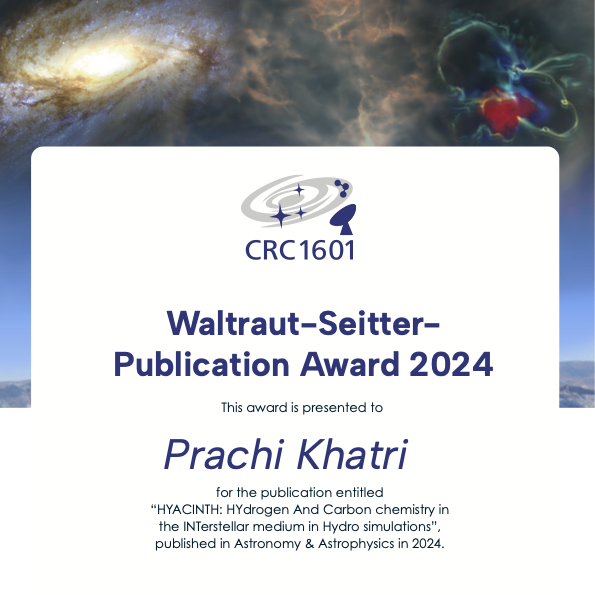
The Waltraut-Seitter-Publication award 2024 is presented to Prachi Khatri
The ceremony took place during the 3rd members assembly of the CRC 1601 in Vallendar on March 27, 2025.
Prachi Khatri: “I am grateful to the SFB Executive Board for recognising this work and my contribution. I thank my supervisors and collaborators for their guidance throughout the project. This research was supported by SFB956 and SFB1601, which enabled a productive collaboration between Cologne and Bonn. Finally, I sincerely thank abj-sensorik for creating this wonderful opportunity, it’s deeply encouraging as a young scientist.“
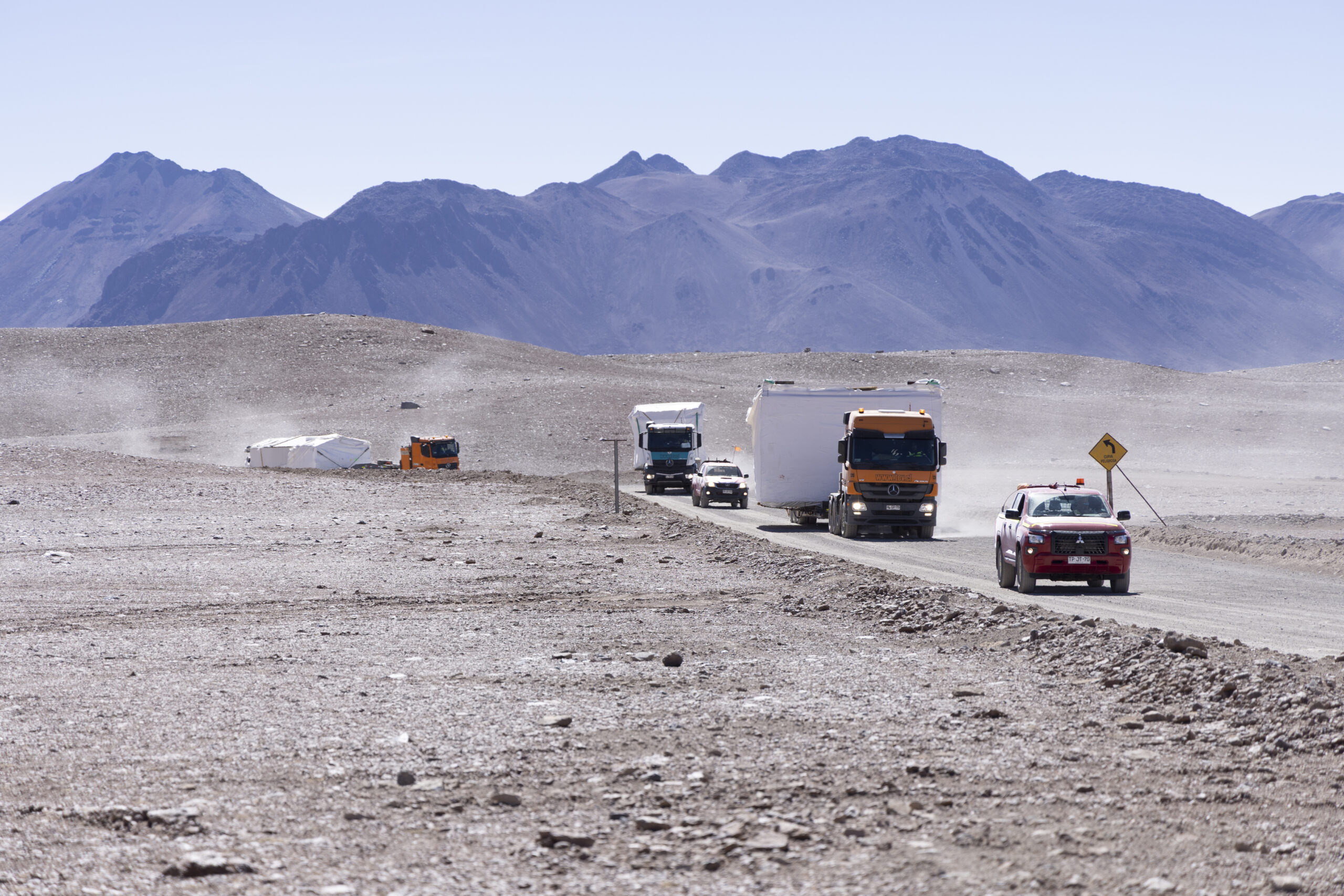
New high-powered telescope reaches Chilean peak
The Fred Young Submillimeter Telescope is now ready to be assembled at its destination in the Atacama Desert. Planned to take up operations in April 2026, it will be able to look all the way back to the Big Bang, revealing new details about star and galaxy formation.
After a six-week ocean voyage, a week spent outside Chile’s Port of Angamos waiting to offload and another week trekking through the mountains, the first major component of the Fred Young Submillimeter Telescope (FYST) has arrived at its final home: the Cerro Chajnantor mountaintop, more than 5.600 metres above sea level.
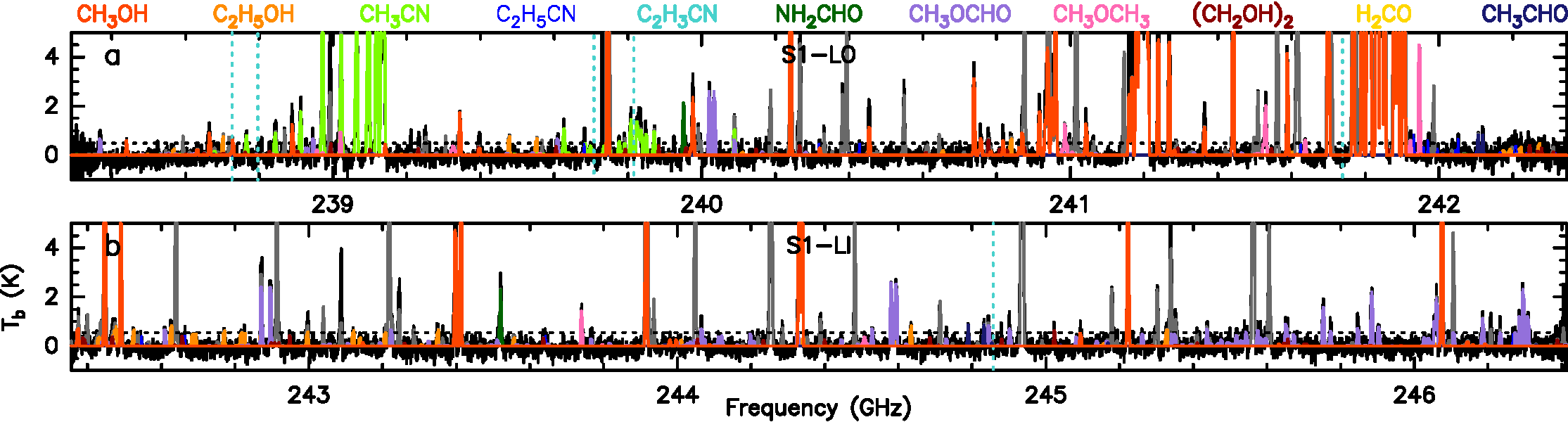
A1: Hot cores in the outer Galaxy: impact of metallicity on the formation of complex organic molecules (Youxin Wang, Arnaud Belloche)
Understanding the formation of complex organic molecules (COMs) in star forming regions is crucial for astrochemistry. Many COMs are believed to form on the surfaces of dust grains or in their ice mantles. The metallicity and dust-to-gas mass ratio in the outer Galaxy are lower than in the inner regions and are expected to influence the chemical composition of star-forming environments. To test this, we used the NOEMA interferometer to conduct a sensitive imaging spectral line survey of a hot core candidate located at a galactocentric distance of 13 kpc.
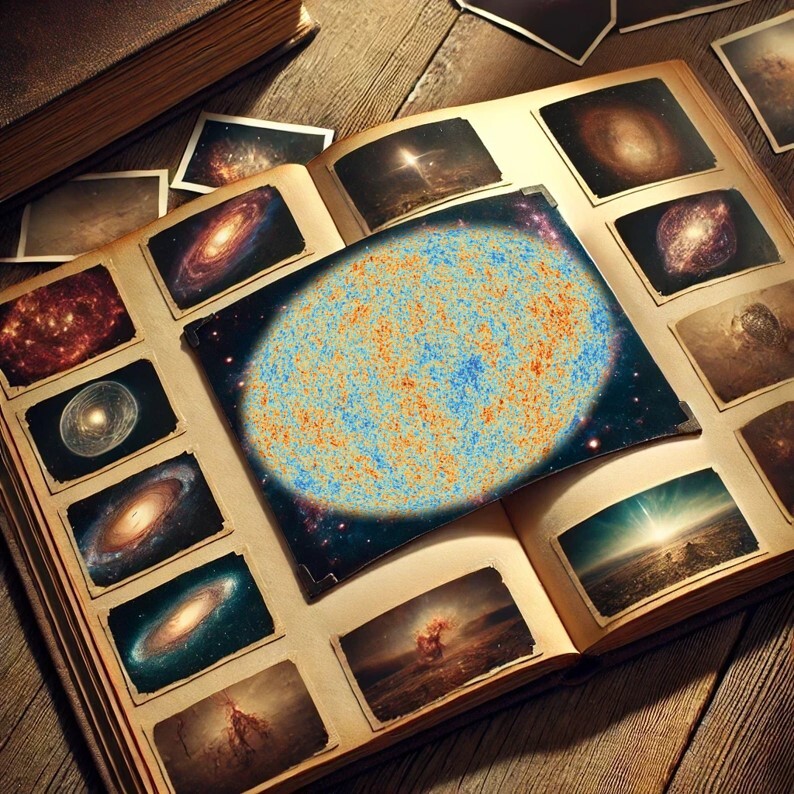
Das Babyfoto des Universums – Tim-Eric Rathjen (Walter-Hohmann Sternwarte Essen, 04.04.25)
Die kosmische Hintergrundstrahlung zeigt uns das Universum, wie es nur 380.000 Jahre nach dem Urknall aussah – ein faszinierender Blick auf das „Babyfoto“ des Kosmos. In diesem Vortrag erklärt Dr. Tim-Eric Rathjen von der Universität zu Köln, was uns diese Strahlung über die Anteile von normaler Materie, dunkler Materie und dunkler Energie verrät und wie wir daraus die heutigen kosmischen Strukturen ableiten können. Ein Vortrag für alle, die sich fragen, wie wir das Unsichtbare sichtbar machen und das Gewicht des Universums bestimmen.
The colloquium program for the summer semester 2025 is online. https://sfb1601.astro.uni-koeln.de/events/sfb1601-colloquium/
We welcome you every Tuesday at 2 pm.
The colloquia will start with a coffee/tea reception at 01:45 pm in front of the lecture hall.
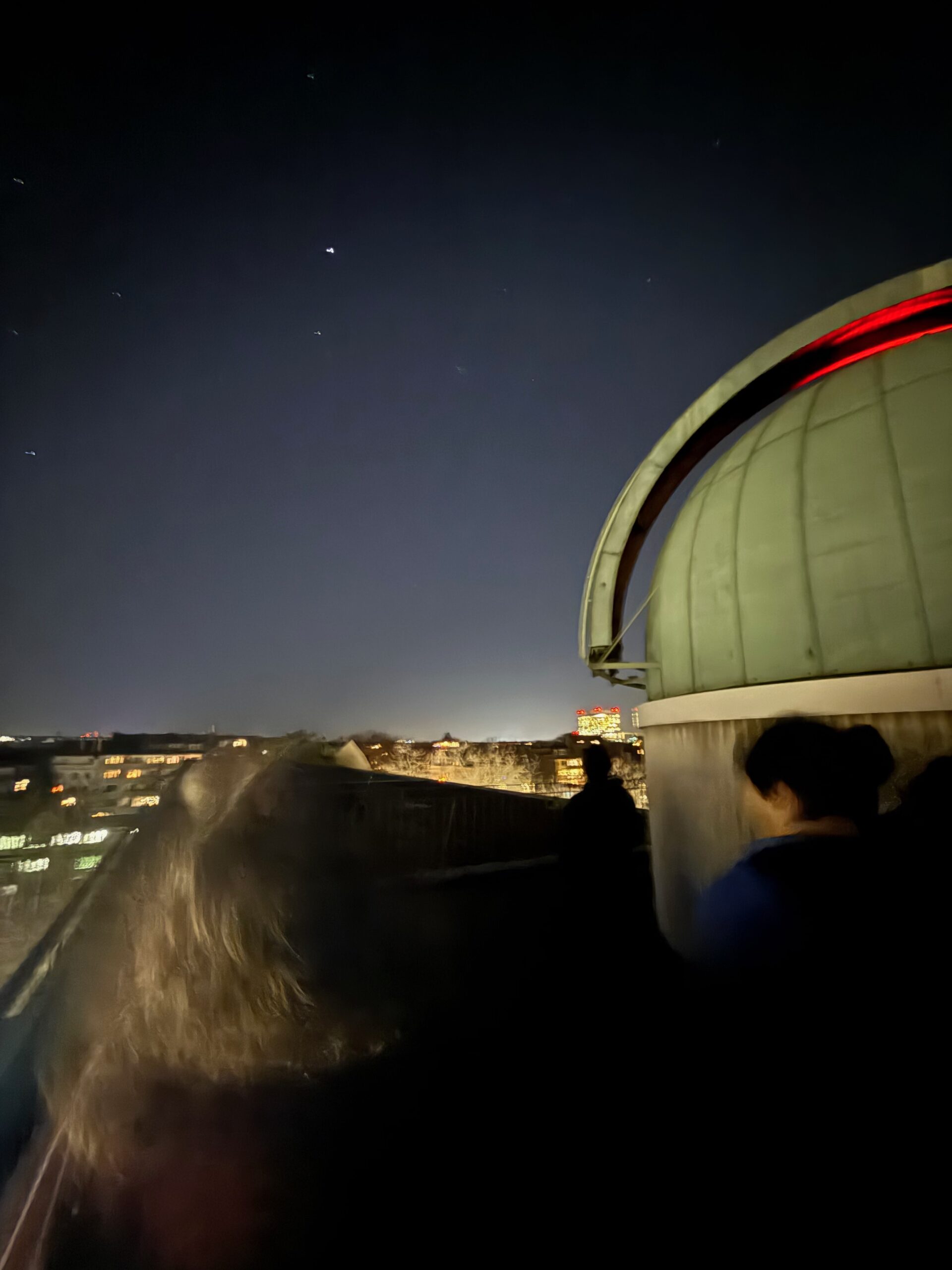
CRC1601-visit to the Public Observatory Cologne
Members of the CRC1601 visited to Public Observatory Cologne on March 19, 2025.
Having a clear sky, we were able to observe several stars and nebulae
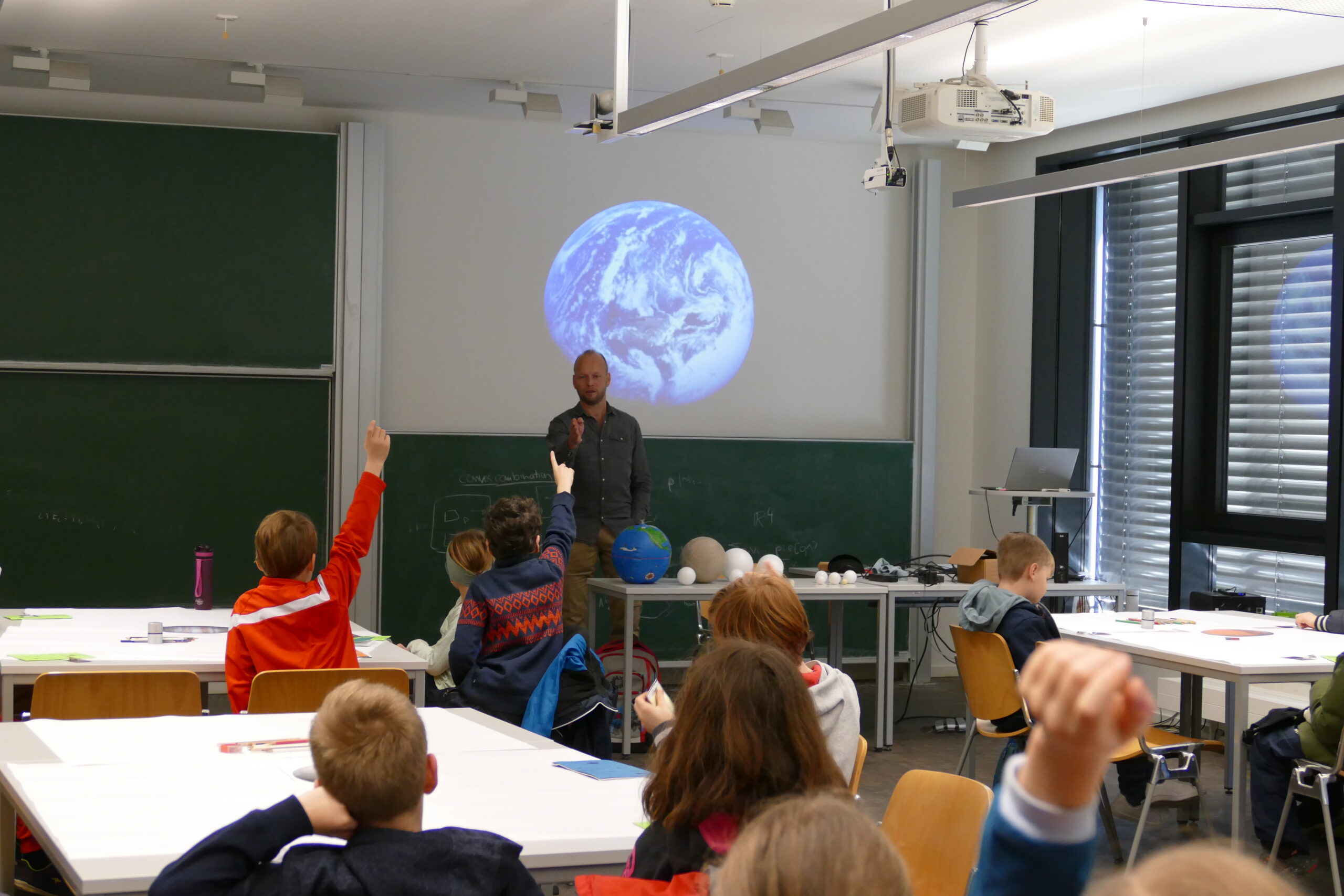
Nachrichten vom kleinen blauen Punkt: Was sollten wir einer Rakete mitgeben? – Volker Ossenkopf Okada (29.03.25, Kölner Kinderuniversität)
Du bist neugierig und interessierst Dich für Wissenschaft? Du möchtest einfach mal eine Universität erleben? Du bist in der 3. bis 6. Klasse? Dann bist Du bei der KölnerKinderUniversität genau richtig! Hier kannst Du Wissenschaft und Forschung kennenlernen, Uni-Luft schnuppern, Fragen stellen und experimentieren. Spaß und Neugier stehen bei uns im Vordergrund. Viele Wissenschaftler*innen aus unterschiedlichsten Bereichen der Universität halten die Lehrveranstaltungen extra für Kinder. Dabei ist egal, auf welche Schule Du gehst oder welche Noten Du hast.

Megaconstellations: Fluch oder Segen – Volker Ossenkopf Okada (21.03.2025, Physikalischer Verein Frankfurt)
Weltweit schnelles, stabiles und erschwingliches Internet – das wird
mit den Megakonstellationen wie Starlink derzeit möglich. Polare Regi-
onen werden erstmals ebenfalls gut abgedeckt. Aber was ist dafür nö-
tig? Systeme mit tausenden Satelliten bedrohen andere Raumfahrt-
anwendungen, liefern das Potenzial für eine neuerliche Zerstörung
unserer Ozonschicht und machen bestimmte optische und radioastro-
nomische Untersuchungen unmöglich. Was wären Alternativen?
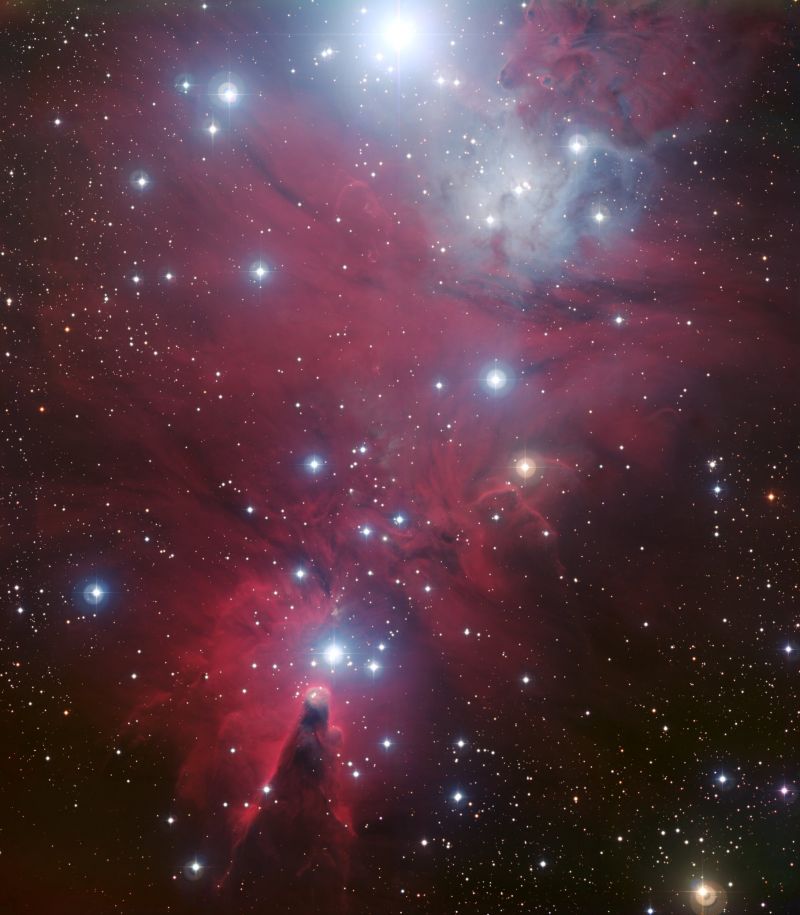
Sternenstaub auf Reisen – Stefanie Walch-Gassner (19.03.25, Planetarium Bochum)
Planetarium Bochum, 19. März, 20:00 Uhrhttps://www.planetarium-bochum.de/de_DE/program/sternenstaub-auf-reisen.1369612
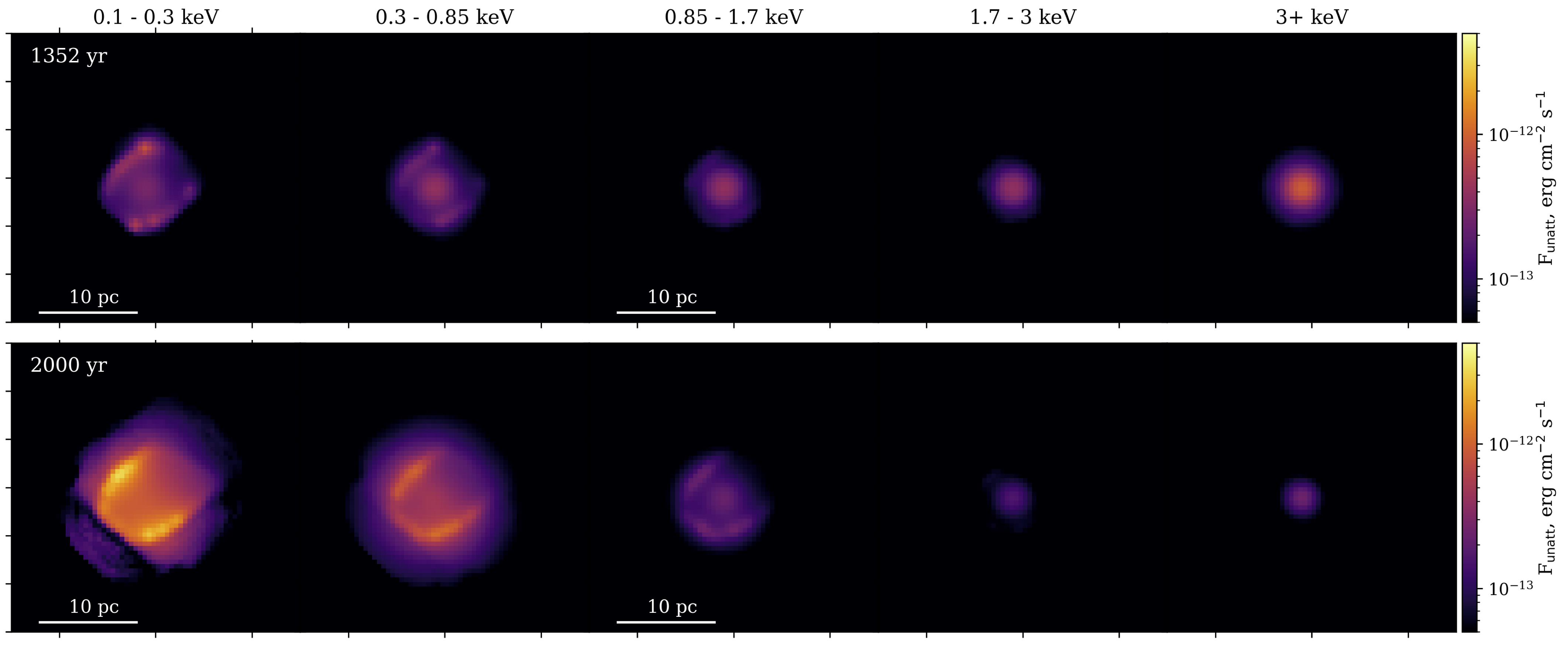
B5: Modelling the environment that shapes an RCW 103 supernova remnant (Ekaterina Makarenko)
Massive stars (M > 8 solar masses) significantly affect the surrounding medium during their life through stellar winds and ionising radiation. These processes shape the circumstellar medium (CSM) into complex structures, including cavities. When a massive star explodes as a supernova (SN), the resulting shock wave expands into this non-uniform medium, generating bright X-ray emission. As a result, X-ray observations of SN remnants (SNRs) provide insights into the stellar evolution of a progenitor massive star and the interstellar medium (ISM) nearby.
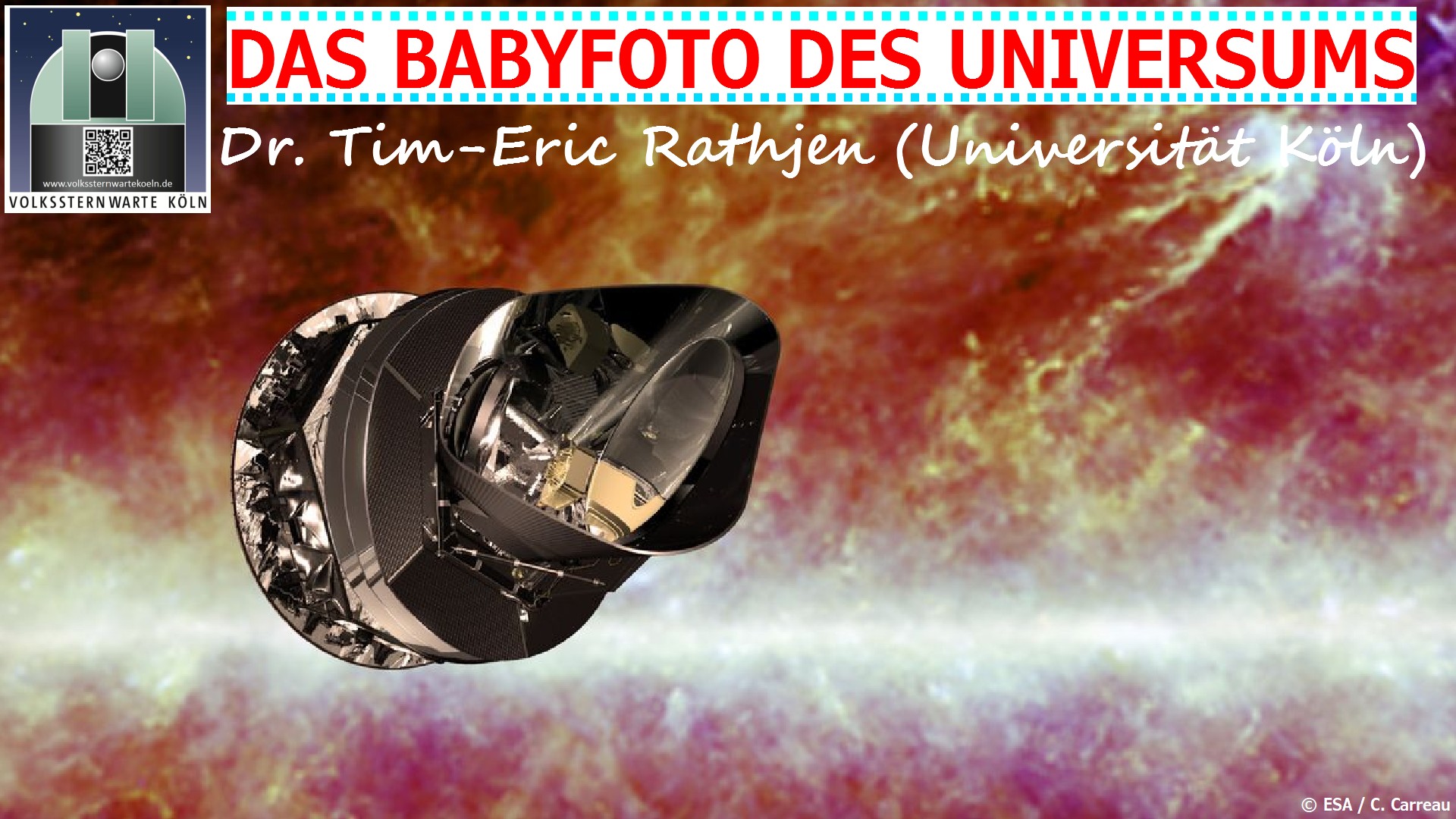
Das Babyfoto des Universums – Tim-Eric Rathjen (Volkssternwarte Köln, 14.03.25)
Die kosmische Hintergrundstrahlung wird oft als das „Babyfoto“ des Universums bezeichnet. In diesem Vortrag reisen wir fast 14 Milliarden Jahre zurück, um zu verstehen, wie diese Strahlung entstand und was sie uns heute über die Zusam- mensetzung des Universums verrät. Wir werden beleuchten, wie Astronomen und Physiker mit dieser „Momentaufnahme“ die Anteile von normaler Materie, dunkler Materie und dunkler Energie bestimmen konnten und welche Rolle diese mysteriösen Bestandteile für die Entwicklung des Universums spielen. Dr. Tim- Eric Rathjen von der Universität zu Köln gibt einen anschaulichen Einblick in die Bestandteile unseres Universums und die spannende Wissenschaft dahinter.
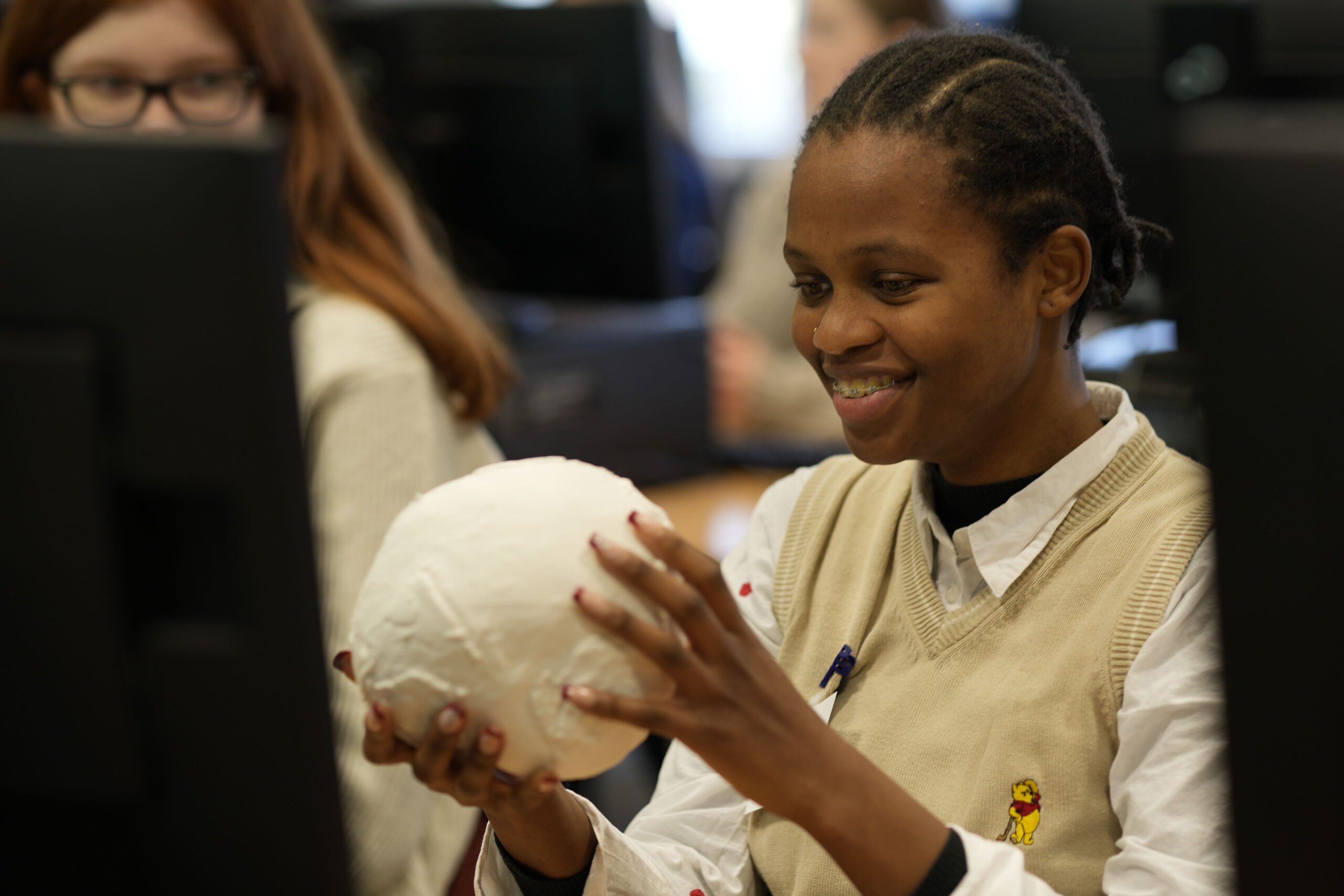
MINT-Tag für Schülerinnen: Hands-on-Einblicke in naturwissenschaftliche Studiengänge
Getting more girls interested in studying mathematics and science: that is the aim of STEM Day at the University of Bonn. Numerous departments – from computer science, mathematics and physics to chemistry, geodesy, astronomy, meteorology and geophysics – offered schoolgirls a day-long opportunity to get to know their subjects and ask questions about studying.
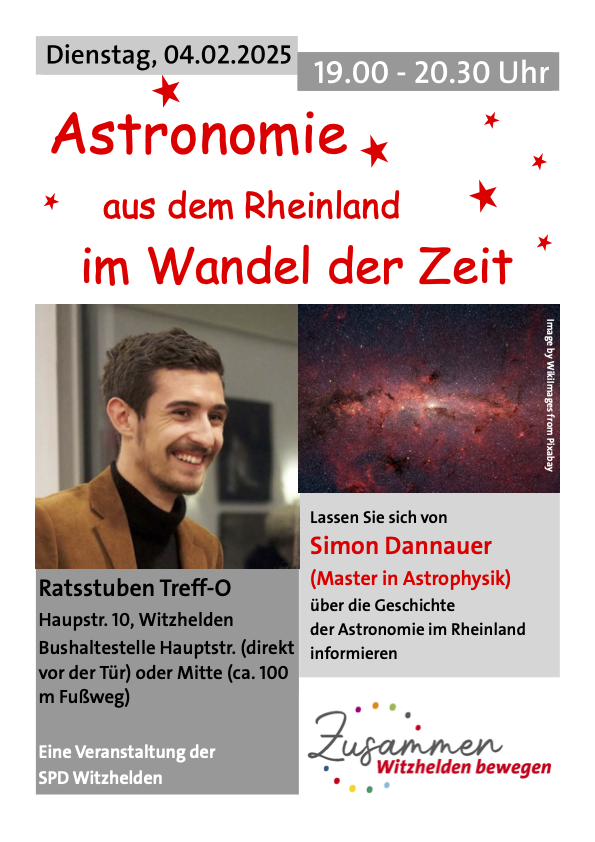
Astronomie aus dem Rheinland im Wandel der Zeit – Simon Dannhauer (4.2.25)
Astronomie im Rheinland – Faszination über Jahrhunderte Simon Dannhauer, Doktorand der Astrophysik, hat auf Einladung der SPD Witzhelden gut 20 Menschen von jung bis alt begeistert.
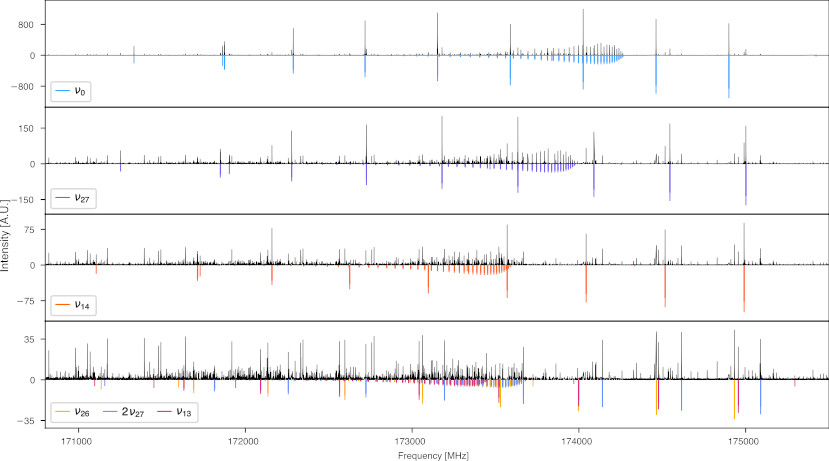
A4: Deciphering the Rotational Fingerprints of Vibrational States (Luis Bonah)
We analyze molecules in the laboratory to find their spectroscopic “fingerprints”, which astronomers can use to identify the molecules in space. Unlike a human fingerprint, the molecular fingerprint also reveals physical properties of the molecules’ surroundings. The temperature of the astronomical regions can be determined by comparing the relative intensities of different transitions of a molecule. In an ideal case, the transitions belong to different vibrationally excited states of the molecule. Therefore, analyzing also the rotational spectra of vibrationally excited states, the so-called vibrational satellites, in the laboratory is important. However, due to the higher vibrational energy, their population usually is very much lower compared to the ground vibrational state making it harder to find their patterns in the spectrum.
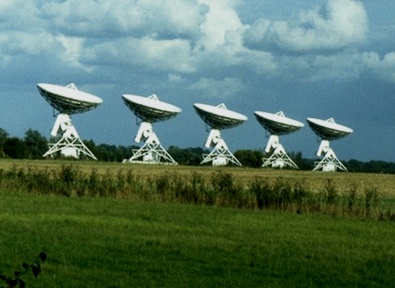
Bau eines Radioteleskops – Urs Graf & Markus Röllig (15./16.02.25, Physikalischer Verein Frankfurt)
Nach einführenden Vorträgen in die Astronomie und die Besonderheiten der Radioastronomie, sowie der dazugehörigen Messtechnik, widmen wir uns dem Bau eines einfachen Radioteleskops. JederTeilnehmende baut sein eigenes Gerät zur eigenen weiteren Verwendung. Mit dem Gerät wird es möglich sein, eine Spektrallinie von atomarem Wasserstoff bei einer Wellenlänge von 21 cm spektroskopisch zu untersuchen. Wir werden die Emission des Wasserstoffgases in der Milchstraße detektieren und über die spektrale Variation die Geschwindigkeitsunterschiede der verschiedenen Bereiche unserer Galaxie sehen.