The Colloquium program for WS24/25 is online!
You are invited to join the SFB 1601 colloquium every TUESDAY at 2 pm. Check this page https://sfb1601.astro.uni-koeln.de/events/sfb1601-colloquium/ for details.
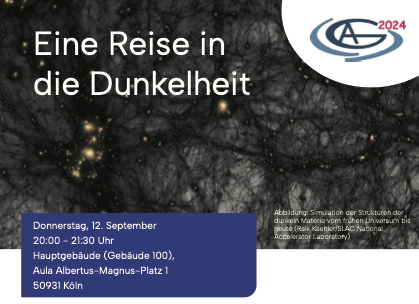
Eine Reise in die Dunkelheit – Andrina Nicola (12.09.24, Universität zu Köln)
Das Universum besteht zu 95 Prozent aus zwei mysteriösen, unsichtbaren Komponenten, der Dunklen Materie und der Dunklen Energie. Eines der Hauptziele der Kosmologie ist es, diesen Bestandteilen auf die Spur zu kommen und ihre Eigenschaften einzugrenzen. In diesem Vortrag werde ich die zugrundeliegenden Methoden erläutern und einen Überblick über die Durchmusterungen geben, die uns einen neuen Blick und neue Erkenntnisse über unser Universum geben werden.
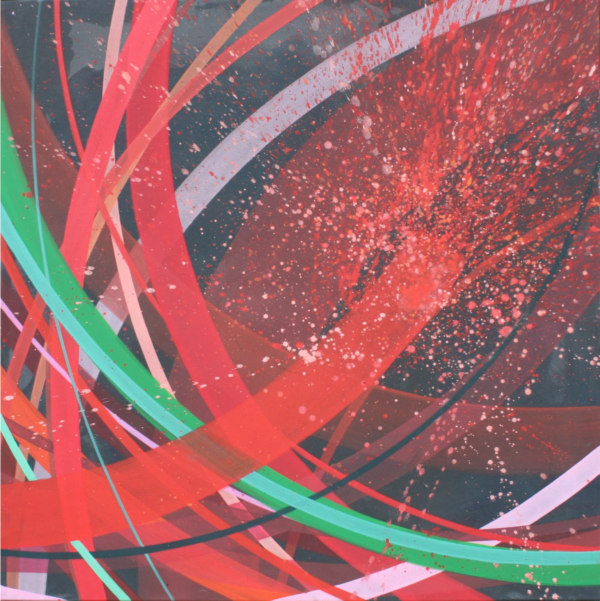
Space Debris – Art Exhibition by Iris Nitzl (09-13.09.24, University of Cologne)
Space Debris” shows lanes of debris found in the earth’s orbits – more than 130 million pieces.
According to the IADC a critical point is reached (Kessler syndrome) and a chain reaction of collisions begins causing more and more garbage objects.
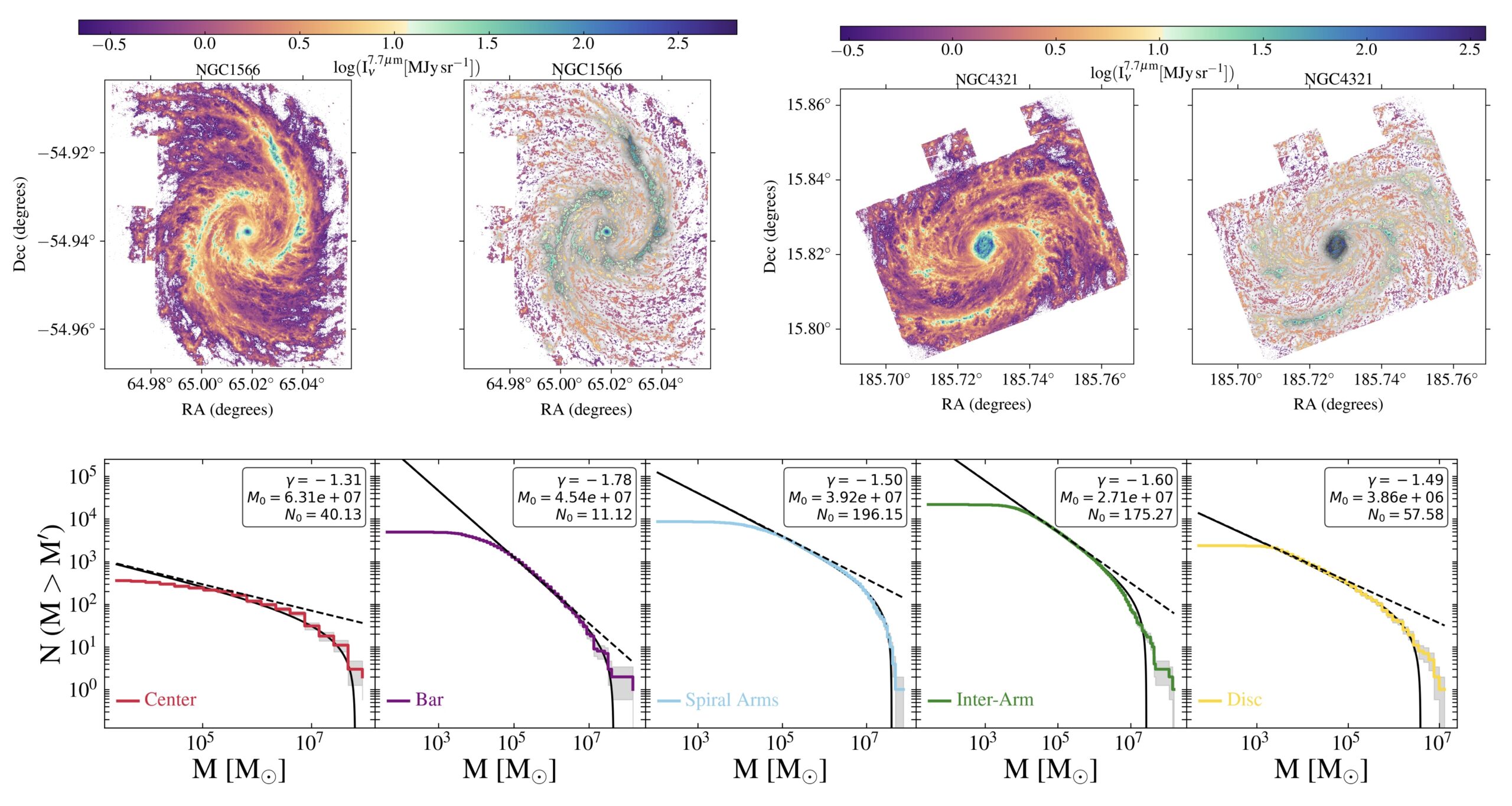
B3: PHANGS-JWST: Molecular cloud identification using 7.7μm MIRI data (Z. Bazzi, D. Colombo, F. Bigiel)
Stars form within molecular clouds, dense regions of cold gas primarily composed of molecular hydrogen. These clouds provide the necessary conditions for the formation of stars, including low temperatures and high densities, which allow gravitational forces to overcome thermal pressure and initiate the collapse of gas. To fully understand the process of star formation and therefore the evolution of galaxies, it is crucial to study the properties of molecular clouds—such as their mass, density, distribution, and relation to the galactic environment.
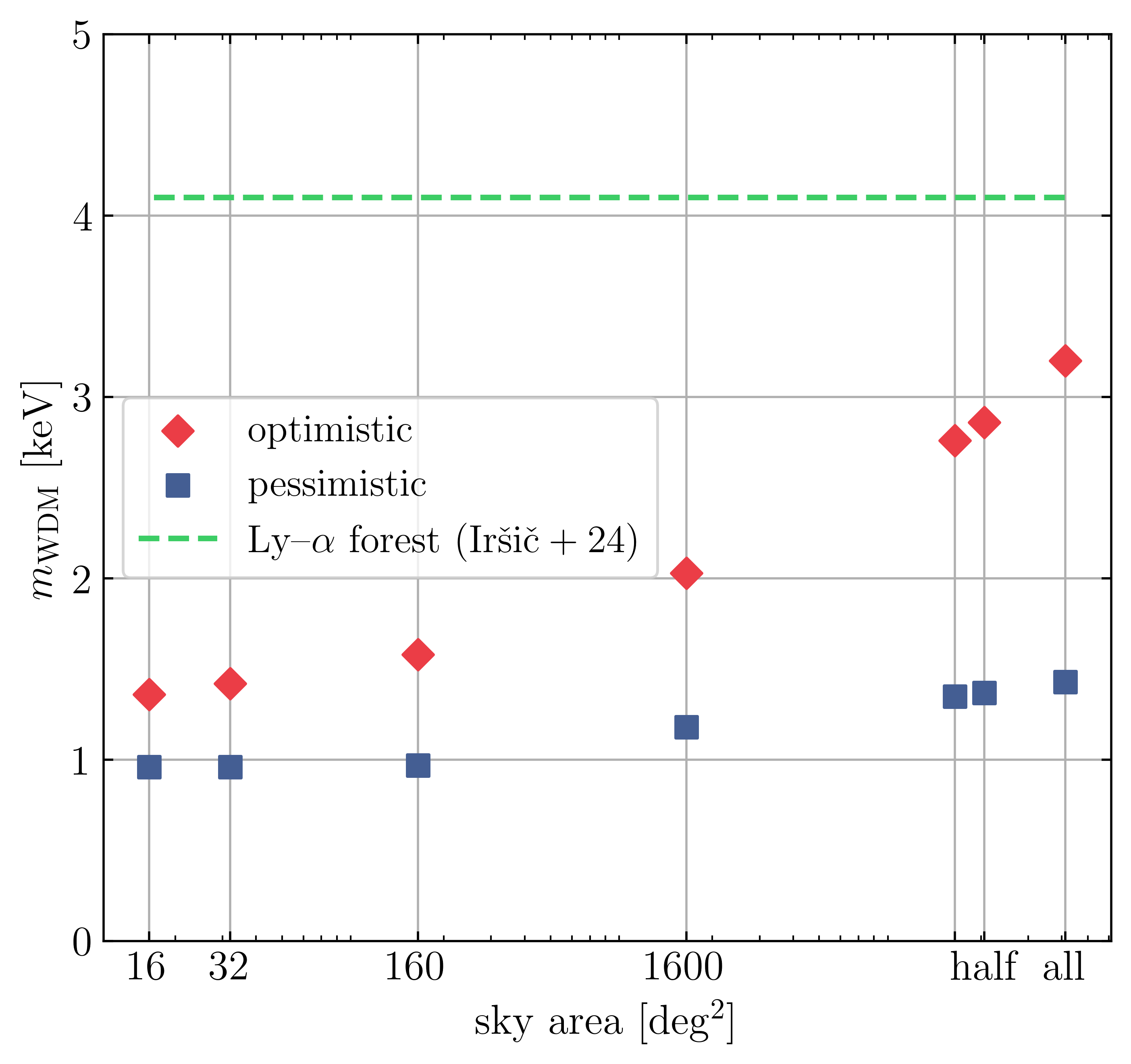
C6: Constraining warm dark matter with intensity mapping of the [CII] fine-structure line (Elena Marcuzzo)
Line Intensity Mapping (LIM) is an emerging technique in radio-astronomy that scans vast fractions of the sky with a large beam and detects the integrated emission of all sources along the line of sight without resolving individual objects. This approach enables probing the high-redshift Universe including the contribution from intrinsically faint sources that traditional surveys miss due to their flux-limit thresholds. These peculiarities make LIM an ideal tool to probe the nature of dark matter (DM).
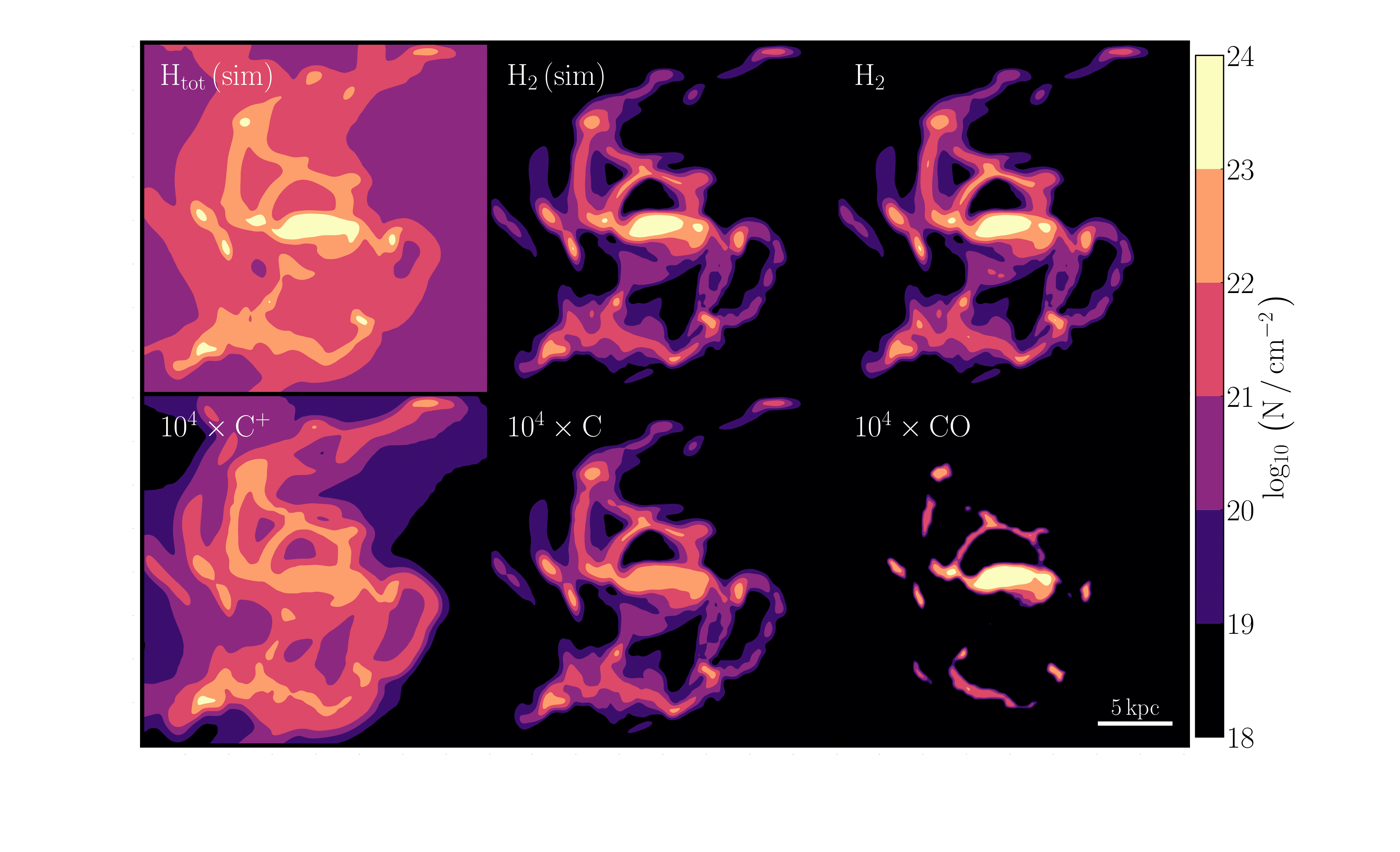
C5: HYACINTH – A New Model for Molecular Hydrogen and Carbon Chemistry in Cosmological Simulations (Prachi Khatri)
Modelling the molecular gas content of galaxies is a highly non-linear, multi-scale problem in astrophysics. On one hand, it is necessary to simulate galaxies in realistic environments as they are affected by outflows and gas accretion from the cosmic web. On the other hand, molecular-cloud chemistry is regulated by conditions on sub-parsec scales.
Science Communication Seminar
Our science is often not visible to the public because we don’t know how to present in properly.
With the help of the UoC press department we are aiming to change that.
Superschnelle Babysterne flitzen wie ein Bienenschwarm um Schwarzes Loch
Astronomische Beobachtungen zeigen, dass sich neu entdeckte Babysterne in der Umgebung von Sagittarius A*, dem Schwarzen Loch im Zentrum unserer Galaxie, anders verhalten als erwartet: Sie beschreiben ähnliche Bahnen wie bereits bekannte Hochgeschwindigkeitssterne und ordnen sich in einem bestimmten Muster um das Schwarze Loch an. Die Studienergebnisse deuten darauf hin, dass Sgr A* die Sterne zu bestimmten Anordnungen veranlasst. Die Studie wurde unter dem Titel „Young Stellar Objects in the S-cluster: The Kinematic Analysis of a Sub-population of the Low-mass G-objects close to Sgr A*“ in der Fachzeitschrift Astronomy & Astrophysics veröffentlicht. Beteiligt waren Forscher*innen der Universität zu Köln, der Masaryk-Universität in Brünn (Tschechien), der Karls-Universität in Prag (Tschechien), der Akademie der Wissenschaften der Tschechischen Republik und des Max-Plack-Instituts für Radioastronomie in Bonn.
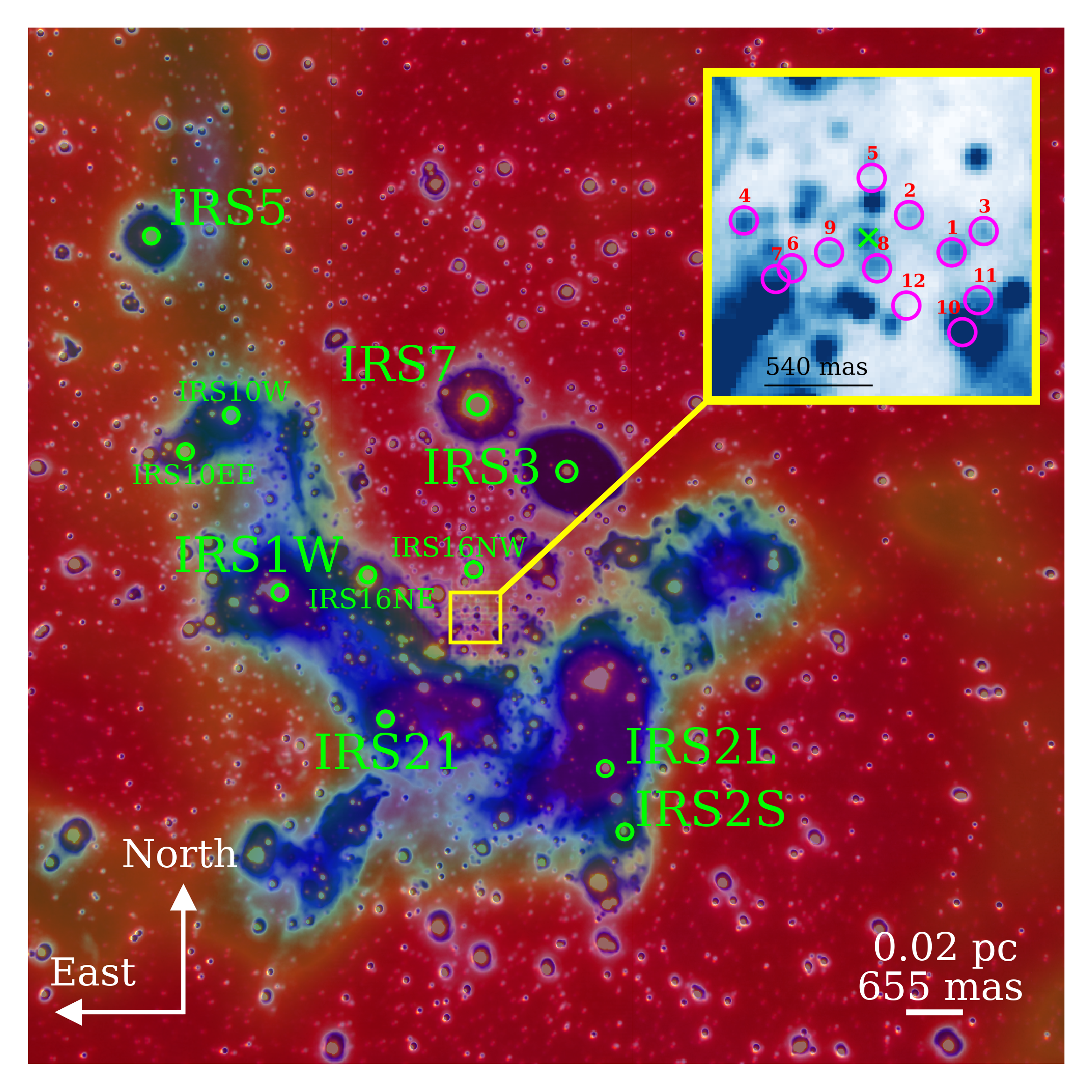
An unexpected observed orbital pattern of candidate Young Stellar Objects close to the supermassive black hole
The Near- and Mid-infrared observation of dusty sources in the S cluster, which harbors the supermassive black hole in the center of our galaxy, Sgr A*, is accompanied by a discussion about their nature. The current study, published today in A&A, aims to explore the Keplerian parameters of these dusty S cluster members orbiting Sgr A* and analyze their orbital distribution. The results indicate a clear disk-like pattern following the arrangements of the main-sequence cluster members, suggesting a common formation process for the young dusty sources. Based on the multi-wavelength photometric analysis, the study found strong indications that suggest that the dusty sources have a stellar nature consistent with the spectral energy distribution of Young Stellar Objects. The nature of the dusty sources and their organized arrangement around Sgr A* are unexpected and shed light on unexplored star formation processes in the high energetic radiation environment of the supermassive black hole.
A4: First Measurements of the rotational Spectrum of Phosphabutyne (Sven Thorwirth, Luis Bonah)
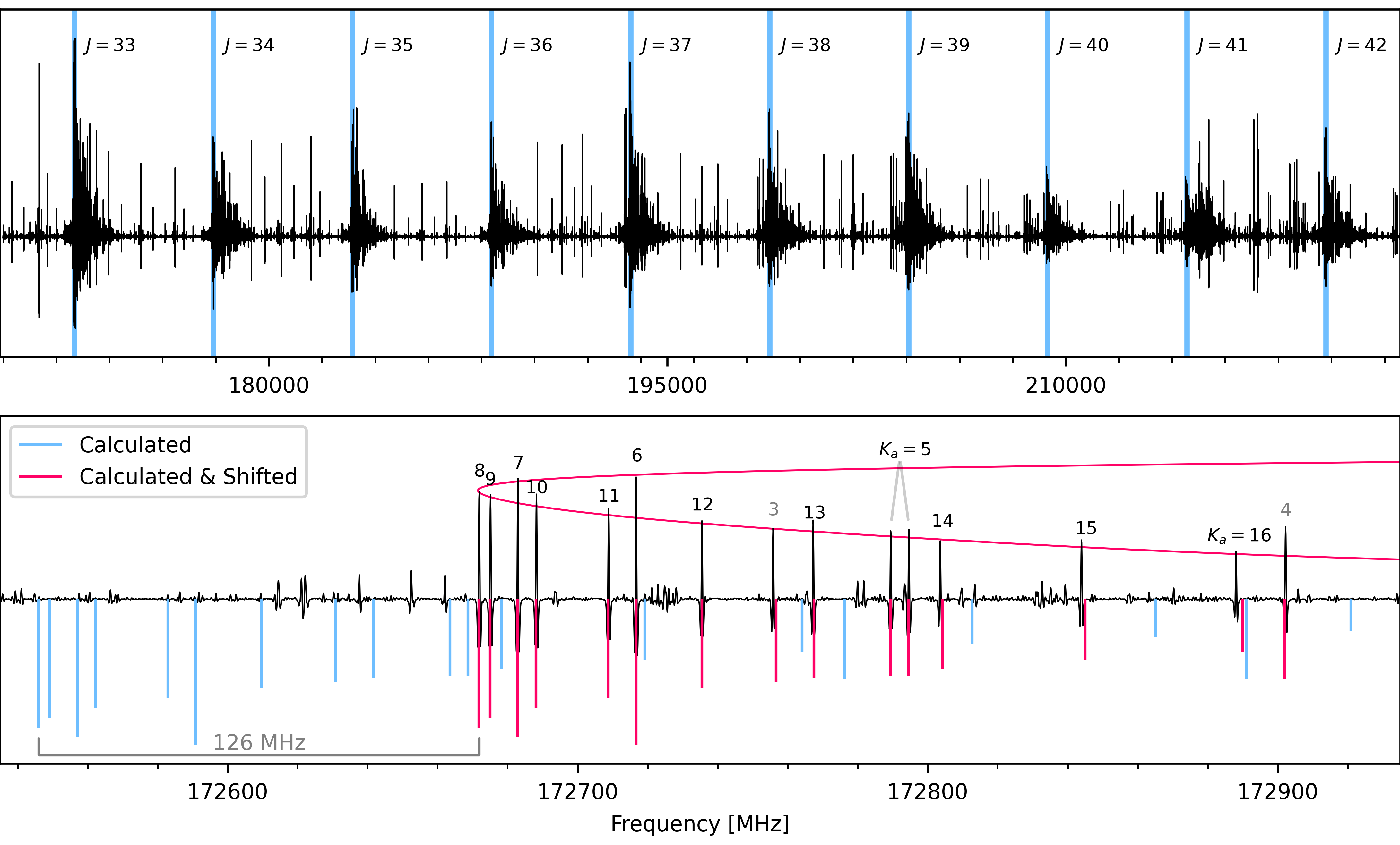
Many places in space are too far away to learn about them by sending spacecraft there. So they cannot be examined directly but instead, we can learn about them by analyzing their emitted light.
Due to quantum mechanics, each molecule has a set of characteristic transition lines that uniquely identify it. When these transition lines are found in the emitted spectrum, we can be sure that the respective molecule appears in the observed object.
However, to identify molecules in space, we first have to understand their characteristic patterns in the laboratory. We do so by measuring the rotational spectrum of the molecules in our experiment and then fitting quantum mechanical models to them. These models can then be used by astronomers to identify the molecules in space and also to infer the physical conditions of the corresponding regions in space. For example, the temperature can be deduced from intensity relations, the pressure from the lineshape, and the molecule’s abundance can be inferred from its intensity.
A6/B2: First detection of ionized carbon in a high latitude cloud raises new questions (Nicola Schneider, Volker Ossenkopf-Okada)
What is the structure and chemical composition of gas that may feed future star formation? Before interstellar gas turns dense enough to form new stars it is not fully molecular yet but in some so far unknown transitional state. A special case of such gas clouds are given by high-latitude clouds representing material that may fall onto the plane of the Milky Way.
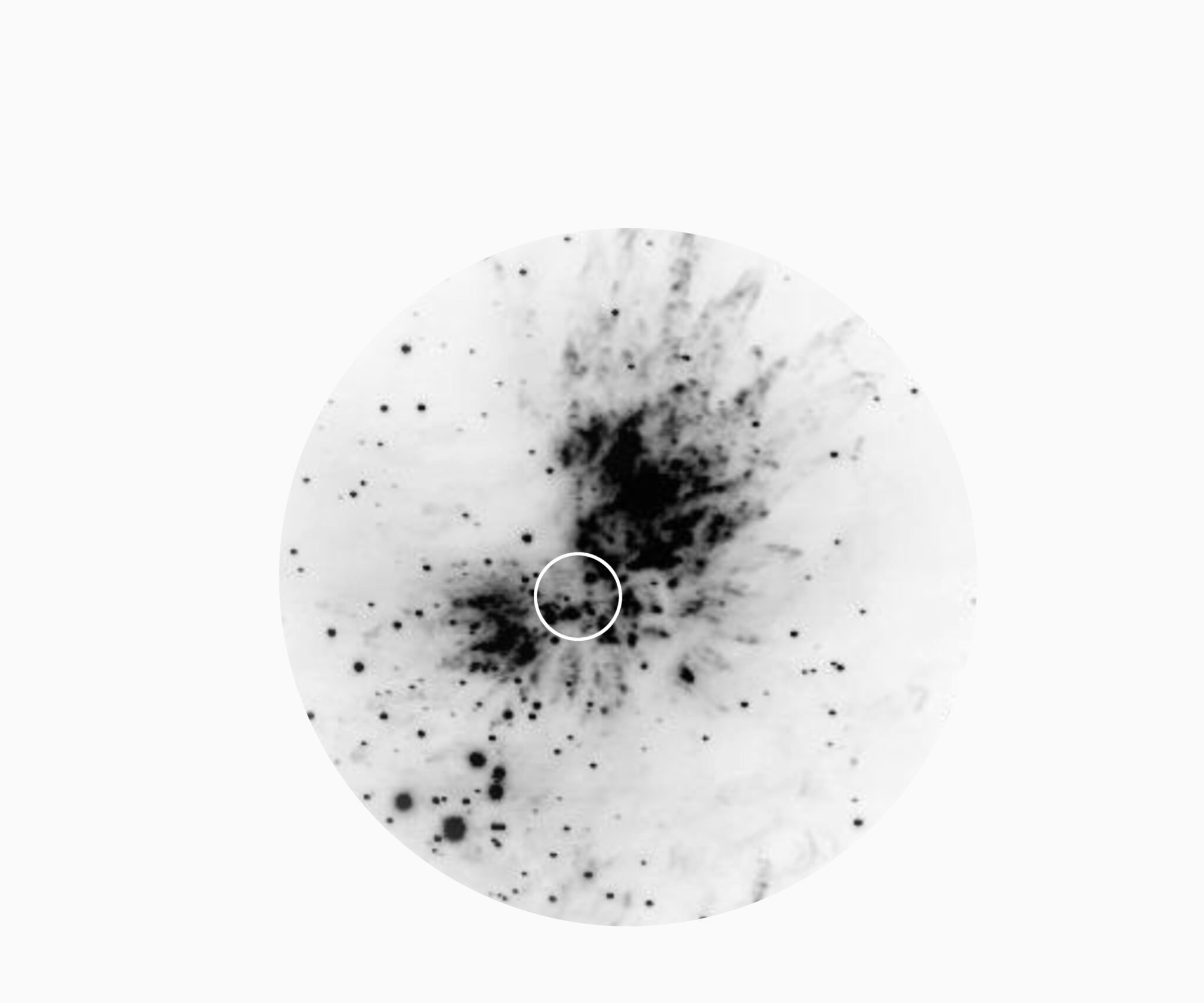
Leuchtstoffraum 2, Kleinmann-Low 16.1 channel sound installation – Julian Rohrhuber & Volker Ossenkopf-Okada (18.04.24, Weltkunstzimmer Düsseldorf)
The Kleinmann-Low nebula in the Orion is a location of intense star formation with a complex spatial and chemical dynamic. Its radiation originates from finely distributed atoms and molecules, which in the light of the young stars emit a characteristic spectrum. The piece „Leuchtstoffraum“ is informed by the unusually precise measurements of the Herschel space telescope from 2010. It is based on the simple principle that the natural laws are the same on earth as in the nebula 1300 light years away. We hear the structure of electromagnetic radiation of a minute point in the sky whose frequencies may be partitioned into series of molecule spectra, known from the laboratory. Leuchtstoffraum 2 is an outcome of a collaboration between Julian Rohrhuber, professor at the Robert Schumann Hochschule Düsseldorf, with the astro-physicist PD Dr. Volker Ossenkopf-Okada, who teaches at I. Physikalische Institut of the University, Cologne.
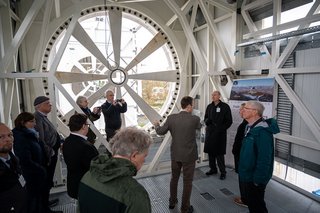
Präsentation des Fred Young Submillimeter Teleskops (FYST) – Dominik Riechers (04.04.24, Xanten)
Am 04. April 2024 wurde das neue Fred Young Submillimeter Teleskop (FYST) in Xanten am Niederrhein präsentiert. Begleitet von Vorträgen zu den wissenschaftlichen und technischen Hintergründen konnten sich die Teilnehmer*innen bei einer Bewegungsdemonstration und in Führungen einen Eindruck von dem neuartigen Teleskopdesign machen. Das FYST ist ein hochmodernes Teleskop, dessen Spiegeldurchmesser allein sechs Metern misst. Damit ist es für den Betrieb im Submillimeter- bis Millimeter-Wellenlängenbereich ausgelegt. Es wird Einblicke in die Geburt der ersten Sterne nach dem Urknall sowie in die Entstehung von Sternen und Galaxien gewähren.
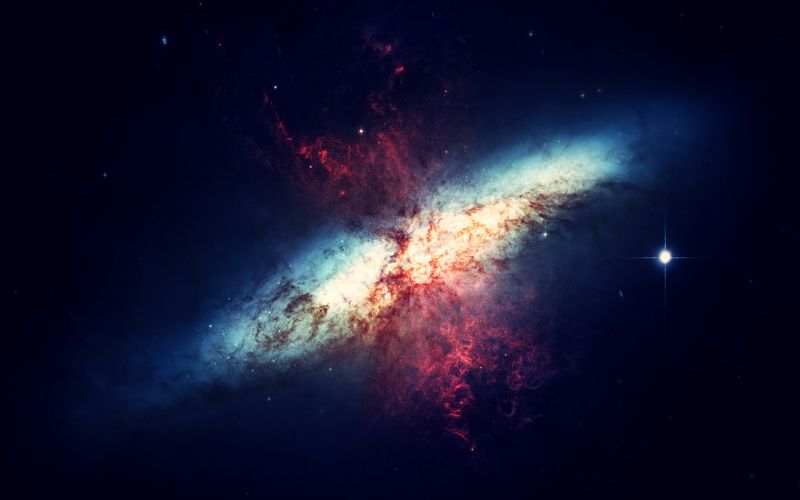
The impact of stellar feedback on different scales and galactic environments – Stefanie Walch-Gassner (10.04.24, NRW Akademie der Wissenschaften, Düsseldorf)
Stellar feedback refers to the processes by which massive stars release energy, radiation, and material into their surroundings, influencing the structure and evolution of the galaxies in which they reside. Understanding the impact of stellar feedback on different galactic environments is crucial for developing a comprehensive picture of galaxy formation and evolution. In this context, different galactic environments refer to regions within a galaxy that differ in their physical conditions, such as the average gas density, temperature, metallicity, or radiation field.
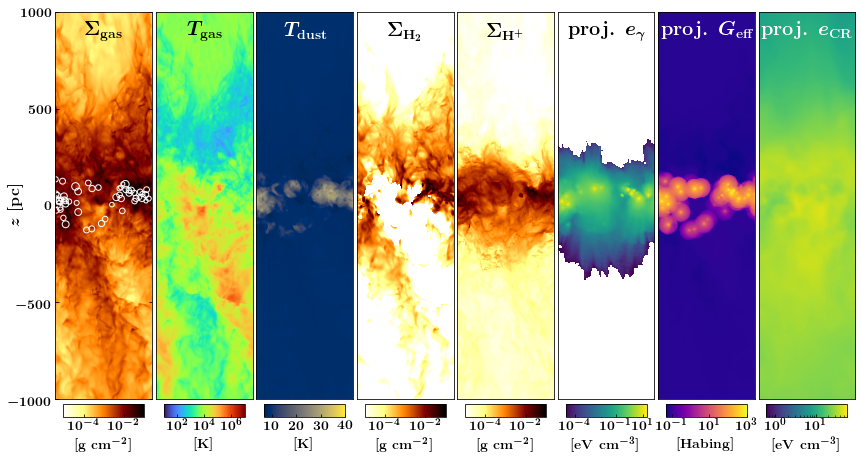
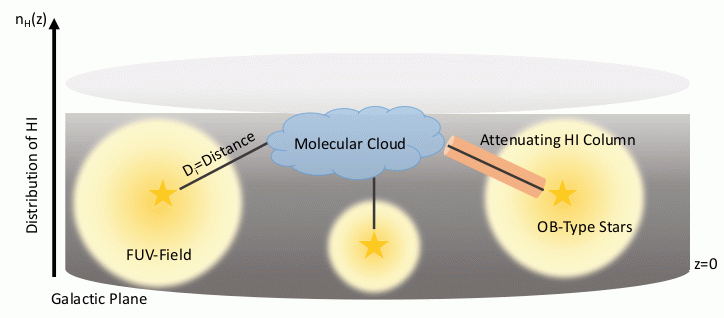
B6: SILCC-FUV: The Influence of Far-Ultraviolet Radiation on Star Formation and the Interstellar Medium (Tim-Eric Rathjen)
What roles do different stellar feedback processes play in governing star formation? From ionizing and non-ionizing
radiation to stellar winds and supernovae, these forces interact with the surrounding stellar nurseries. However, understanding the precise significance of each process in shaping star formation remains an ongoing challenge.
Die Entstehung von Sternen und Planetensystemen – Stefanie Walch-Gassner (22.02.24, Volkssternwarte Köln)
In diesem Vortrag werden wir uns auf eine Reise durch die Geburt von Sternen begeben und die komplexen Prozesse erkunden, die zur Entstehung neuer Planetensysteme führen.
Wir werden erfahren, dass Sternentstehung in gigantischen Gas- und Staubwolken stattfindet, in denen Gravitationskräfte und elektromagnetische Strahlung eine Schlüsselrolle spielen. Wir werden uns mit der Kollapsphase bis zur Geburt eines leuchtenden Sterns auseinandersetzen sowie die Entstehung von Planeten und deren Anordnung in einer Vielzahl von Planetensystemen erforschen.

Training offers at the FZJ
Jülich Supercomputing Centre offers a training programme of about 25 HPC-relevant courses per year. The courses comprise lectures and hands-on training on programming languages, usage of HPC systems, parallel environments, MPI, hybrid programming, GPU programming, deep learning, and – in the near future – quantum computing.
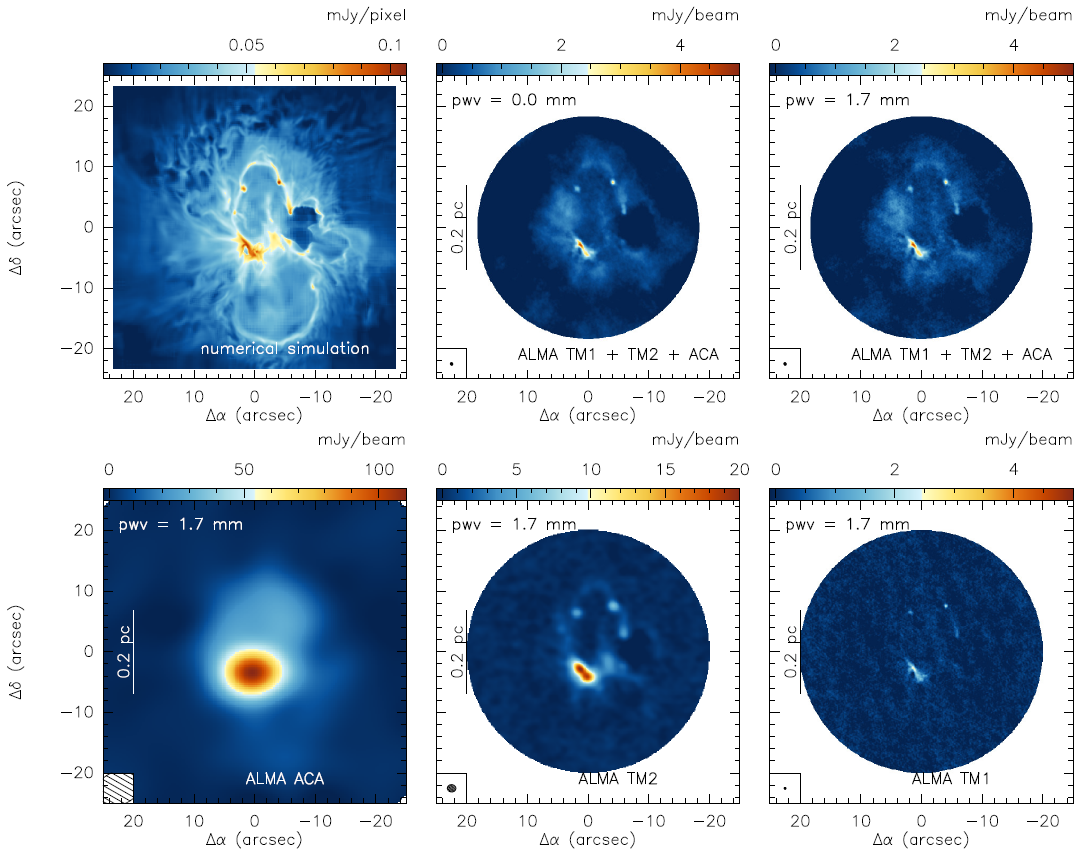
A2/A5: Confronting Simulations and Synthetic Observations (Birka Zimmermann)
To learn more about the formation and evolution of massive stars it is important to confront simulations and observations.
It is useful to interpret the observational data and to extract the cores’ physical parameters,. We can address e.g. the question how massive cores fragment and form (massive) stars, or how long the young, massive stellar objects are embedded in their parental core.