B2: The Diamond Ring in Cygnus X – Environment shapes evolution (Simon Dannhauer, Nicola Schneider, Robert Simon, Sebastian Vider)
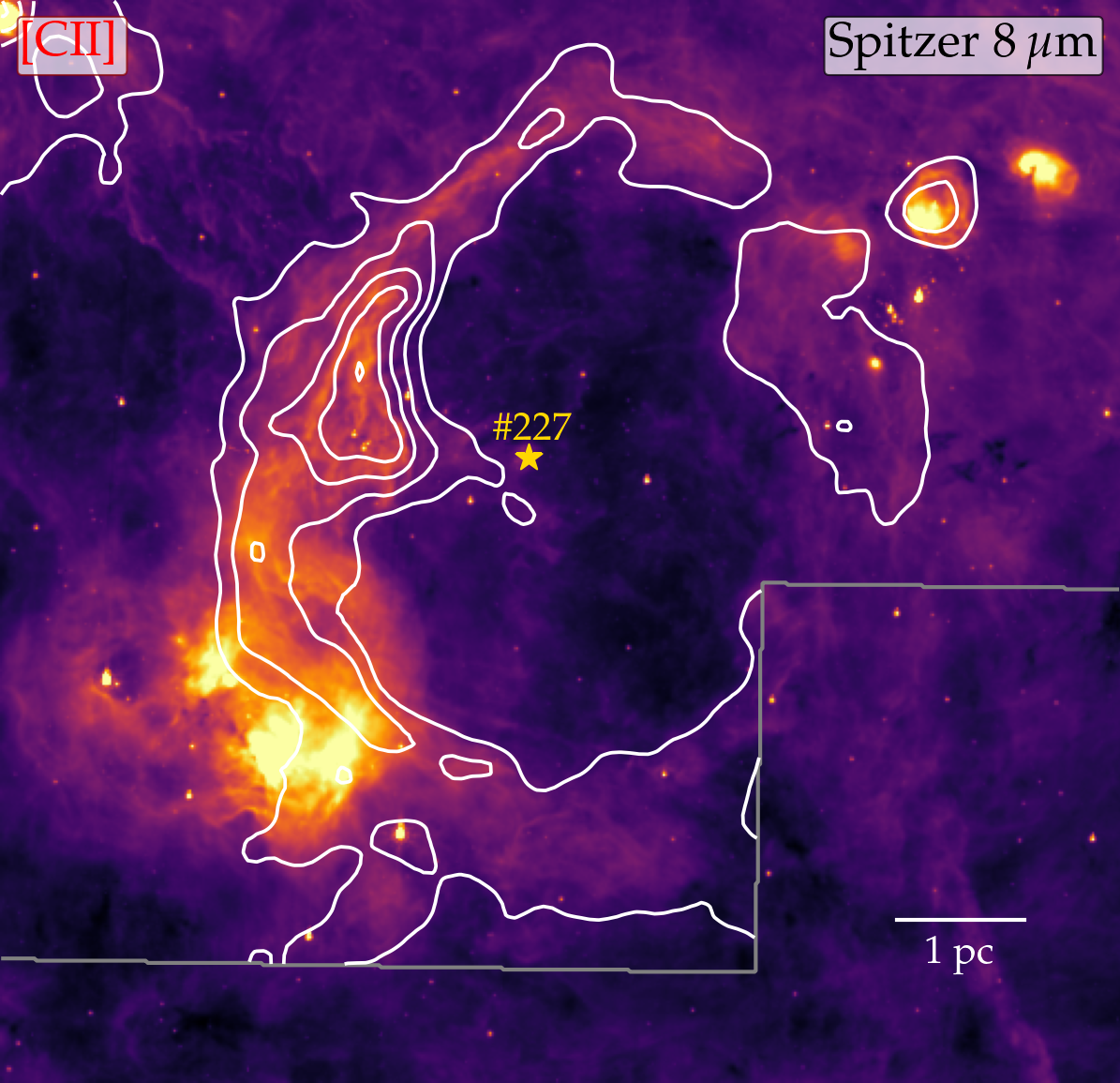
In our recent A&A paper (Dannhauer et al., subm.), we investigated the “Diamond Ring” in Cygnus X, a striking 6 pc wide ring-like structure seen in [C II] 158 μm and dust emission. Unlike the three-dimensional [C II] shells discovered in recent years, the Diamond Ring reveals itself as the first pure ring, slowly expanding at only ~1.3 km/s.
Markus Röllig: Revealing the cosmos with the James Webb Space Telescope! (26.08.2025)
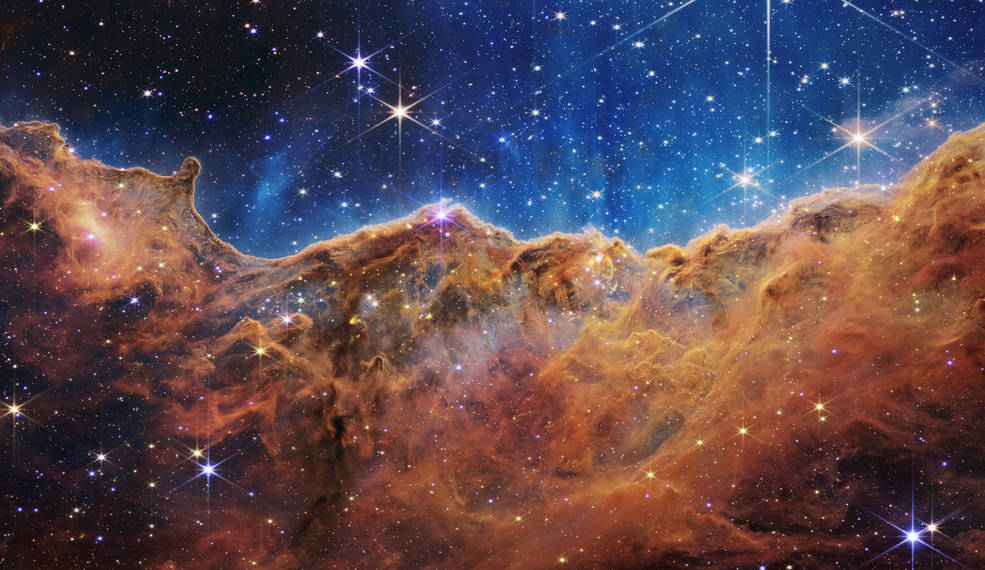
NASA’s James Webb Space Telescope heralds the next era of infrared astronomy. With spectacular new results, astronomers are gaining unprecedented insight into the secrets of our universe. The telescope, the instruments on board, and the details of its mission are more complex than any previous mission. We take a closer look at the technical aspects of the mission and its latest astronomical results, including the spectroscopic detection of dimethyl sulfide, a molecule produced on Earth, particularly by marine microorganisms. How close are we really to discovering extraterrestrial life?
FYST is available as a lego model
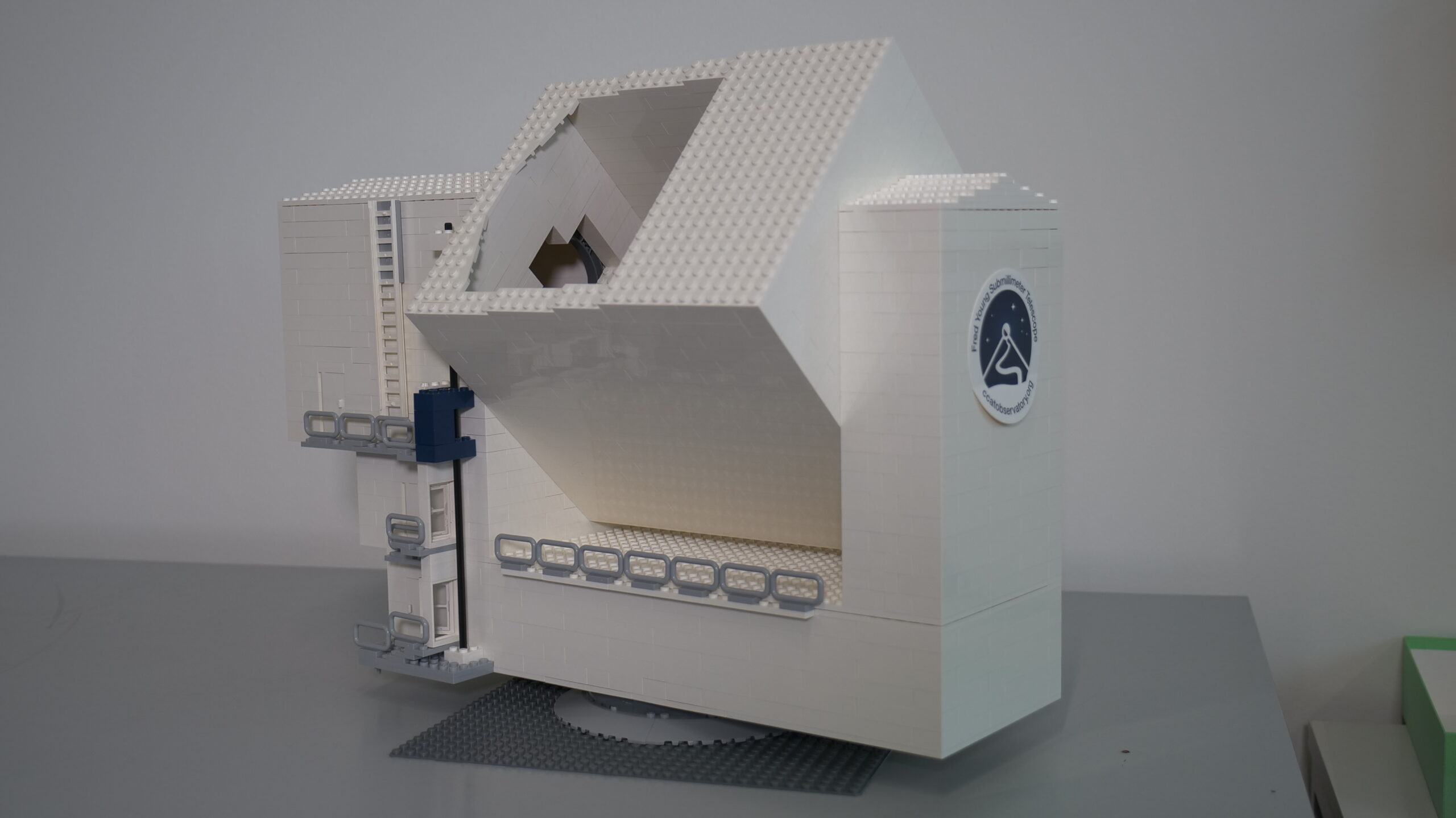
The telescope FYST, which is currently being re-assembled on 5600 above sea level the top of Cerro Chajnantor in the Chilean Atacama Desert, was assembled from lego bricks by Yoko Okada. The instructions are ready for download and we welcome replicas and expansions.
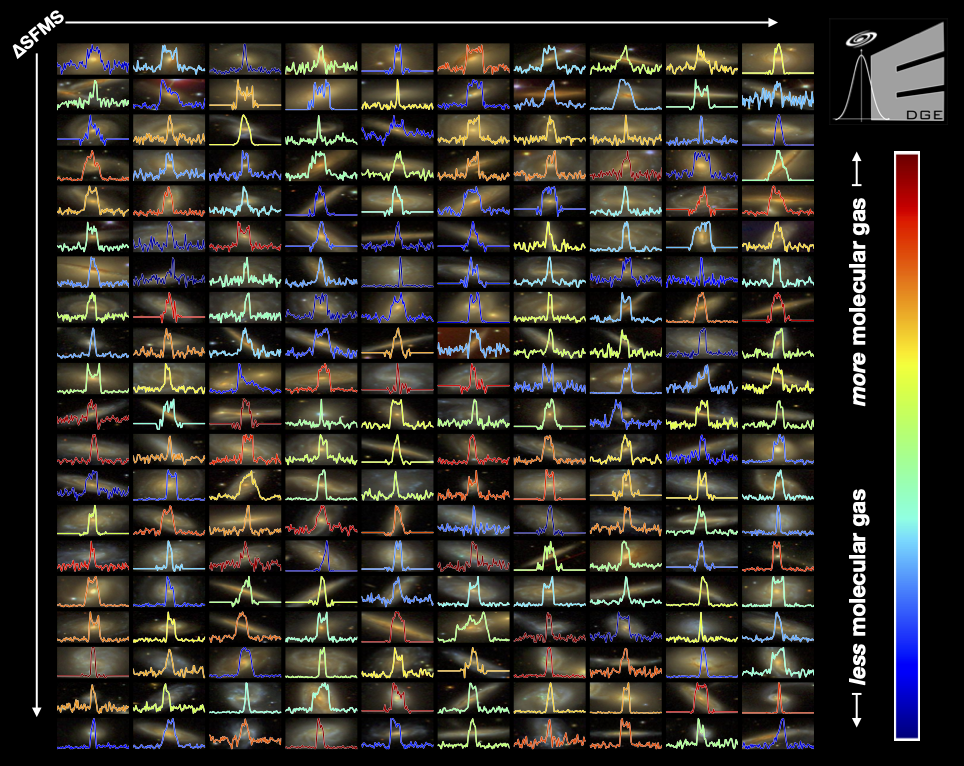
B3: iEDGE: Star formation relationships for active and non-active galaxies at different stages of their evolution (Dario Colombo, Zein Bazzi, Frank Bigiel)
The process that brings galaxies to reduce and definitely halt to form stars (the star formation quenching) is the result of a complex interplay of phenomena that are difficult to disentangle without an adequate and statistically significant sample of galaxies. Given this, we have assembled the integrated Extragalactic Database for Galaxy Evolution (iEDGE), collecting stellar continuum, nebular emission lines, and molecular gas information for hundreds of galaxies in the local Universe. iEDGE is, to date, the most comprehensive and extensive database of (CO-based) integrated galaxy properties.
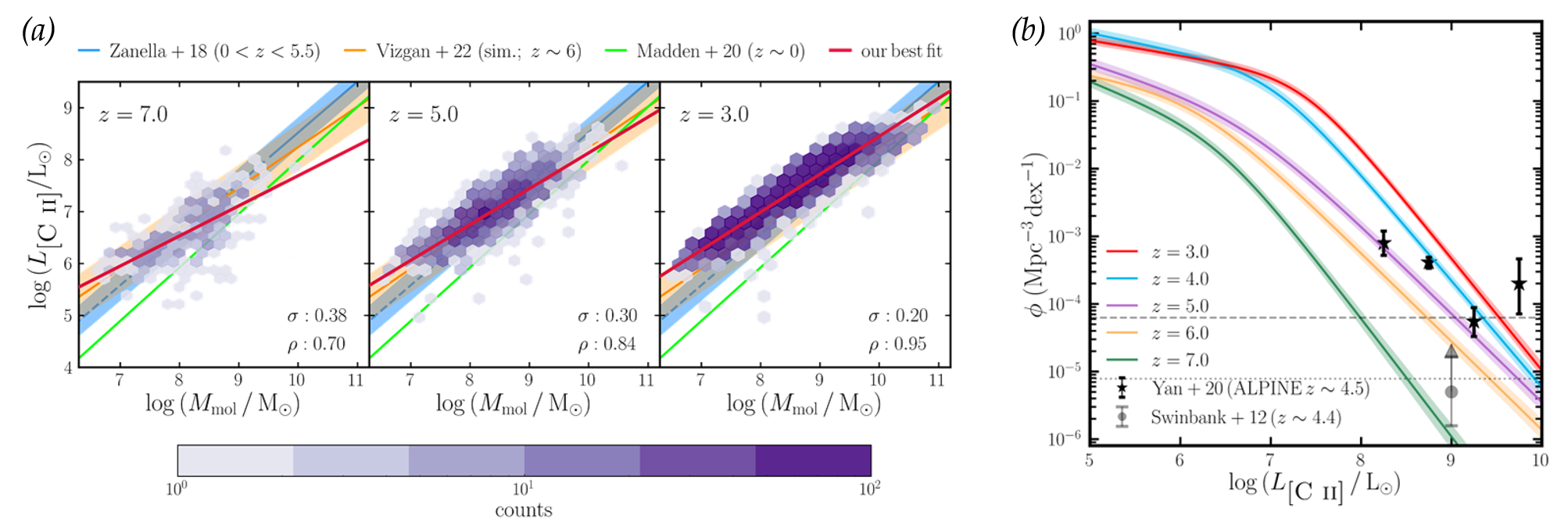
C5: Does the [CII]-molecular gas relation evolve over time? (Prachi Khatri)
In recent years, the fine-structure line of C+ at 158 microns – the [CII] line – has gained significant attention as a molecular gas tracer, particularly at z ≳ 4. Being one of the brightest emission lines in galaxies, it offers a unique window into the molecular ISM of distant galaxies, where conventional tracers like CO become observationally expensive.
Lange Nacht der Astronomie (13.09.2025 at the Public Observatory Cologne)
Beobachten, staunen, erleben – das Universum entdecken mit der bundesweiten Langen Nacht der Astronomie!
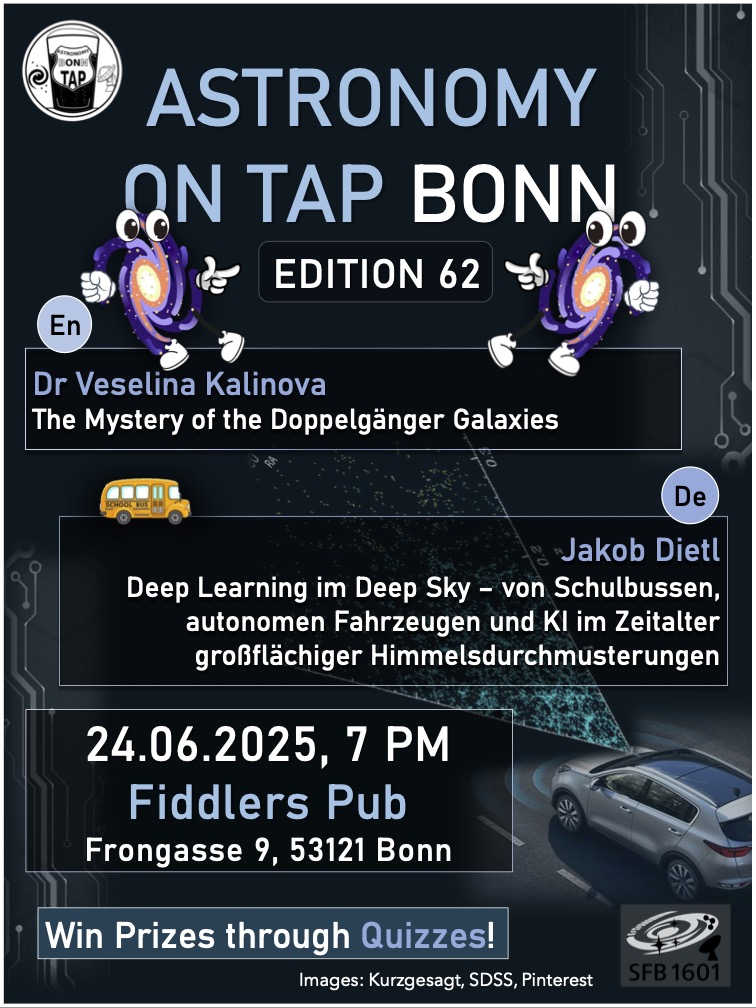
Join us for Astronomy on Tap Bonn on June 24, 2025.
You can attend exciting astronomy talks in English and German at Fiddlers Pub (Frongasse 9, Endenich) on Tuesday 24 at 19:00.
– “The Mystery of the Doppelgänger Galaxies” by Dr Veselina Kalinova (EN)
– “Deep Learning im Deep Sky – von Schulbussen, autonomen Fahrzeugen und KI im Zeitalter großflächiger Himmelsdurchmusterungen” by Jakob Dietl (DE)
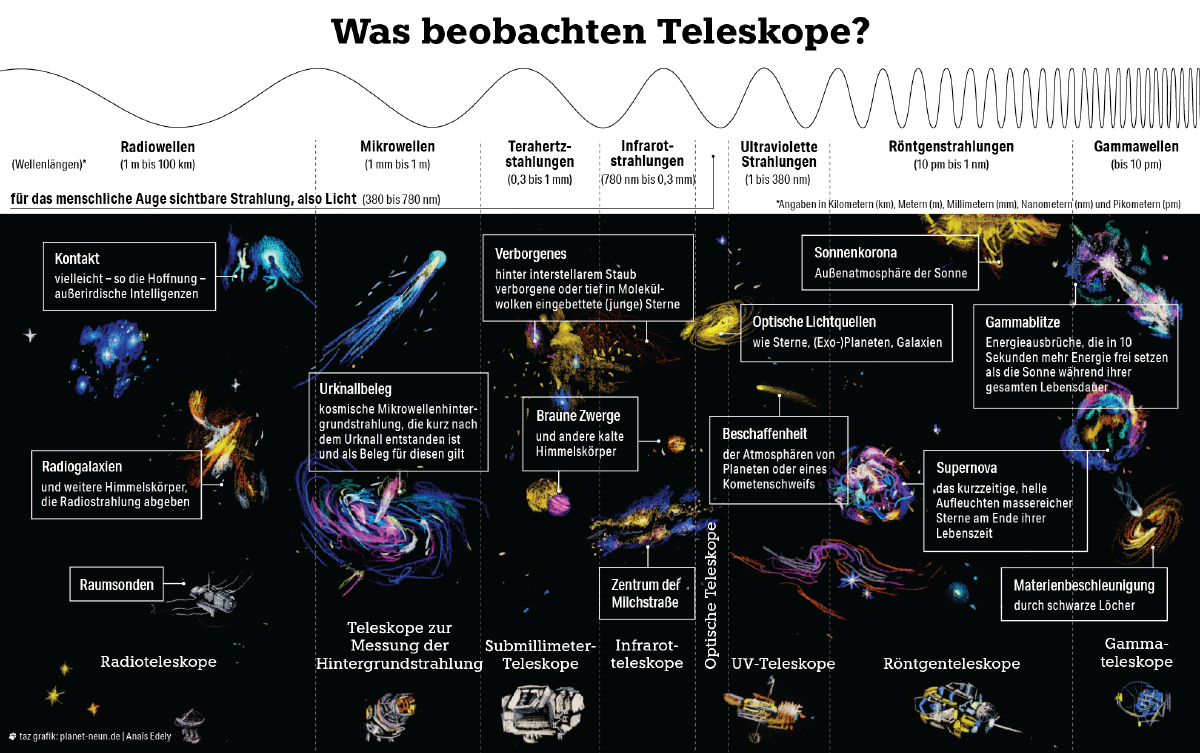
Teleskope – Von der Wüste bis ins All (taz-newspaper article)
Ständig werden neue Teleskope gebaut. Aber warum stehen so viele in der chilenischen Wüste? Und gibt es nicht schon zu viel Lichtverschmutzung? (Ruth Lang Fuentes)
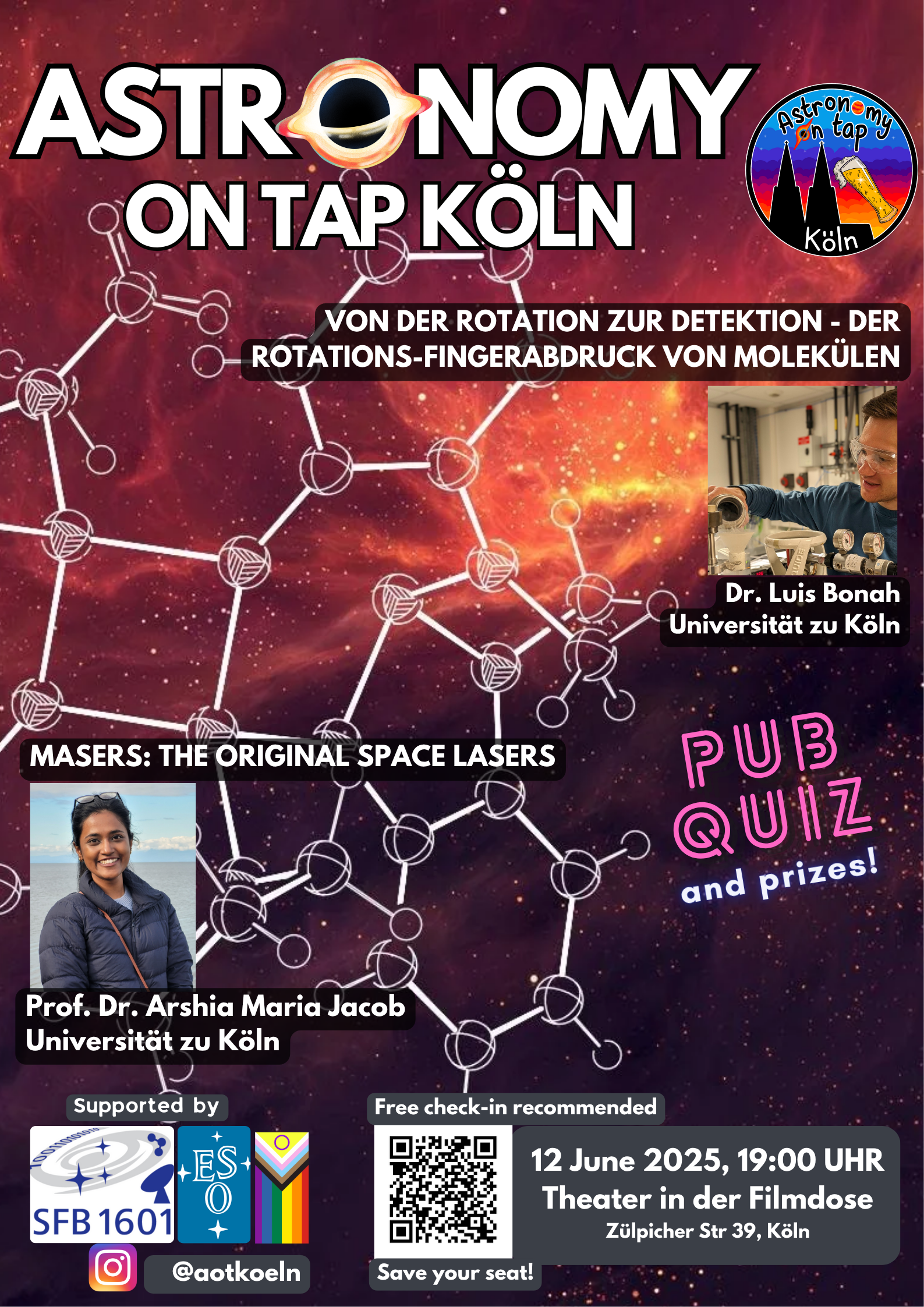
Join us for the next event of Astronomy on Tap Köln on June 13
Every month, Astronomy on Tap Köln brings you fun and enlightening talks in German and English! Join us to find what Astrophysicists are up to in solving the puzzles of the cosmos. Make sure to show off your smarts in the exciting Pub Quiz. Winners get astronomy goodies from the European Southern Observatory, SOFIA and other cool telescopes, to take home!
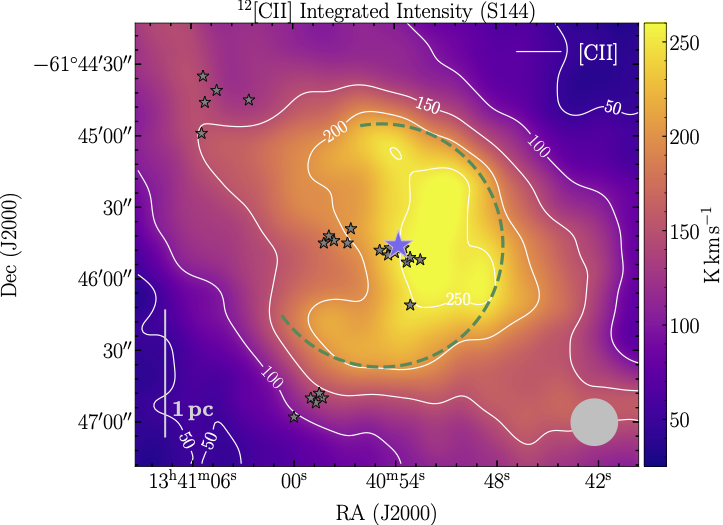
B2: First-Detected Young Carbon-Filled Bubble in RCW79 Hides Its Carbon Emission (Eduard Keilmann, Simon Dannhauer, Nicola Schneider, Robert Simon)
In our recent A&A Letter, we studied ionized carbon emission (C⁺, [C II]) at 158 μm in S144, a C⁺ bubble on the southeastern edge of the ring-shaped star-forming region RCW79. S144 hosts a compact H II region ionized by a single O7.5–9.5 V/III star. Using SOFIA/upGREAT maps with high angular and spectral resolution, we identified the first bubble that remains mostly filled with C⁺ gas – an indicator of an exceptionally early evolutionary stage. All previously characterized C⁺ bubbles exhibit shell-like rings with central cavities carved by stellar winds, marking more advanced phases.
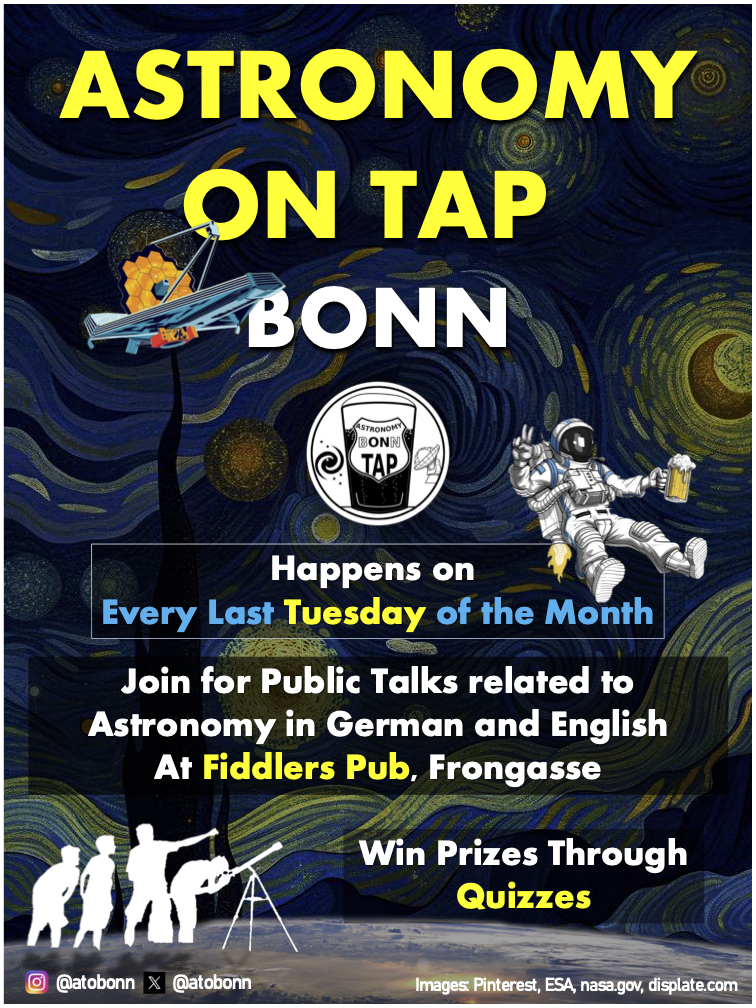
Join us for Astronomy on Tap Bonn on May 27, 2025.
Join us for Astronomy on Tap Bonn next week!
You can attend exciting astronomy talks in English and German at Fiddlers Pub (Frongasse 9, Endenich) on Tuesday 27 at 19:00.
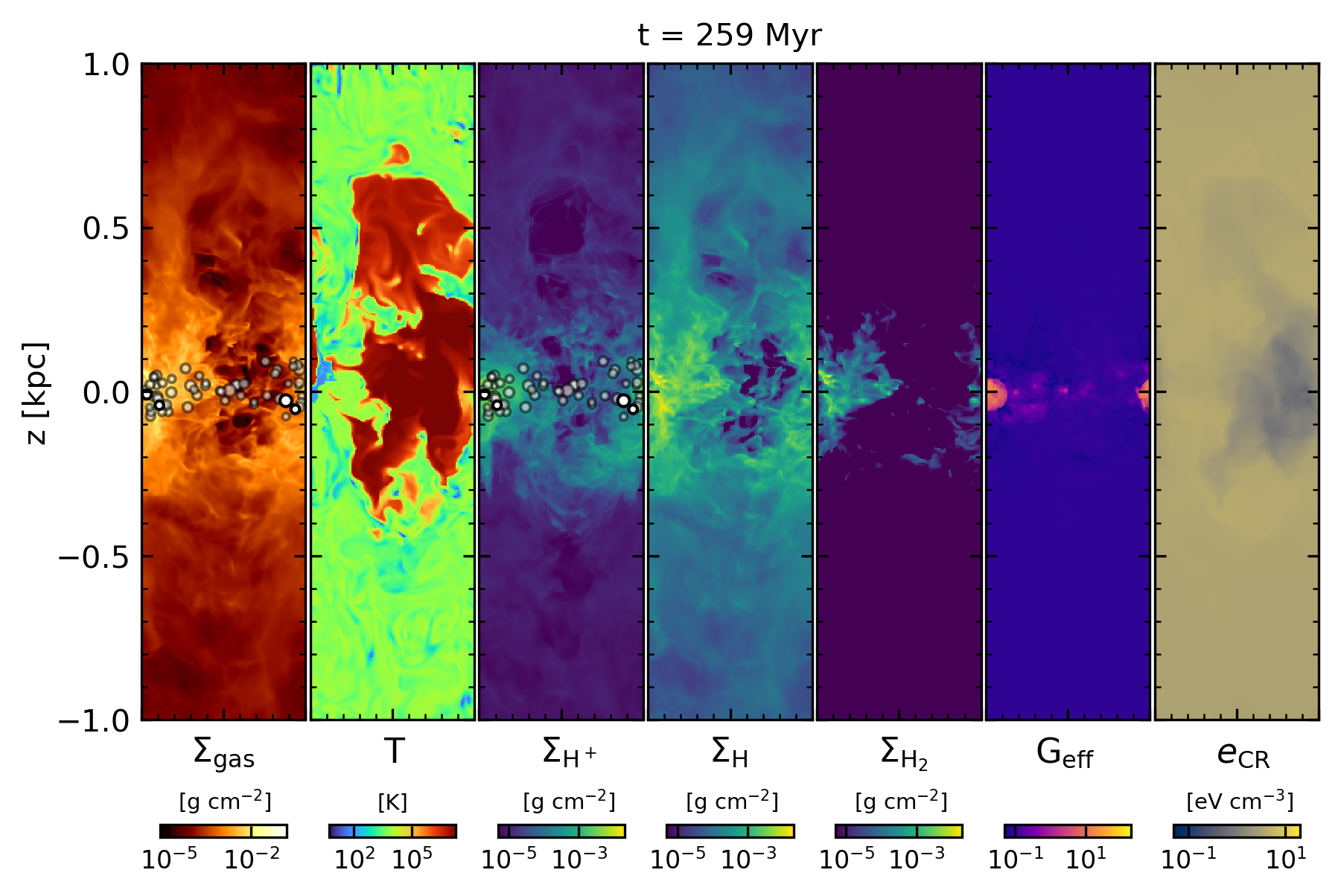
Vittoria Brugaletta wins the Federico Tonielli Award 2025!
In her PhD research, Vittoria focusses on the physics of the interstellar medium (ISM), with particular emphasis on environments at low metallicity. She has employed SILCC simulations, which model the evolution of the ISM in a stratified galactic disc. These simulations solve the ideal magneto-hydrodynamic equations and include non-equilibrium chemistry, gas heating and cooling, anisotropic cosmic ray (CR) transport, and stellar tracks. In addition, she incorporates stellar feedback through far-UV and ionizing radiation, massive star winds, supernovae, and CR injection. The gas metallicities in her simulations span from solar to as low as 0.02 Z☉, providing insights into the ISM in metal-poor galaxies.
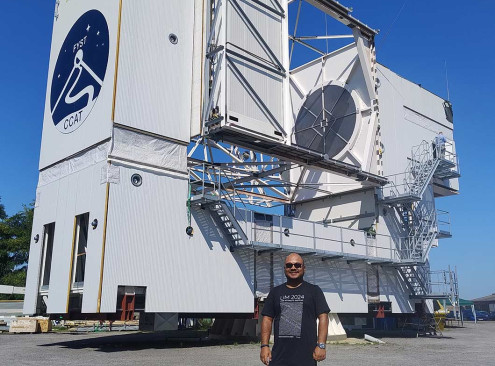
Ankur Dev: “Tracing the Cosmos: Exploring Science with Fred Young Submillimeter Telescope” (21.05.25,Pint of Science Festival)
The University of Bonn is a key partner in the Fred Young Submillimeter Telescope (FYST), a state-of-the-art 6-meter telescope built in North Rhine-Westphalia and now en route to its high-altitude site in Chile. This cutting-edge observatory will advance research in galaxy evolution, cosmology, and star formation, deepening our understanding of the cosmos. In this talk, I will explore FYST’s development and highlight the groundbreaking science it will enable.
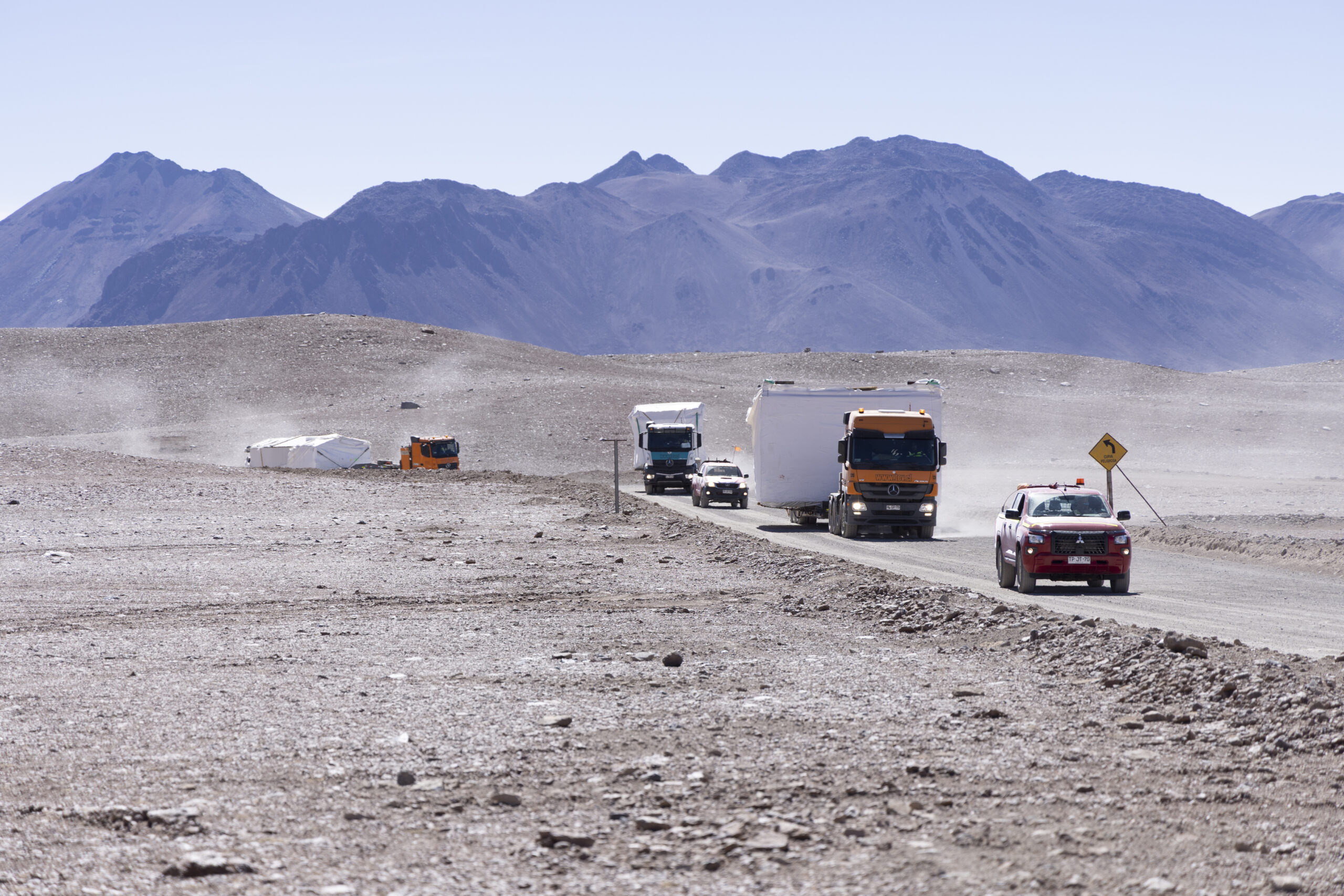
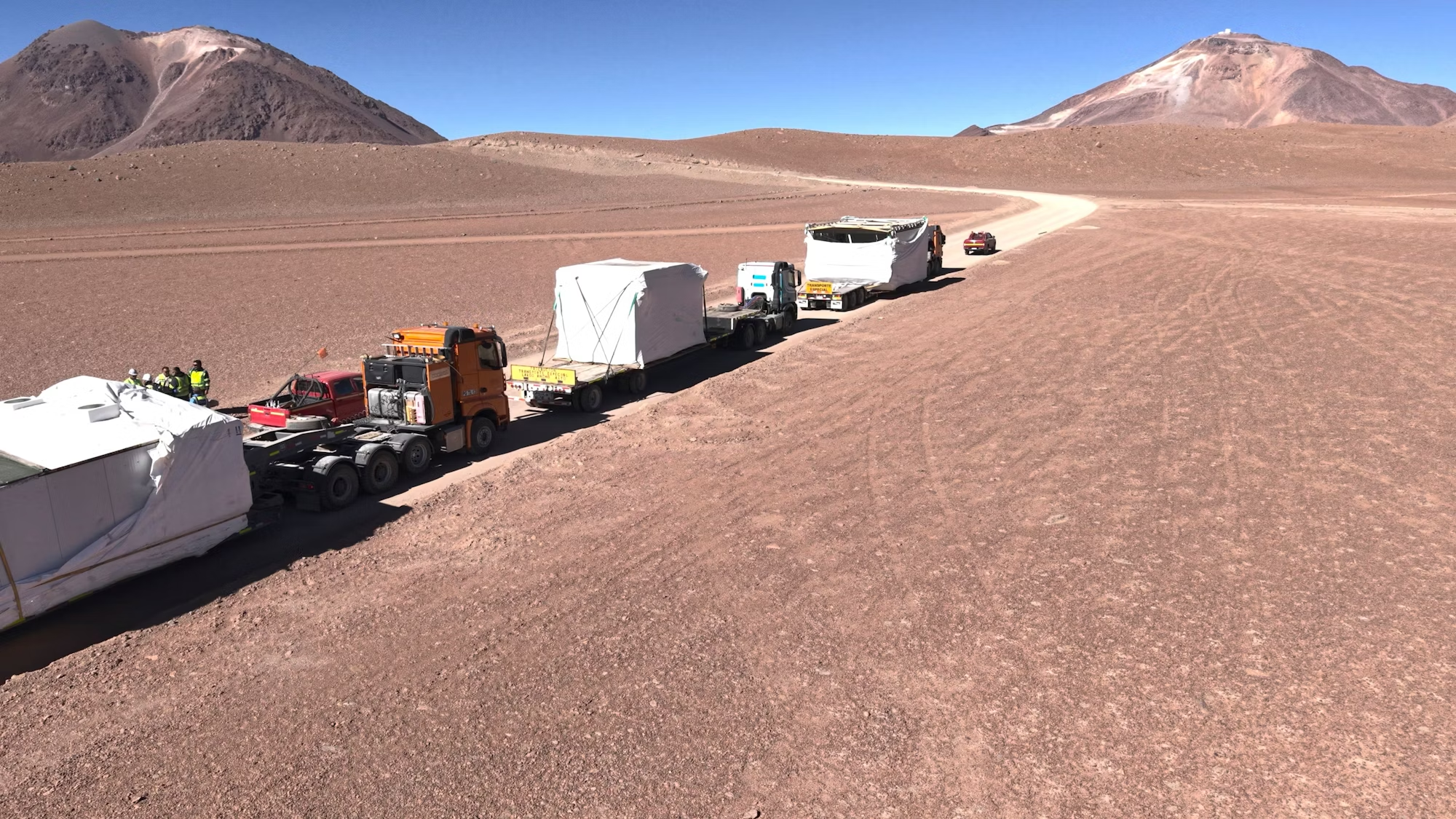
The “Kölner Stadtanzeiger” writes about FYST’s transport to Chile
https://www.ksta.de/koeln/koeln-teleskop-in-chile-soll-daten-aus-5600-metern-hoehe-liefern-1019639 Figure: The FYST telescope parts being transported through the Atacama desert (Copyright: Ludolf Dahmen, UzK)
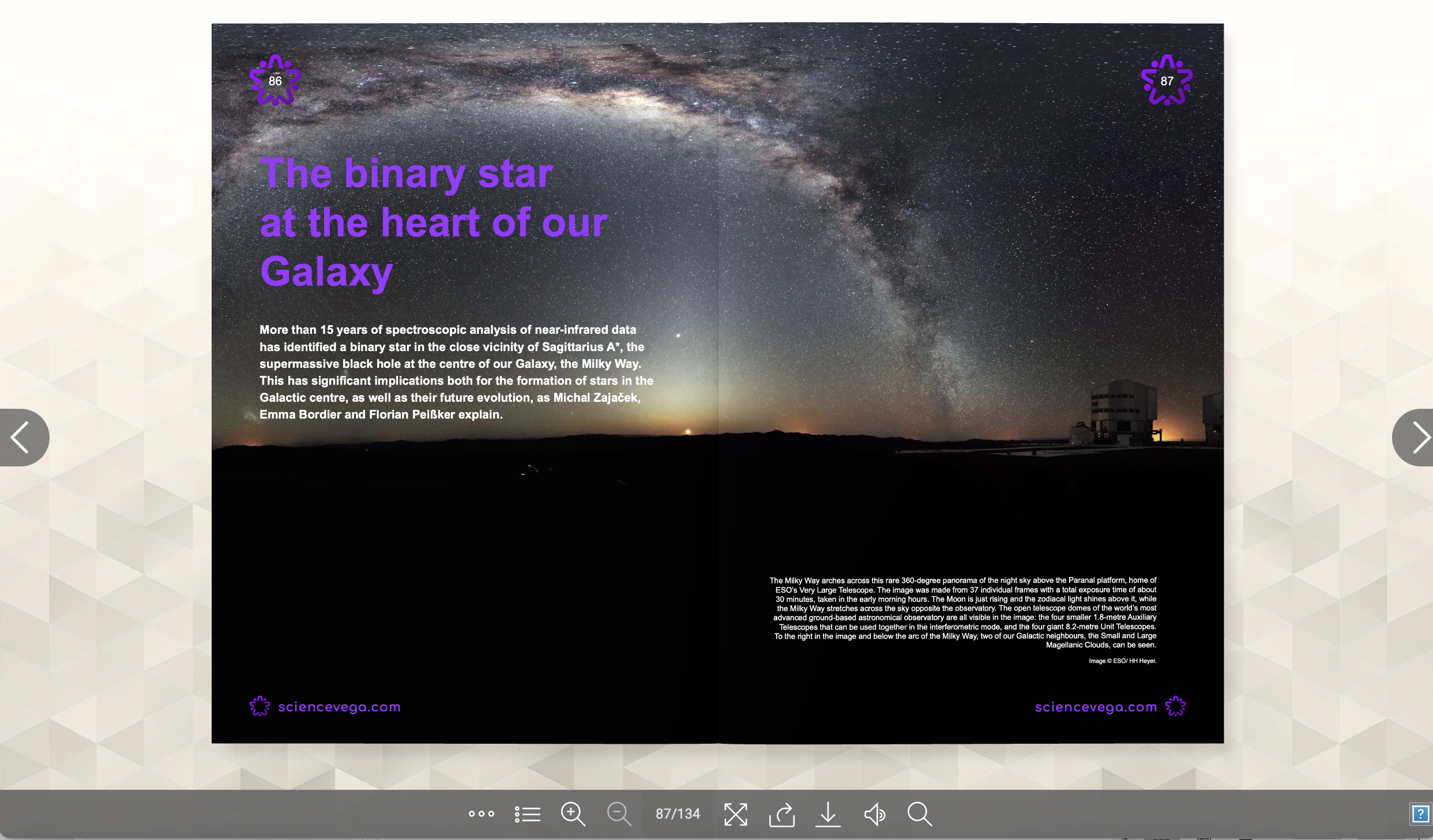
ScienceVega Article: The binary star at the heart of our Galaxy
https://sciencevega.com/flipbook/ScienceVega-April-Issue-2.html#my_flipbook/1
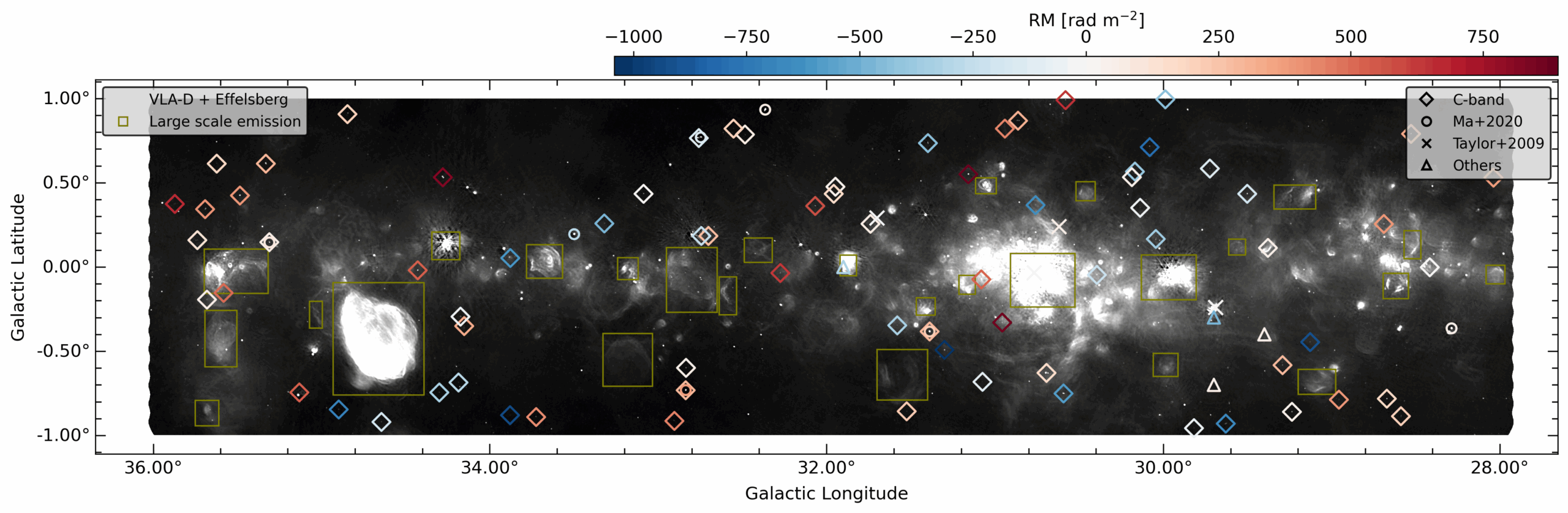
B4: The first high frequency C-band RM Grid of the Galactic plane: A Faraday Rotation study using the GLObal view on STAR formation survey (Anahat Cheema, Ann Mao)
Magnetic fields are a key component of the interstellar medium, influencing star formation and galaxy evolution. To better understand their structure and strength, we use data from the GLObal view on STAR formation (GLOSTAR) survey to investigate magnetic fields in the plane of the Milky Way. Our study focuses on the Faraday effect – quantified by rotation measures (RM) towards background polarized radio sources to construct the first C-band RM grid. The small channel width in wavelength squared (~1.5 to 5 cm2) at C-band makes it well suited for identifying polarized sources with extreme RMs (~3000 rad m-2 at a channel width of 200 MHz), which would likely be completely bandwidth depolarized in lower-frequency surveys. GLOSTAR’s higher frequency coverage also significantly reduces depolarization effects from foreground Galactic turbulence, enabling us to probe previously obscured, dense regions of the Galaxy.
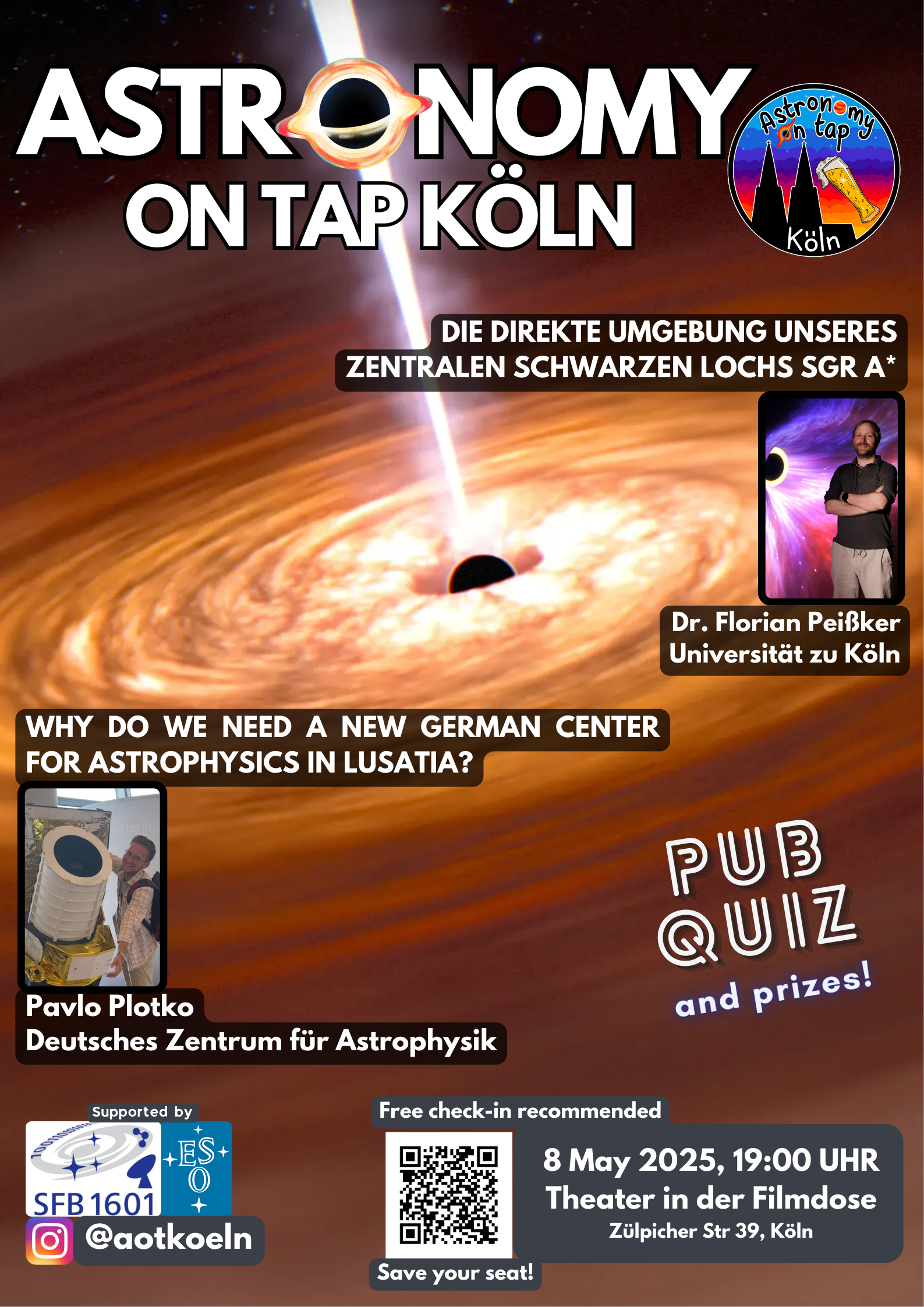
Join us for the next event of Astronomy on Tap Köln
Every month, Astronomy on Tap Köln brings you fun and enlightening talks in German and English! Join us to find what Astrophysicists are up to in solving the puzzles of the cosmos.
Make sure to show off your smarts in the exciting Pub Quiz. Winners get astronomy goodies from the European Southern Observatory, SOFIA and other cool telescopes, to take home!
Check-in now for free! or simply respond to this email with the no. of people you plan to bring to the event (not mandatory but helps us to make adequate arrangements)