
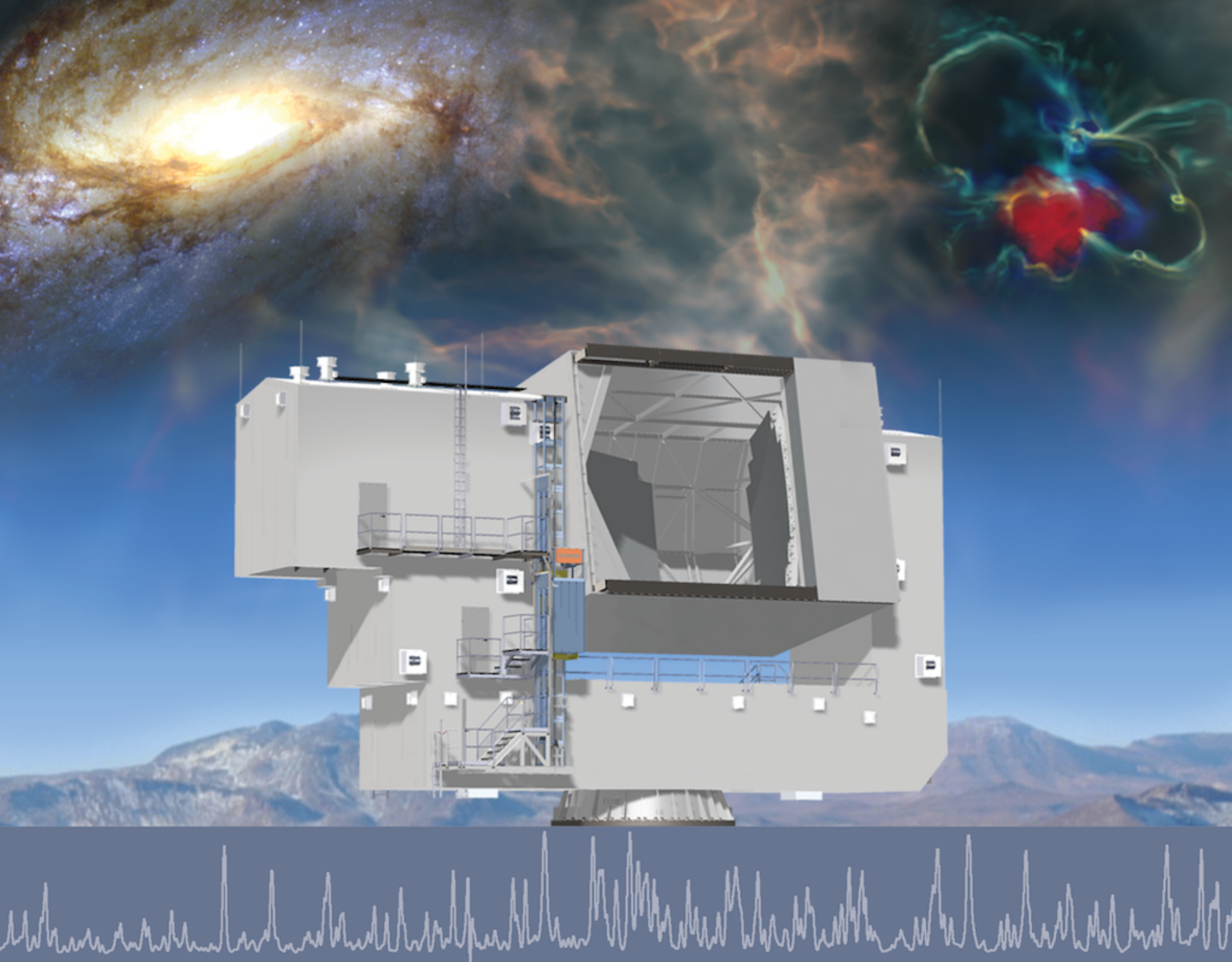
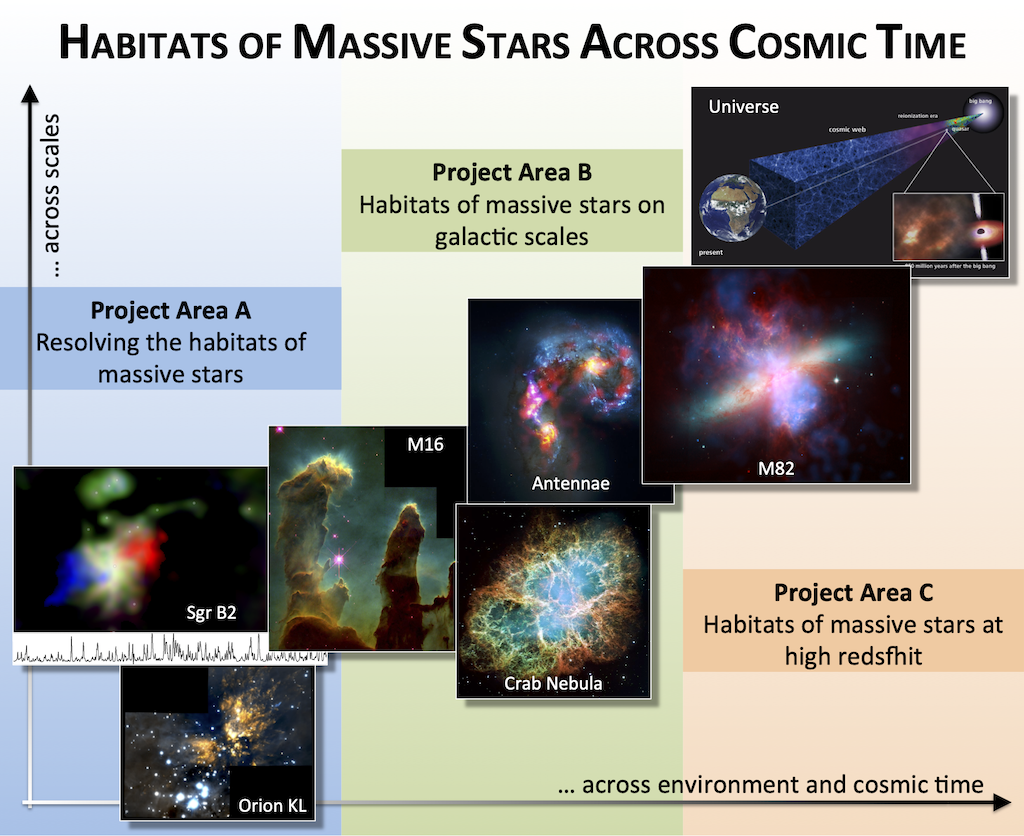
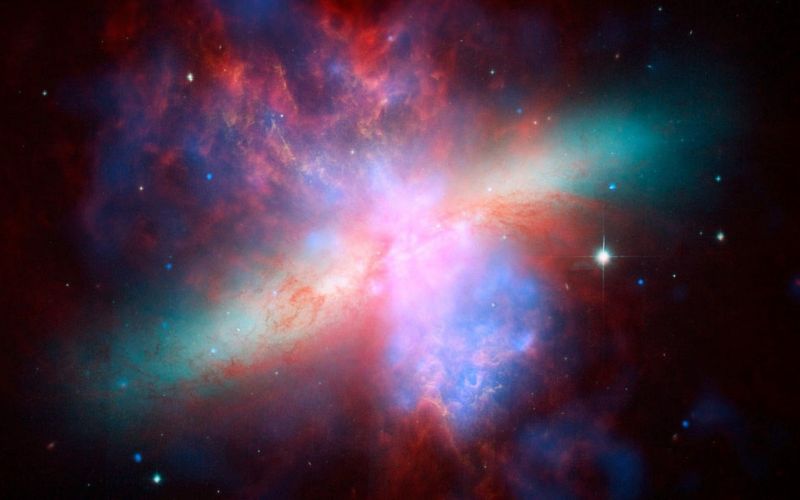
Massive stars, due to their short lifetime and high energy output, drive the evolution of galaxies across cosmic time. Hence, they substantially contribute to shaping the present-day Universe. The Collaborative Research Centre (CRC) will unravel the “habitats of massive stars across cosmic time”. “Habitats” are the gaseous environments within which massive stars are born and which they interact with via their feedback. Over the anticipated 12-year lifetime of this new CRC initiative, we aim to connect the physical processes that govern the habitats of massive stars across the full range of environments hosting massive stars – from sub-parsec to mega-parsec scales and from the Milky Way to the high-redshift Universe, where massive stars leave their cosmological fingerprint by driving cosmic reionisation.
Key Profile Area
“Dynamics of the Universe”
Our universe is full of fascinating, mysterious and often surprising phenomena. Understanding and explaining this in physical terms is the task of the new key profile area Dynamics of the Universe.
The Dynamics of the Universe key profile area establishes an excellent environment for training, early contact with current research, and exchange in international co-operations and competitions. In addition, the interdisciplinary collaboration between the fields of physics, computer science and applied mathematics will be strengthened in the long term. This is particularly important given the need to meet unprecedented challenges arising from the large amounts of observational data being generated by way of innovative ideas and algorithms, and to enable and efficiently advance complex simulations using new hardware technologies.
SFB 1601 News
Public Outreach
Symposium 2026
HRMS 2025

Colloquium
Child Care
Publications
Videos & Articles
SFB 1601 Projects
PhD Students
Family & Diversity
Sustainability
Science Highlight
-
B6: SILCC – IX. The multi-phase interstellar medium at low metallicity (Vittoria Brugaletta)
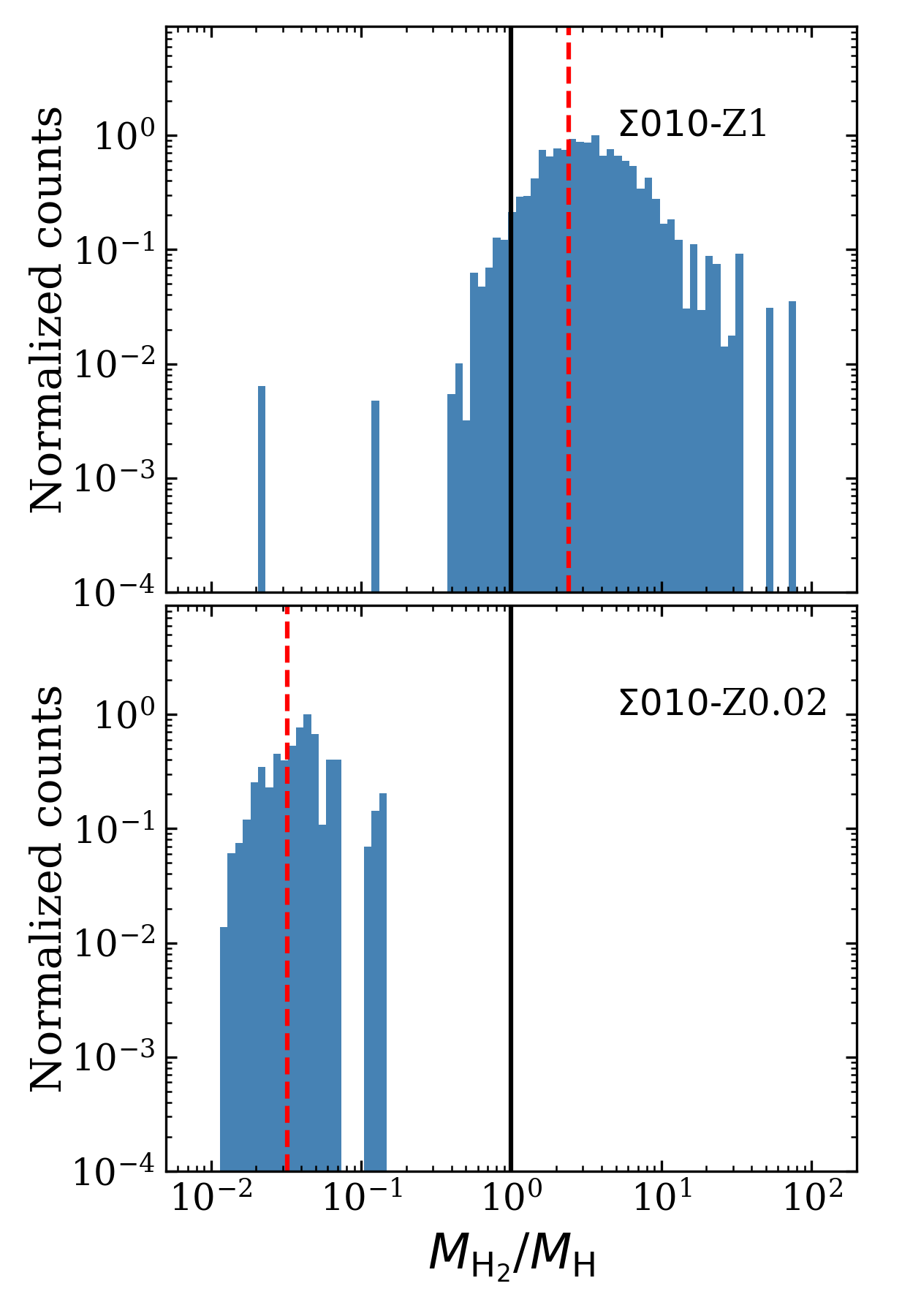
In our latest SILCC paper, we perform magneto-hydrodynamic simulations to investigate the impact of metallicity on the interstellar medium (ISM). In fact, gas-phase metallicity affects heating and cooling processes in the star-forming ISM as well as ionising luminosities, wind strengths, and lifetimes of massive stars. Our simulations include non-equilibrium chemistry, a space- and time-variable far-UV background and cosmic ray ionisation rate, metal-dependent stellar tracks, the formation of HII regions, stellar winds, type II supernovae, and cosmic ray injection and transport. The simulations assume a gas surface density of 10 M_sun pc−2 and span metallicities from 1/50 Z_sun to 1 Zsun. Among our results, we find that for decreasing metallicity, the star formation rate decreases by more than a factor of ten, the mass fraction of cold gas decreases from 60% to 2.3%, while the volume filling fraction of the warm gas increases from 20% to 80%. In particular, we analyze the conditions in which our stars form, computing the ratio of the H2 mass to the H mass in star-forming regions, and we find that this ratio depends on the metallicity. In fact, we find that at solar metallicity (upper panel), massive stars form in an almost fully molecular gas, whereas at extremely low metallicity (bottom panel), they form in almost fully atomic gas. Including the major processes that regulate ISM properties, this study highlights the strong impact of gas phase metallicity on the star-forming ISM.
We value our Planet:
1st funding period: 10/2023 – 06/2027