
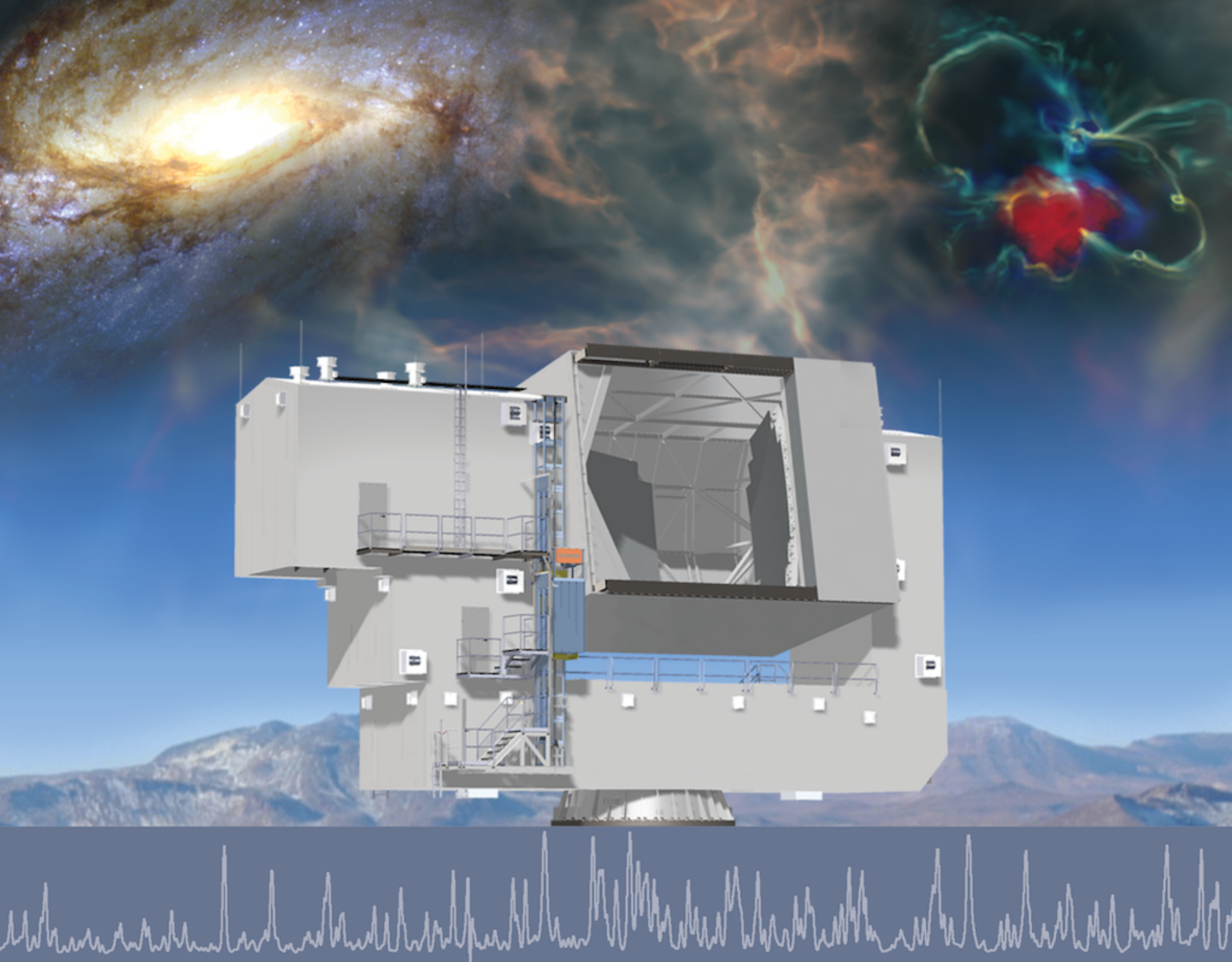
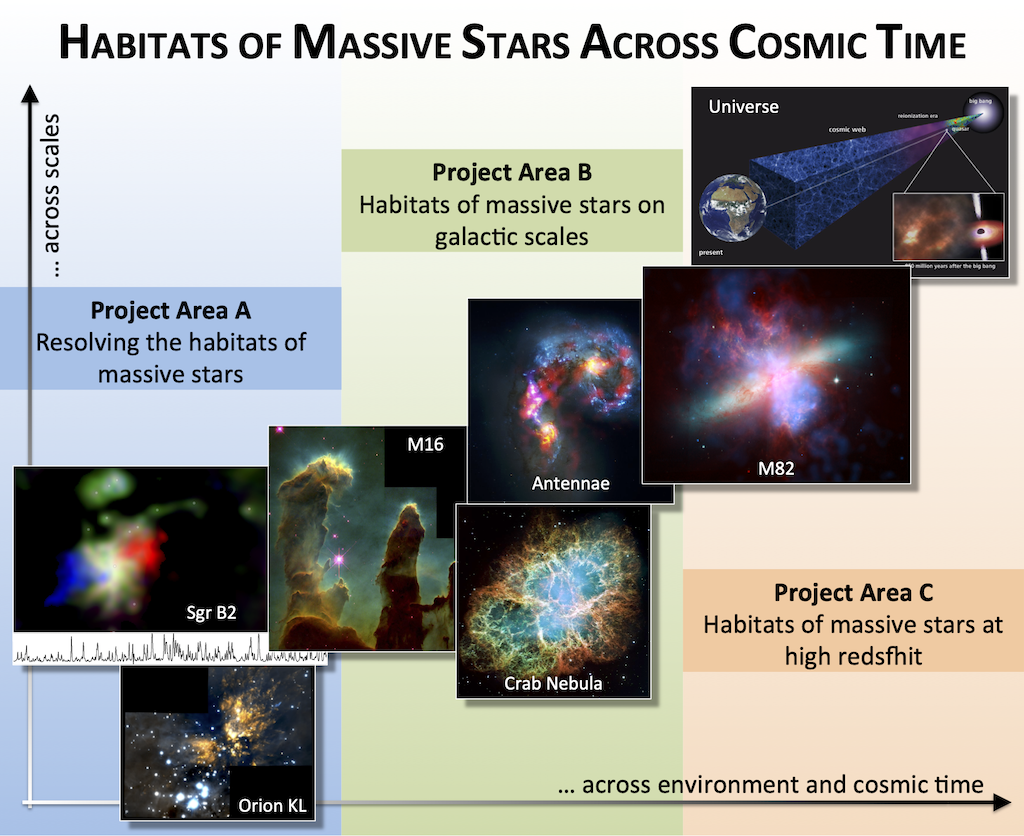
Massive stars, due to their short lifetime and high energy output, drive the evolution of galaxies across cosmic time. Hence, they substantially contribute to shaping the present-day Universe. The Collaborative Research Centre (CRC) will unravel the “habitats of massive stars across cosmic time”. “Habitats” are the gaseous environments within which massive stars are born and which they interact with via their feedback. Over the anticipated 12-year lifetime of this new CRC initiative, we aim to connect the physical processes that govern the habitats of massive stars across the full range of environments hosting massive stars – from sub-parsec to mega-parsec scales and from the Milky Way to the high-redshift Universe, where massive stars leave their cosmological fingerprint by driving cosmic reionisation.
Key Profile Area
“Dynamics of the Universe”
Our universe is full of fascinating, mysterious and often surprising phenomena. Understanding and explaining this in physical terms is the task of the new key profile area Dynamics of the Universe.
The Dynamics of the Universe key profile area establishes an excellent environment for training, early contact with current research, and exchange in international co-operations and competitions. In addition, the interdisciplinary collaboration between the fields of physics, computer science and applied mathematics will be strengthened in the long term. This is particularly important given the need to meet unprecedented challenges arising from the large amounts of observational data being generated by way of innovative ideas and algorithms, and to enable and efficiently advance complex simulations using new hardware technologies.
SFB 1601 News
Public Outreach
Symposium 2026
HRMS 2025

Colloquium
Child Care
Publications
Videos & Articles
SFB 1601 Projects
PhD Students
Family & Diversity
Sustainability
Science Highlight
-
B2: A peculiar proplyd-like object in Cygnus (Nicola Schneider, Simon Dannhauer)
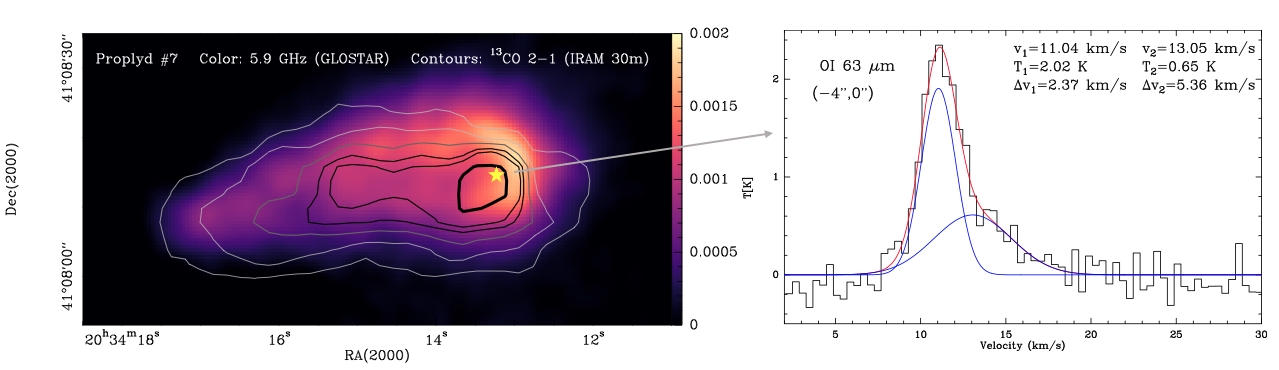
Proplyds are young stars surrounded by gas and dust discs that lose material through internal and external photo-evaporation. Understanding their evolution requires measurements of gas masses and key timescales, obtained from spectrally resolved observations of the molecular and atomic gas.
We studied an isolated, globule-shaped object near the centre of Cygnus OB2, known as proplyd #7. Its nature is debated: it may host either a massive star with an HII region or a G-type T Tauri star. In both scenarios, a photo-evaporating disk inside a molecular envelope may be present. Using SOFIA OI 63 μm and CII 158 μm data, together with IRAM 30m CO observations and radio continuum at 5.9 GHz (left panel of the figure), we detected all lines across the source. The brightest OI emission (right panel) lies west of the embedded YSO (marked by a yellow star) and shows bulk emission near 11 km/s and a redshifted wing at 13 km/s.
The OI can trace either a photodissociation region (PDR) orshock-heated disc material. The KOSMA-tau PDR model reproduces theemission in the proplyd tail under a modest UV field, but not near theYSO, where strong lines, broader profiles, and a possible CO outflow point to a protostellar disc. Radio continuum data instead indicate a thermal HII region, consistent with a massive central star.
Proplyd #7 contains mostly molecular gas, with ~20 M⊙ of molecular and a few solar masses of atomic material. Its external photo-evaporation timescale (~1.6×10⁵ yr) is shorter than the free-fall time (~5.2×10⁵ yr), suggesting that little additional star formation could occur – consistent with numerical simulations.
The true nature of proplyd #7 is not yet revealed. Our study sets constraints on the timeline of the evolution of this object and highlights observational discrepancies. Upcoming NOEMA and further IRAM 30m observations will help to elucidate if we indeed observe a disc around a massive star within this object, a rare and remarkable finding.
A&A in press
DOI: https://doi.org/10.1051/0004-6361/202557227
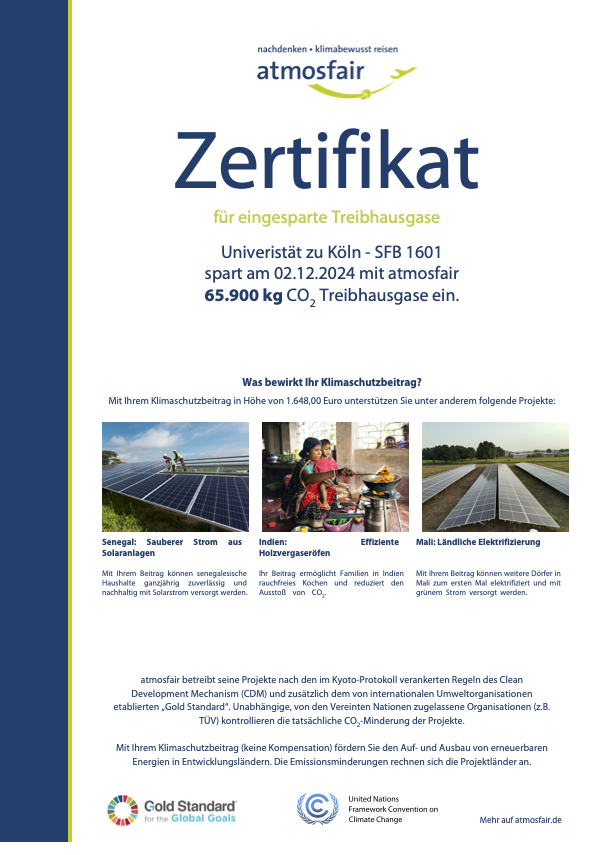
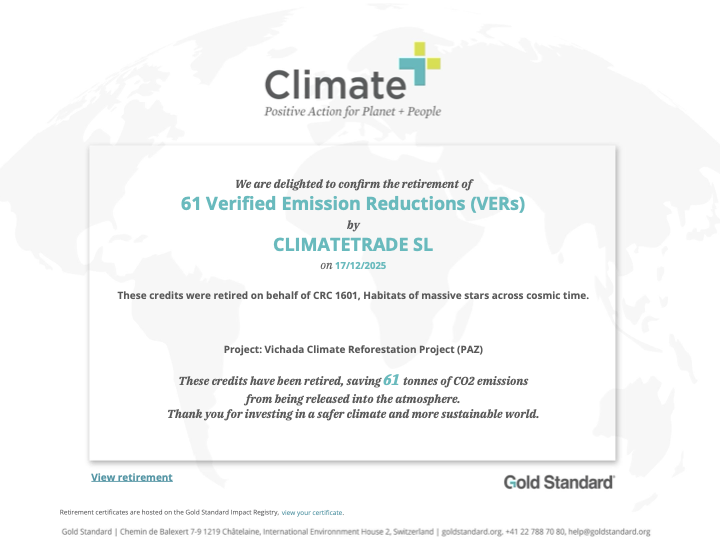
We value our Planet:
1st funding period: 10/2023 – 06/2027