All PhD students and young postdocs can participate in a competitive exchange programme. In principle, any international institution can serve as a host. The purpose of the exchange programme is to learn new skills that are relevant to the respective CRC project and to make new contacts to gain visibility. The CRC aims to fund a 3 month‘s exchange for 5 people each year. To participate, young researchers should apply to the CRC executive board with a research statement and a cost estimate. The PL will be asked to write a support statement. If there are more applications that can be funded, the PLs will be asked to outline their priority setting to the Executive Board. Furthermore, the PLs are asked to maintain active planning of exchange activities for each funding period. Due to the scientific activities of the CRC in Chile, close contact with the Universidad Catolica de la Santisima Concepcion exists and can be used to enable a PhD exchange to Chile where the young researchers can gain experience in using some of the world’s most modern telescopes. Participants must report on their experience within this exchange programme, and the reports will be uploaded on the CRC website (Cupcake-photo by Bettina Heyne).
Exchange Report from Birka Zimmermann
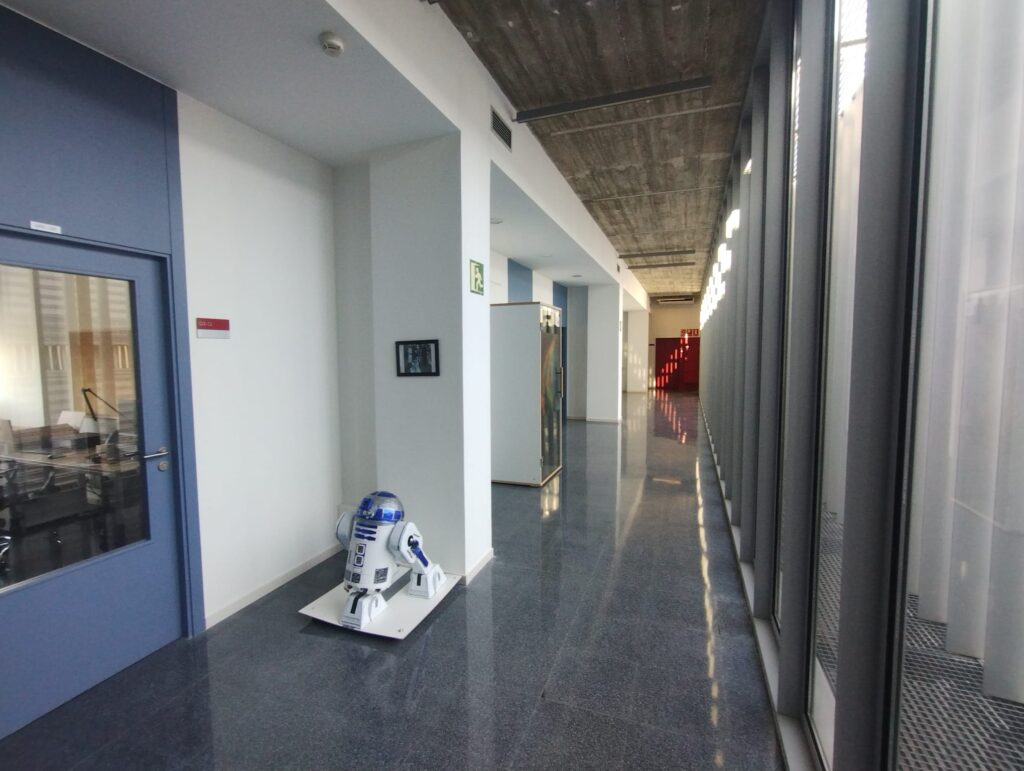
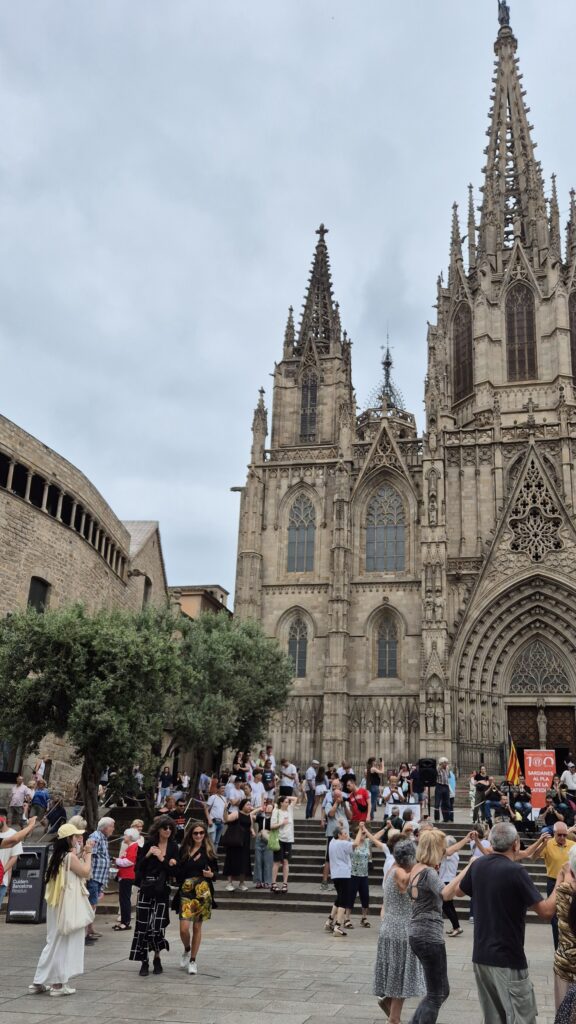
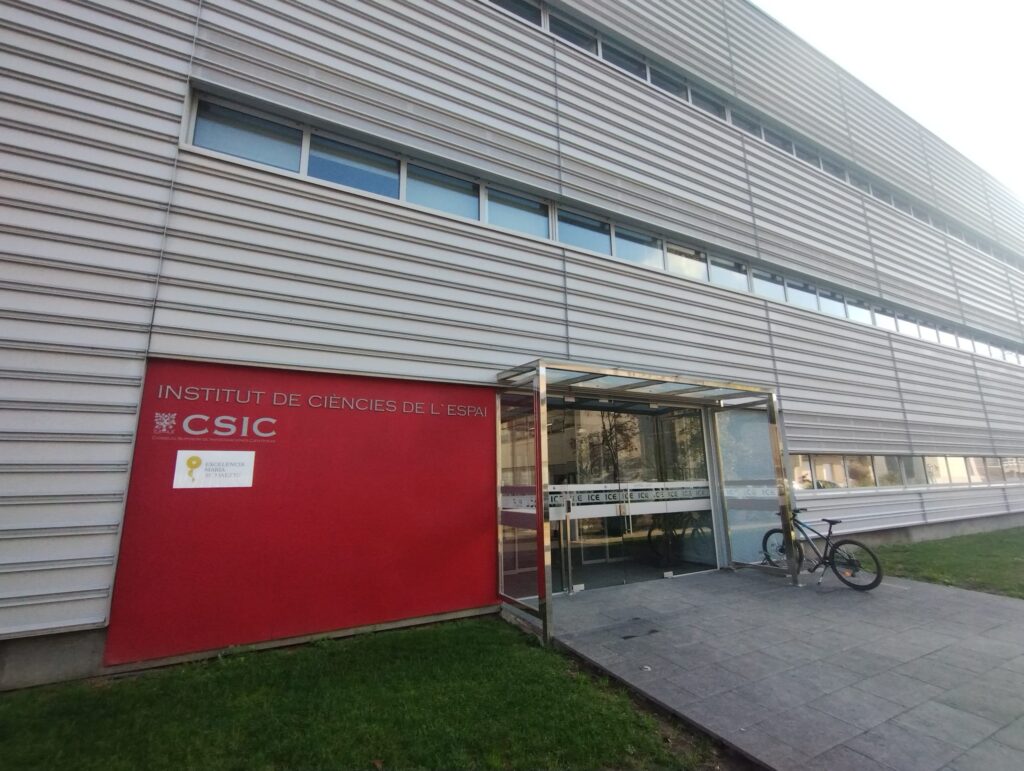
Host Institution: Institute of Space Sciences (ICE-CSIC), Barcelona
Host Researcher: Dr. Álvaro Sánchez-Monge
Duration: 5 weeks in 2025
Introduction
My PhD research focuses on high-mass star formation, where I simulate the collapse of massive, turbulent cores and generate synthetic dust continuum maps. A key challenge in this work is comparing these idealised simulation outputs with real observational data such as the ALMAGAL survey. Doing so requires a solid understanding of interferometric observing techniques and the associated data-reduction steps. To bridge this gap, I spend a five-week research stay at ICE-CSIC in Barcelona under the supervision of Dr. Álvaro Sánchez-Monge, with the goal of learning and applying his established ALMAGAL data-processing workflow to my synthetic observations.
Research Experience
During my stay, I was introduced to the full calibration and imaging pipeline used for ALMAGAL observations. Together, we adapted this workflow to operate on synthetic data from my simulations, allowing me to learn how to translate my idealised continuum maps (produced from AMR simulations and radiative transfer) into postprocessed synthetic observations. This step is essential for achieving a realistic, one-to-one comparison between simulations and observational data.
Beyond the technical work, daily discussions offered valuable insights into common observational artefacts (such as missing flux, noise patterns, and beam effects) and how these phenomena influence the interpretation of structures like protostellar cores when comparing observations with simulations. During the visit, we also developed a concrete strategy for my upcoming simulation–observation comparison paper, including the evolutionary stages to analyse, appropriate imaging parameters, and robust metrics for quantitative evaluation. Regular group meetings and seminars provided an excellent overview of the latest research activities at ICE-CSIC. The group members (from students to professors) were very collaborative and supportive, creating an inspiring and highly productive scientific environment for this exchange.
Conclusion
This exchange significantly strengthened my project: I got a working, realistic pipeline to turn simulation outputs into ALMA-like data, and I gained a deeper understanding of observational limitations and their implications for comparing to simulations. The stay also established a lasting collaboration with Dr. Sánchez-Monge. Finally, beyond science, the visit was personally enriching: living in Barcelona and working at ICE-CSIC gave me fresh perspectives, new ideas and additional motivation. I am very grateful to CRC 1601 for supporting this opportunity.
Exchange Report from Simon Dannhauer
Host Institution: Laboratoire d’Astrophysique de Bordeaux (LAB), France
Host Researcher: Dr. Timea Csengeri & Dr. Sylvain Bontemps
Duration: 2 weeks, early 2026
Introduction
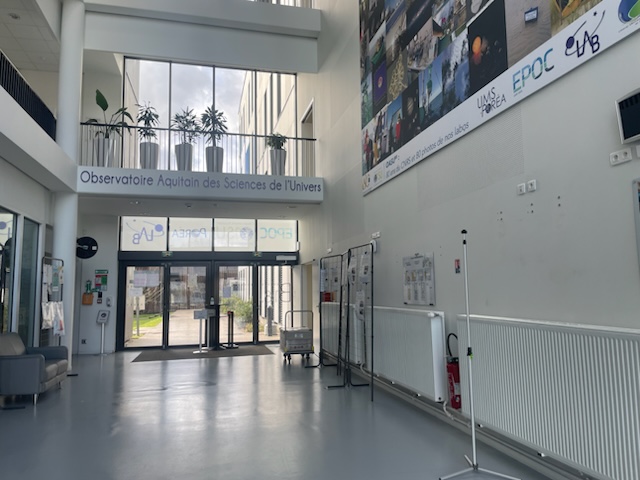
My PhD research centres on high-mass star formation in Cygnus X, combining multi-wavelength observations to trace the physical and chemical structure of embedded protostars and the molecular cloud environments they shape. A central thread is understanding how stellar feedback couples to the surrounding medium – a question I am pursuing primarily through observations with submm- and mm-telescopes like SOFIA, APEX, IRAM 30m and NOEMA. Reducing and imaging these data, particularly when merging them with single-dish short-spacings, involves non-trivial calibration choices, and some problems are simply faster to work through in person than by email. This was the main motivation for spending approximately two weeks at the Laboratoire d’Astrophysique de Bordeaux (LAB) in early 2026, working with Dr. Timea Csengeri and Dr. Sylvain Bontemps. Timea is the PI of the NOEMA Large Program NASCENT-stars and a long-standing collaborator on my work; both bring deep expertise in the star formation physics underlying these observations.
Research experience
The visit covered two complementary areas of my doctoral project. The first was NOEMA data reduction: together with Timea I worked through the calibration and imaging pipeline for molecular line and continuum observations of the star-forming region S106 in Cygnus X, using the GILDAS software package. The hands-on sessions in Bordeaux allowed me to work through specific reduction challenges that are difficult to resolve remotely, and to adopt best practices from researchers with long experience in NOEMA interferometry. I came away with a significantly more robust understanding of the steps involved – from flagging and calibration through to cleaning and primary-beam correction – and ultimatevly with cleaner, more reliable data products for use in an upcoming paper. Beyond the technical work, we also had time for in-depth scientific discussions, which have already fed into a NOEMA follow-up proposal.
The second focus was spectral energy distribution (SED) modelling of NASCENT dust cores which we discussed during my time in Bordeaux. I worked on my greybody fitting pipeline used to derive dust temperatures and masses from multi-wavelength photometry, including Herschel PACS and SPIRE data, as well as constraints from shorter wavelengths.
During the stay, I also had the opportunity to present my work to the FEMIS group at the LAB twice. The broader interaction with the LAB star formation community – through informal conversations and meeting fellow PhD students – was stimulating and gave me a broader perspective on current research directions in the field. The exchange also helped advance planning for future observing proposals that are directly connected to the science being developed in sub-project B2.
Conclusion
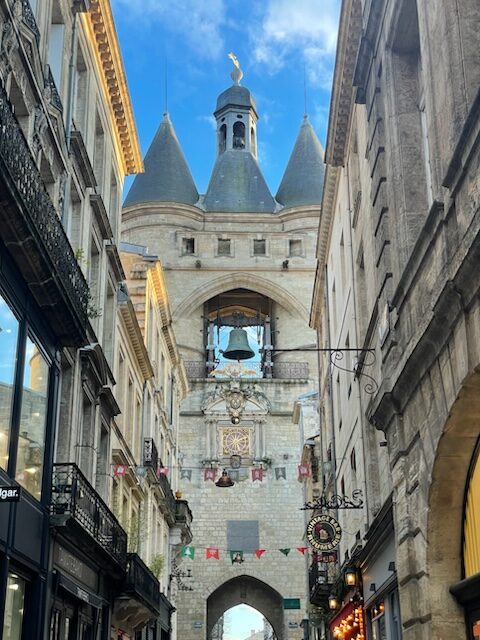
Two weeks is short, but the visit moved things forward in ways that months of remote work had not. I came back to Cologne with cleaner data products, a more solid SED fitting pipeline, and a clearer picture of the next steps for both the S106 paper and future observing proposals. Working through problems was more effective than exchanging emails – and the scientific conversations that happened around the reduction sessions were just as useful. I am grateful to both of them for making the time, and to the broader LAB community for the welcoming environment. Also having the time to get to know Bordeaux and its immediate surroundings better was a wonderful and enriching experience. Immediately after the visit, CRC 1601 supported continued travel to the European ALMA school in Leiden, which built directly on what I had learned in Bordeaux and rounded out a very productive month.
Exchange Report from Akash Gupta
Host Institution: Laboratoire d’Astrophysique de Bordeaux (LAB), France
Host Researcher: Dr. Valentine Wakelam
Duration: 4 weeks, March 2026
Introduction
My PhD research focuses on modeling chemistry in High-Mass Star-Forming Regions. To do this, I use MHD simulations from computational astrophysics group at PH1 and post-process these simulations using a chemical code. Currently, I am using the code NAUTILUS, developed by Dr. Valentine Wakelam in Bordeaux. This requires knowing the chemical networks, the differential equation solver used in the code. One of the key questions is how the chemical reactions are added in these networks and how rate constants are calculated, for e.g., from experiments, classical and quantum mechanical calculations. Once we have all the recipes, we can calculate abundance of various key species present in the Interstellar Medium (ISM) and compare them to observed abundances from various surveys done using facilities like IRAM, ALMA, JWST, etc.
Research Experience
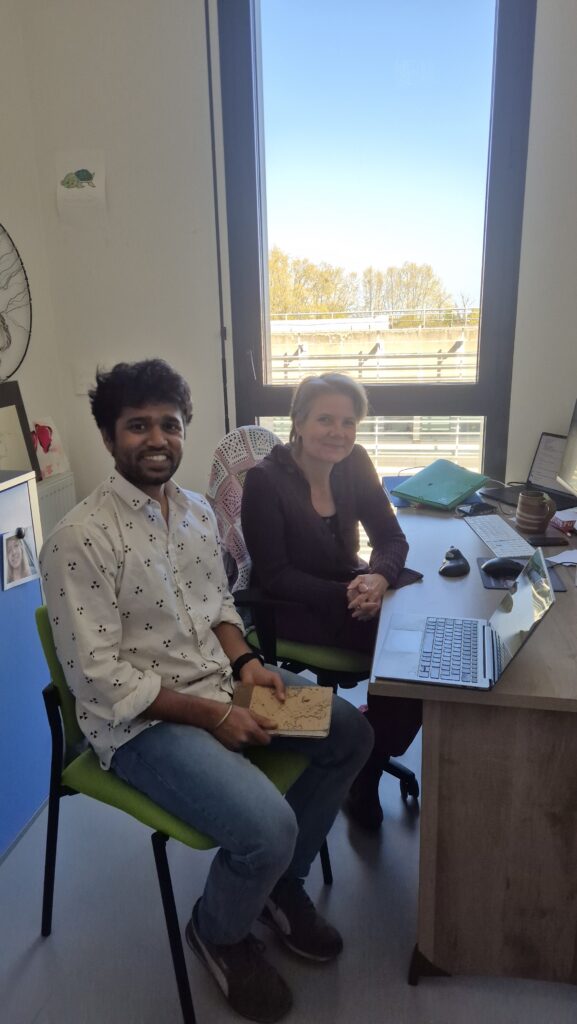
During my visit, I worked with Dr. Wakelam on understanding KIDA (Kinetic Database for Astrochemistry), the reaction network and how we can add or remove reactions in the database and this helps to test which reactions are key to formation or destruction of certain species of interest. This was particularly used to understand the formation and destruction of HCN and HNC in ices and gas phase with extending a new collaboration with Dr. Jean-Chrisophe Loison from ISM, Bordeaux. We also discussed the much debated, HCN/HNC ratio and factors and chemical reactions which effect this ratio.
We also discussed a new type of chemistry which is being used by newer chemical models, “non-diffusive chemistry”. We discussed its implications on our model and how it will be integrated with NAUTILUS further. We discussed in detail about effect of initial conditions in molecular clouds and its effects on long term effect on chemistry of star forming regions. We found out there are many molecules which acts as reservoir for some elements and how it changes when we increase the initial temperature of molecular clouds. For e.g., we see more C and O trapped in CO at 10K initial temperature, but when we go above 12K we see CO2 as major reservoir for C and O due to higher mobility these species on ices. With daily discussions on the topic, we finished also running new models for initial cloud collapse and wrote the draft of this upcoming paper.
Additionally, together with Dr. Loison, we also discussed about isotopic reaction network, i.e., chemistry with isotopologues also accounted in the network. This is an ongoing work and soon “isoNAUTILUS”, NAUTILUS with isotopic reaction network will be released publicly.
Conclusions
The visit to Bordeaux was very productive science-wise and frequent discussions with Dr. Wakelam helped me to get a much clearer idea on how the complex chemistry works in these systems and how reactions are included in database. Additionally, we keep in constant contact with Valentine via weekly zoom meetings. Also, together with JC Loison, we also touched upon HCN/HNC ratio is star-forming regions, reactions and physical conditions affecting this ratio. Apart from scientific exchange, I had great opportunity to know various research labs in Bordeaux/Talence region, providing me fresh motivation for my research. I am grateful to SFB1601 for supporting